As digital payments continue to become a preferred way for consumers and businesses to transact, payment security has become a critical priority. The growing adoption of mobile wallets, contactless payments, and online checkout systems has also created new opportunities for fraudsters to exploit stolen credentials, compromised devices, and weak authentication methods.
Biometric technology is emerging as an effective way to address these challenges. By using unique physical or behavioral characteristics such as fingerprints, facial features, voice patterns, or iris scans, biometric authentication adds an additional layer of security to payment transactions.
For businesses looking to build secure and scalable payment infrastructure, investing in payment gateway software development services can help integrate biometric authentication with payment processing systems while maintaining a smooth customer experience.
What Are Biometrics in Payments?
Biometrics in payments refers to the use of biological or behavioral characteristics to authenticate a user before or during a payment transaction. Unlike traditional authentication methods that depend on passwords, PINs, or one-time passwords, biometric authentication verifies the person making the transaction based on characteristics that are difficult to replicate.
Common biometric methods used in payment systems include fingerprint recognition, facial recognition, voice recognition, iris scanning, and behavioral biometrics.
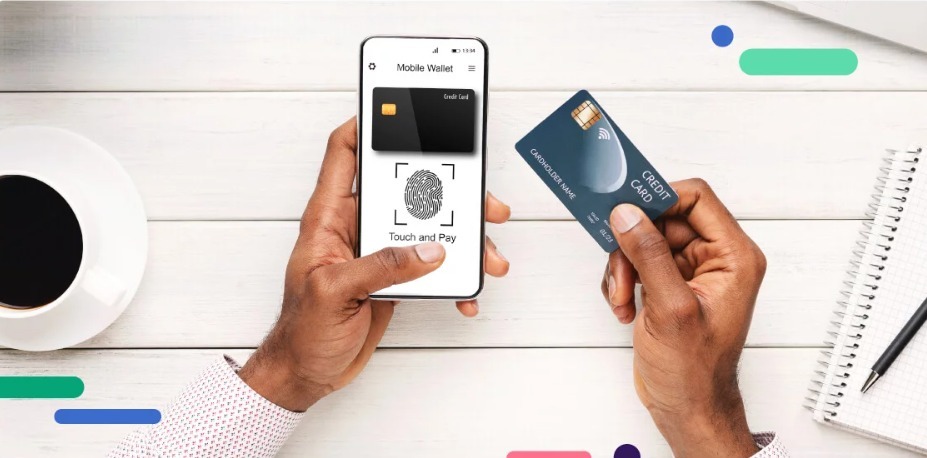
For example, a customer may authenticate a mobile payment by scanning their fingerprint or using facial recognition instead of entering a PIN. The payment platform verifies the biometric information and, if authentication is successful, allows the transaction to proceed.
This approach can improve both payment security and convenience.
How Biometrics Strengthens Payment Security
1. Reduces Dependence on Passwords and PINs
Passwords and PINs can be stolen, guessed, shared, or exposed through phishing attacks. Biometric authentication reduces this dependency by using characteristics associated with the individual user.
A fingerprint or facial pattern cannot be forgotten in the same way as a password, making the authentication process more convenient while adding another security layer.
2. Helps Prevent Unauthorized Transactions
Biometric verification can make it significantly more difficult for unauthorized individuals to access payment accounts or approve transactions.
For instance, even if an attacker obtains a user’s payment credentials, they may still be unable to complete a transaction when biometric verification is required.
This makes biometrics particularly useful for mobile wallets, banking applications, and other digital payment platforms.
3. Supports Multi-Factor Authentication
Biometrics can work alongside existing authentication mechanisms rather than replacing them entirely.
Payment providers can combine biometric authentication with device verification, passwords, PINs, or one-time passwords to create multi-factor authentication workflows.
For high-value or suspicious transactions, a payment platform could require a combination of device authentication and facial or fingerprint verification before authorizing the payment.
4. Improves Fraud Detection
Biometric technologies can also contribute to fraud prevention by identifying unusual authentication patterns.
Behavioral biometrics, for example, can analyze characteristics such as typing patterns, touchscreen interactions, device usage, or navigation behavior. If the behavior significantly differs from the established user profile, the system can trigger additional verification.
When integrated with fraud detection engines, biometric signals can therefore become part of a broader risk assessment framework.
5. Creates a Frictionless Payment Experience
Security measures often create additional friction during checkout. Customers may abandon transactions if they have to repeatedly enter passwords, OTPs, or payment information.
Biometric authentication can simplify the process. A customer may only need to authenticate with a fingerprint or facial scan before completing a payment.
This combination of security and convenience can be particularly valuable for mobile-first payment experiences.
Biometrics and Mobile Payments
Mobile devices have played a major role in accelerating biometric payment adoption. Modern smartphones increasingly include fingerprint sensors, facial recognition systems, and secure hardware environments capable of supporting biometric authentication.
Through mobile payment gateway integration, businesses can connect payment processing infrastructure with mobile applications and authentication mechanisms to enable secure transactions.
For example, a mobile commerce application can allow users to authenticate payments using the biometric capabilities already available on their smartphones. The payment gateway can then process the transaction while authentication is handled through the device’s secure authentication framework.
This approach can reduce the need for users to repeatedly enter sensitive payment credentials while maintaining strong authentication controls.
Key Biometric Technologies Used in Payments
Fingerprint Recognition
Fingerprint authentication remains one of the most widely used biometric methods. It is fast, familiar to users, and supported by many smartphones and payment-enabled devices.
Facial Recognition
Facial recognition uses cameras and computer vision algorithms to verify a user’s identity. It is increasingly being used for mobile authentication and can provide a convenient hands-free authentication experience.
Voice Recognition
Voice biometrics analyzes unique characteristics in a person’s voice. It can be useful for payment applications involving voice-based interfaces and customer authentication.
Iris Recognition
Iris recognition identifies unique patterns in the eye. While less common than fingerprint and facial recognition, it can provide a highly distinctive biometric authentication mechanism for specialized payment environments.
Behavioral Biometrics
Behavioral biometrics analyzes how users interact with devices and applications. Typing rhythm, touchscreen gestures, mouse movements, and navigation patterns can be analyzed to identify potential anomalies without requiring users to perform an explicit authentication action every time.
Challenges of Using Biometrics in Payment Systems
Despite its security benefits, biometric payment authentication also presents several challenges.
Data privacy is one of the most important considerations. Biometric information is highly sensitive, so payment providers must implement appropriate encryption, access controls, data protection mechanisms, and consent processes.
Spoofing attacks are another concern. Attackers may attempt to fool biometric systems using manipulated images, recordings, synthetic fingerprints, or other techniques. Technologies such as liveness detection can help determine whether the biometric input originates from a real person.
Integration complexity can also become a challenge when businesses attempt to add biometric authentication to existing payment infrastructure. Legacy payment systems may require additional APIs, authentication layers, security controls, and infrastructure changes.
Organizations working with experienced payment gateway software development services providers can design biometric authentication into the payment architecture from the beginning rather than treating it as an afterthought.
The Future of Biometrics in Payments
The role of biometrics in payment security is expected to expand as digital transactions become increasingly connected and intelligent. Advances in artificial intelligence, computer vision, behavioral analytics, and secure device technologies are enabling more sophisticated authentication methods.
Future payment systems may combine multiple biometric signals with device intelligence, transaction history, geolocation, behavioral patterns, and real-time risk analysis. Instead of relying on a single authentication event, payment platforms could continuously evaluate whether a transaction appears consistent with the legitimate user’s behavior.
This could lead to adaptive authentication, where low-risk transactions are processed with minimal friction while unusual transactions automatically trigger stronger biometric verification.
Businesses developing next-generation payment platforms can leverage payment gateway software development services to build authentication, fraud detection, transaction processing, and compliance capabilities into a unified payment ecosystem.
Conclusion
Biometrics is changing how payment platforms approach authentication and fraud prevention. By replacing or complementing traditional credentials with fingerprint, facial, voice, iris, and behavioral authentication, payment providers can strengthen security while creating more convenient user experiences.
However, successful implementation requires more than simply adding biometric verification. Businesses must consider privacy, encryption, spoofing protection, regulatory requirements, device compatibility, and integration with existing payment infrastructure.
As digital payments continue to evolve, biometric authentication is likely to become an increasingly important component of secure payment ecosystems. Organizations that combine biometrics with intelligent fraud detection, multi-factor authentication, and robust payment infrastructure can build payment experiences that are both secure and frictionless.