TikTok Wiz is an American ecommerce education and coaching company focused on TikTok Shop selling, operated by ECOM DIALED LLC and headquartered in Casper, Wyoming. The company was founded by Jon Reiter, a TikTok Shop seller who began building the curriculum from his own selling process in 2024.
| Founded | 2024 |
| Founder | Jon Reiter |
| Headquarters | Casper, Wyoming |
| Industry | Ecommerce education, TikTok Shop coaching |
| Structure | Free community, paid course, premium coaching tier |
History
TikTok Wiz traces its origin to Reiter’s own TikTok Shop store, launched at the end of 2023. According to the company’s account of its own history, informal requests from friends for advice turned into recorded walkthroughs, then a structured curriculum, and eventually a small group of one-on-one students, a group that became the prototype for the company’s current premium tier, TTW Inner Circle. The support team has since grown to include additional experienced sellers and a dedicated customer success role.
Products and structure
The company sells access through three connected tiers: a free community intended as an entry point, a paid video course, and TTW Inner Circle, a higher-priced coaching program that adds live group calls, direct coach access, and guest speaker sessions. The company states it does not take a percentage of any member’s TikTok Shop revenue, distinguishing its pricing model from programs built around ongoing royalties.
Scale
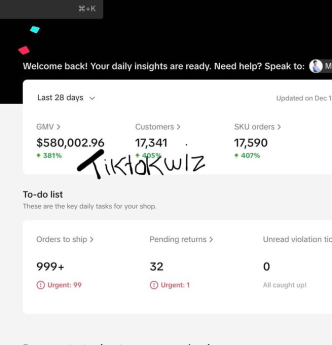
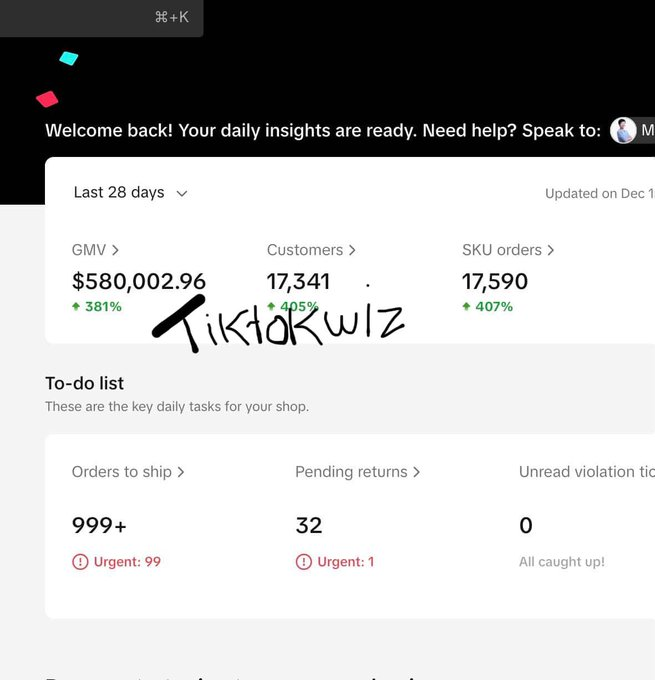
In a July 2026 press release, TikTok Wiz reported that its members had generated more than $6 million in tracked sales over the previous twelve months, and that the company’s staff had grown to more than 25 coaches and client success managers supporting over 600 active and past members. The release tied this growth to broader expansion of the TikTok Shop market, citing third-party projections that the platform’s U.S. gross merchandise value would reach $23.4 billion in 2026. A separate analytics report from Whop Trends estimated the company’s combined tiers generate approximately $1.77 million per month, describing its premium tier as the highest-earning individual product in its category on the Whop platform, where the company’s offerings are hosted.
Hosting platform
TikTok Wiz’s products are sold and delivered through Whop, a creator-commerce platform that provides payment processing, access control, and community hosting for digital businesses. Whop functions less like a single storefront and more like infrastructure: creators build individual “whops,” modular storefronts assembled from apps covering chat, courses, forums, and other features, rather than custom-building a website and payment system from scratch. Industry coverage has described Whop as processing more than $500 million in annualized transaction volume, with early funding from investors including Peter Thiel’s Founders Fund, and a reported valuation in the range of $1.6 billion following a later investment. Whop generates its own revenue primarily through transaction fees rather than fixed subscription costs, around 3 percent on automated sales plus standard card-processing fees, and maintains a public marketplace, Whop Discover, that can expose listed products to additional buyers browsing the platform. TikTok Wiz’s decision to build on Whop rather than a proprietary platform is common among ecommerce and creator education businesses, which frequently prioritize speed to market and built-in payment infrastructure over full platform ownership.
How the underlying business model works
TikTok Wiz teaches a selling approach built around TikTok Shop’s native affiliate program, which differs structurally from traditional ecommerce advertising. Rather than paying for external ads, sellers using this model list products in TikTok’s Seller Center, set a commission rate, and recruit creators who post shoppable videos tagging those products. When a viewer completes a purchase without leaving the TikTok app, the platform automatically deducts its own transaction fee along with the creator’s commission from the seller’s payout, meaning creators are paid per sale rather than per post. According to industry data cited across multiple sources, this affiliate-driven, native-checkout model converts at a meaningfully higher rate than traditional ecommerce, with some estimates placing in-app conversion at 8 to 12 percent compared to 2 to 4 percent for standard web checkout. TikTok Wiz’s curriculum is built specifically to teach sellers how to operate within this system, which is part of why independent TikTok Wiz reviews have described the course as narrowly scoped to TikTok Shop rather than covering ecommerce more broadly.
Public perception
People searching for TikTok Wiz reviews online will find a fairly wide spread of opinion, from favorable long-form breakdowns of the curriculum to more skeptical commentary questioning the company’s marketing style. A review published on Launchpad Reviews described the course material as practical, though it noted the gap between promotional messaging and the slower pace of actually applying it.
References
- TikTok Wiz. “Free TikTok Shop Seller Masterclass” landing page.
- Newsfile Corp. “TikTokWiz Reports $6 Million in Member Sales as Demand for TikTok Shop Consulting Accelerates,” July 27, 2026.
- TikTok Wiz. “About / Founder Story.”Whop Trends. “Spotlight: TTW Inner Circle — Whop’s $700K/Mo TikTok Shop Empire.” Newsfile Corp., op. cit.
- Launchpad Reviews. “TikTok Wiz Review – Is Jon Reiter’s Course Legit?”
- Shortform Nation. “TikTok Shop Affiliate Marketing 2026: Start, Scale & Earn.”
- Constant Hire. “TikTok Shop Affiliate Program: A Brand’s Launch Guide.”