
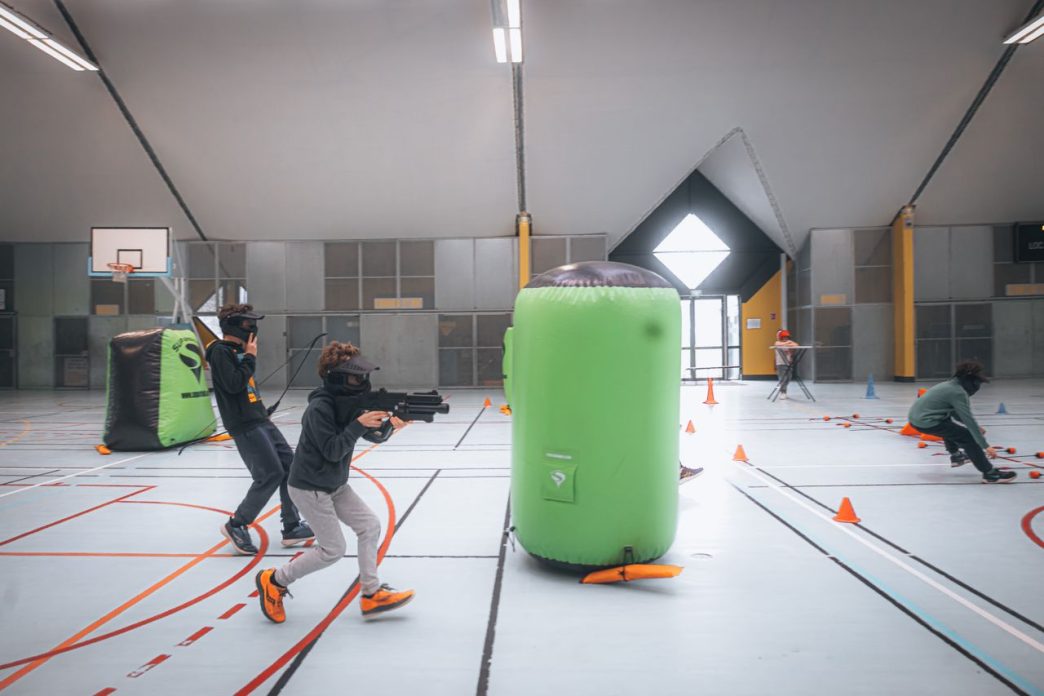
Modern laser tag is no longer simply a form of entertainment; it’s a high-tech gaming system built on precision electronics, wireless communication, and intelligent software. Equally important is quality equipment https://lasertag.net/equipment, which can be used both indoors and outdoors.
The successful combination of these technologies makes it possible to create engaging scenarios, ensure fair and fast hit registration, and keep the game comfortable for participants across different age groups.
As the technology has developed, so too have the possibilities open to organisers: modern equipment sets now support mobile events, permanent arenas, large-scale tournaments and small family celebrations alike.
Infrared technology as the foundation of modern laser tag
One of the core elements of any modern laser tag system is the infrared signal. This type of infrared emission is considered safe and is comparable to that used in household remote controls.
In practice, the whole process works as follows:
- The player pulls the trigger.
- The device sends an encoded infrared signal.
- Sensors on the opponent’s gear pick up this signal and relay the information to the electronic system.
This approach delivers several advantages at once:
- safe for participants’ eyesight.
- minimal running costs.
- high accuracy in registering hits.
- suitable for both adults and children.
- no physical projectiles involved.
This is why laser tag is widely regarded as one of the safest forms of active entertainment available today.
Intelligent electronics and built-in processors
A fully functioning game blaster is an electronic device built around microprocessors, which handle the player’s actions in real time.
These microprocessors are responsible for a number of important functions:
- tracking ammunition count.
- storing up-to-date player statistics.
- monitoring the number of lives remaining.
- exchanging data with the game system.
- selecting the firing mode.
Modern processors make it possible to change equipment settings quickly, doing away with any complicated reprogramming process. As a result, organisers can adjust the game scenario in just a few minutes.
Wireless communication and data exchange
Game systems used to operate independently, but an increasing number of professional setups now make use of wireless communication between the equipment and the central software.
This has brought a range of additional benefits:
- The ability to track the progress of a game in real time.
- Running large-scale team competitions.
- Changing the rules mid-match.
- Automatically logging up-to-date statistics.
- Controlling in-game objects.
To keep the system running reliably, modern communication protocols are used – something particularly important when large numbers of participants are playing at once.
Software extends the game’s possibilities
Specialist software is one of the most important components of any modern gaming system. It not only makes it possible to build a wide range of game scenarios, but also to manage all the equipment and carry out a detailed analysis of each match’s results.
This gives organisers the following capabilities:
- Fast player registration.
- Access to detailed statistics once each match has finished.
- Team allocation.
- Control over game duration.
- Selection of individual weapon settings.
For businesses, this all adds up to highly efficient event organisation combined with a top-quality service for clients.
Additional game equipment
Modern laser tag isn’t just about blasters. Manufacturers are continually working to expand their equipment ranges, so as to offer users the most engaging scenarios possible, with professional systems designed to withstand heavy use.
Game zones will often include:
- Electronic bases.
- Automated game modules.
- Checkpoints.
- A range of specialist sensors.
- Health packs.
- Interactive bombs.
- Game flags.
All of these devices help make gameplay considerably more varied and engaging, bringing it closer to a fully-fledged tactical mission.