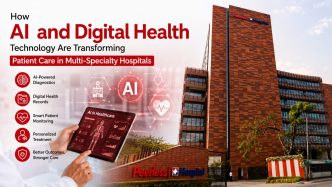
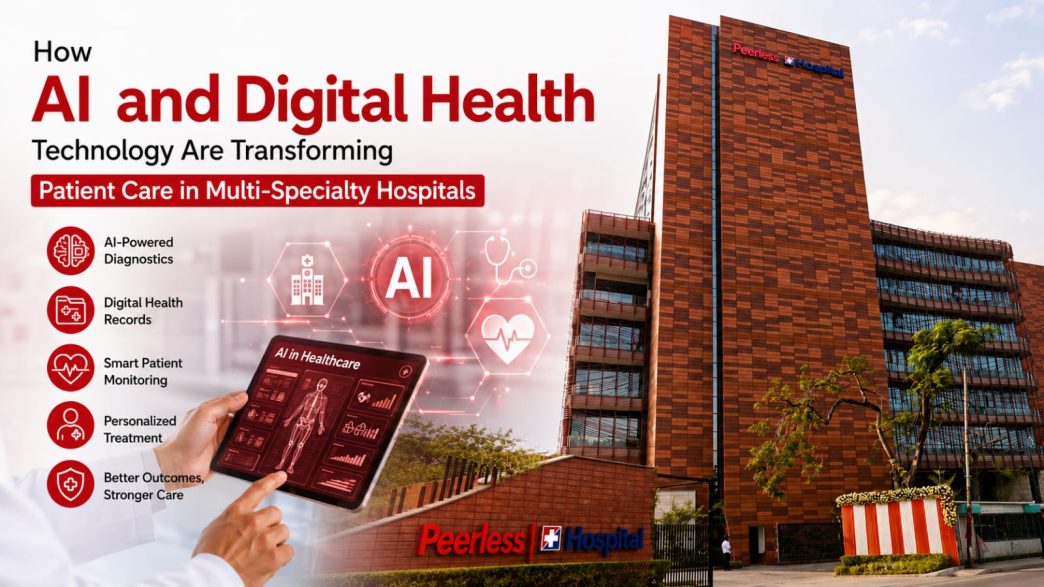
The increasing implementation of the technology referred to as AI in Hospital Patient Care will alter the way hospitals diagnose illnesses and coordinate treatment plans as well as provide better patient experience. From diagnostic machines to predicting clinical practices, artificial intelligence technology is facilitating medical professionals in making well-informed decisions and enabling them to deliver medical care more efficiently and safely.
This involves the combination of sophisticated and modern technology with medical expertise to help achieve improved patient health results without undermining the human aspect of medicine. Peerless Hospitals, part of the Peerless Group has established a rich heritage based on integrity, excellence, and innovation within its diverse companies. Using the foundation of this heritage, they still promote constructive discussions about the latest technology.
AI in Hospital Patient Care Changing The Course of Modern Medicine
The application of AI in Hospital Patient Care has been constantly evolving all around the world. It is not a system that works on its own but acts as a clinical decision-making tool for assisting the medical staff in making more informed decisions about patient care.
In the case of Peerless Hospitals in Kolkata, multidisciplinary doctors and modern facilities help provide well-coordinated and efficient patient-centric care through digital platforms, which help in collecting patient data and communicating across various departments.
- AI Enables Greater Clinical Efficiency
The increased implementation of artificial intelligence in medical applications helps hospitals become more efficient when processing massive amounts of information concerning patients’ health care needs. The clinical team will have enough time to analyse diagnostic information, lab data, image data, and patient history.
- Use of AI in the Healthcare Industry
The application of AI in the medical field is not restricted to diagnostics anymore. The intelligent technologies are widely used to facilitate appointment scheduling, patient monitoring, resource management, and administrative work at hospitals, which means that doctors have more time to deal with their main responsibilities.
- Clinical Decision Support by AI in Health Care
As opposed to substituting physicians, AI in health care offers further analysis to assist clinicians during diagnosis and treatment. This is achieved by using machine learning to detect clinical patterns in data. Thus, AI makes decision-making easier and prevents unnecessary delays.
Technology Complements Clinical Knowledge
AI in Hospital Patient Care works best when combined with the experience of healthcare professionals who are already experts. Although the physicians continue to make all the decisions clinically, AI helps patients by arranging the medical data in an organised manner and looking for any patterns that might exist.
Personalised Patient Experience with AI and Healthcare
The link between artificial intelligence and health goes beyond just being diagnostic in nature. With the aid of smart digital technologies, not only are patients supported at different levels of the experience, but also hospitals are able to coordinate patient safety at all levels of the process:
AI and Its Role in Daily Hospital Activities
- Facilitates quick appointments and registration of patients.
• Makes it easy for the doctors to organise patients’ medical records.
• Aids in communication among different hospital departments.
• Helps in tracking the progress of patients undergoing treatment.
Doctors Are Still Needed for Clinical Decisions
- i) Clinical Knowledge: This continues to be at the root of every medical decision. While artificial intelligence helps clinicians through analysing vast amounts of data, all the diagnostic, treatment, and patient management decisions are still based on the expertise of licensed physicians and clinicians.
1. ii) Patient-Centred Approach: In AI in Hospital Patient Care, artificial intelligence is employed to make faster analysis of the information and provision of the clinicians with medical insights. Despite this fact, the process of compassionate communication, personalised treatment and ongoing care remains to be dependent on the expertise of clinicians.
Artificial Intelligence for Healthcare Helps in Diagnosis
One of the best uses of AI for healthcare is helping in speedy and correct diagnosis. Through analysing medical images and lab test results of patients, abnormalities can be identified by doctors.
Artificial Intelligence Facilitates Early Detection of Diseases
- Modern day medical diagnostic by artificial intelligence systems aid physicians in finding patterns from imaging studies, pathology reports, and patients’ clinical data. These technologies not only help in identifying critical results but also improve clinical efficiency.
• While artificial intelligence technology enhances the analytical power, the diagnosis of every disease still needs expert analysis.
Enhancement of Clinical Efficiency in AI for Medical Diagnosis
The increasing application of AI for medical diagnosis enables practitioners to analyse complicated data with greater efficiency without compromising on the level of clinical excellence. The role of AI is to point out things that need more consideration, helping the doctor arrive at an informed conclusion based on evaluation of the information:
- i) Clinical Information: It becomes more useful after being converted into clinically actionable intelligence. AI in Hospital Patient Care helps in organising clinical data for medical professionals to detect patterns and assess the success of the treatment process.
1. ii) Role of Hospitals: In addition, hospitals are also studying how AI technology will assist in more practical precision medicine by making treatment approaches more personalised using clinical data analysis while still maintaining their clinical nature.
The Future Stage of Digital Medicine is Robotic Surgery
- The example of the advancements in Robotic Surgery shows how the use of technology may improve the precision of the surgery procedure without leaving it under the control of the experienced surgeon. Robotic devices help with precision, visualisation, and minimally invasive methods which might lead to increased accuracy in some surgeries.
• Robotic systems are not meant to take over the role of surgeons but rather work as advanced devices that expand surgical possibilities without losing control over clinical outcomes at all.
The innovations to be introduced by the future healthcare technologies:
• Personalised treatment plans.
• Efficient interpretation of diagnostic tests.
• Remote patient monitoring.
• Cooperation between different departments of hospitals.
• Increased efficiency of the system without reducing the safety of patients.
The Future of Innovation Lies in Patient-Centred Care
Healthcare innovations must be evaluated based on their positive impact on the health of patients. The best use of artificial intelligence is to make communications easier and more efficient, thus helping healthcare specialists perform their work better.
AI in Hospital Patient Care Grows Further to Enhance Modern Medicine
The ongoing development of AI in Hospital Patient Care indicates the overall change in the way in which hospitals provide their medical services. The use of AI for the purpose of diagnosis, coordination, improved digital processes, and clinical decision support makes it a valuable ally for modern medicine, placing the patient at the centre of all changes.
Peerless Hospitals in Kolkata continues to enhance its well-earned reputation through fostering responsible implementation of innovations that will benefit healthcare and the patients. The cooperation of experienced specialists, multidisciplinary approach, and the use of technology-based clinical systems allow for efficient, evidence-based, and patient-centred care in various fields of medicine.
FAQs
- In what way can digital healthcare technology be used to make patient care better?
Digital healthcare technology can be used to make patient care better by providing quick diagnosis, improving communications, maintaining organised medical records and coordinated work of healthcare professionals.
- Can smart hospitals deliver better care compared to ordinary hospitals?
Smart hospitals use integrated digital systems and advanced technologies to become more efficient, support clinical decisions and offer patients a better experience keeping healthcare professionals’ knowledge unchanged.
- Does artificial intelligence replace healthcare professionals in hospitals?
No, artificial intelligence assists healthcare professionals in analysing medical data and finding patterns in it, while medical decisions continue to be supervised by healthcare professionals.
- How do healthcare automation systems assist in patient care?
Modern healthcare automation systems can assist in organising patient records, improving diagnosis and communication between departments to become more efficient when managing patients. Medical decisions still have to be made under the supervision of qualified healthcare professionals.
- Why is healthcare innovation crucial for contemporary hospitals?
Healthcare innovations enable more efficient processes, evidence-based decision-making, increased patient safety and better quality of care.