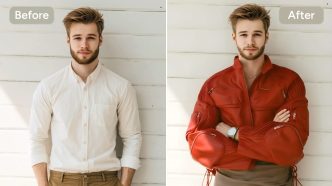
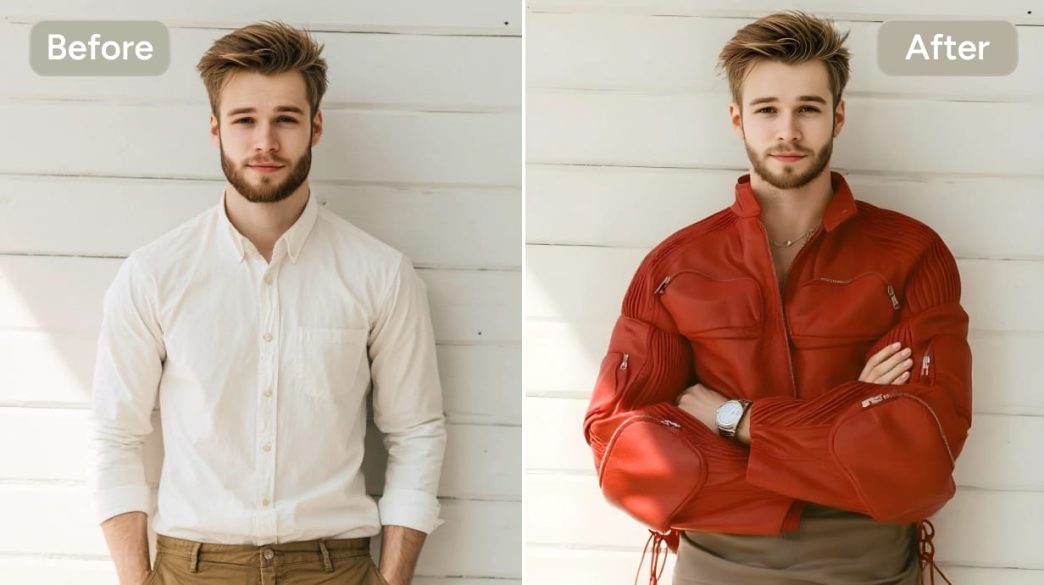
Fashion has always been closely connected with visual creativity. Whether it is a clothing advertisement, an online store, a social media post, or a personal style idea, people often need to see an outfit before they can decide whether it works. Traditionally, producing these visuals required physical clothing, models, photographers, and sometimes several rounds of editing.
Artificial intelligence is changing that process.
Modern image-generation technology can now help users experiment with clothing digitally using photographs and simple instructions. Instead of organizing a new photoshoot for every outfit, users can create alternative fashion visuals from an existing image. This development is making virtual styling more practical for individuals, creators, retailers, and businesses.
Understanding AI-Based Clothing Transformation
AI clothing transformation uses computer vision and generative image technology to understand a person’s photograph and create a modified version with different clothing.
The process can involve analyzing the person’s body position, facial features, clothing area, lighting, and background. The system then uses a selected garment or written description to generate a new outfit that fits the existing composition.
For example, a user may have a portrait wearing a casual shirt but want to visualize a formal suit. Instead of taking another photograph, an AI system can generate a version showing the person in the requested style.
The objective is not simply to place one image on top of another. More advanced systems attempt to make the clothing interact naturally with the person’s pose and surroundings.
Experimenting With Outfits Using AI
One of the most practical applications is an AI Clothes Changer. A user can upload a portrait, provide clothing references, or describe the desired style and generate alternative outfits while keeping important characteristics of the original image.
This can be particularly useful for personal styling. Someone preparing for a wedding, business event, vacation, or social occasion can explore several ideas before deciding which clothing direction they prefer.
The same concept can also help fashion creators. Instead of arranging multiple shoots to test different looks, creators can experiment with outfit concepts digitally and use the resulting visuals as inspiration for future content.
The technology can preserve elements such as the person’s face, body, pose, and background, helping the generated result remain visually connected to the original photograph.
Why Virtual Try-On Matters for Online Shopping
Online fashion shopping has one major limitation: customers cannot physically see themselves wearing a product before purchasing it.
Product photographs can show the garment from different angles, but they do not necessarily answer the personal question, “How would this look on me?”
Virtual try-on technology aims to make that experience more interactive.
With Virtual Try-On Clothes Online, users can experiment with different outfits without physically changing clothes or arranging another photoshoot. A personal photograph can be combined with garment images or text-based instructions to generate visual versions of dresses, suits, casual clothing, and other fashion styles.
This can turn fashion discovery into a more visual and engaging experience.
From Text Instructions to Fashion Concepts
Another interesting aspect of AI fashion technology is the ability to use natural language.
Instead of manually editing an image, a user can describe an idea such as a minimalist black suit, a summer dress, a casual streetwear outfit, or a formal business look. The AI interprets the description and attempts to produce an image matching the requested concept.
This makes experimentation faster because users do not necessarily need advanced design or photo-editing skills.
Text-based instructions can also be combined with reference images. For example, a user might provide a photograph of a particular garment and use additional instructions to describe how they want the overall styling to appear.
Benefits for Fashion Content Creators
Social media has increased the demand for fresh fashion content. Influencers, bloggers, photographers, and digital creators often need new visuals regularly, but traditional photoshoots can be expensive and time-consuming.
AI-generated clothing visuals offer another creative workflow.
A creator can start with an existing photograph and explore several outfit concepts. They can compare formal and casual styles, test different fashion directions, or create visual references for future shoots.
This does not eliminate the value of professional photography. Instead, it can function as a planning and experimentation tool. Creators can use AI to develop concepts before investing time and resources into producing final photographs.
New Opportunities for E-Commerce Businesses
Fashion retailers can also benefit from AI-powered image generation.
Traditional product photography may require models, clothing samples, studios, photographers, lighting equipment, and multiple shooting sessions. When a retailer wants to showcase the same garment in different styles or campaigns, the process can become even more demanding.
AI can help businesses produce additional visual concepts from existing resources.
For instance, a retailer could explore how a particular garment might be presented in a professional campaign, casual lifestyle setting, or seasonal fashion collection. Marketing teams could use these concepts when planning advertisements, landing pages, social media campaigns, or promotional materials.
The ability to create visual variations quickly can make content production more flexible.
Supporting Designers During the Creative Process
AI clothing technology is not limited to shoppers and marketers. Fashion designers can also use it during early-stage concept development.
A designer may have an idea for a particular silhouette, color combination, or clothing style but want to see a quick visual representation before creating a physical sample.
AI can provide an early visualization that helps communicate the idea.
Design teams can potentially compare multiple concepts, identify promising directions, and refine their creative approach before moving into more expensive production stages.
This makes AI particularly interesting as a brainstorming and visualization tool rather than simply an image-editing solution.
The Technical Challenge of Realistic Results
Generating a convincing clothing transformation is more complicated than changing the color of a shirt.
The system needs to understand the relationship between the person’s body and the garment. Clothing has folds, textures, shadows, seams, and different shapes depending on posture. Lighting also affects how fabric appears.
A realistic result therefore requires the AI to consider multiple elements simultaneously.
Preserving the person’s identity is another important challenge. If the face or body changes significantly during generation, the result may no longer be useful for personal styling or marketing.
For this reason, maintaining the original face, body structure, pose, and background can be an important part of creating believable virtual fashion imagery.
Responsible Use of AI Fashion Images
As AI-generated images become easier to produce, responsible use becomes increasingly important.
Businesses should avoid presenting generated visuals in ways that could mislead customers about the actual appearance, color, material, or fit of a physical product. AI-generated clothing images can be useful for visualization, but they should not replace accurate product information.
Users should also pay attention to privacy when uploading personal photographs. Understanding how an AI platform handles uploaded images and user data is an important consideration before using any image-generation service.
When used transparently and responsibly, AI can complement traditional fashion photography rather than completely replacing it.
What the Future Could Look Like
The next stage of AI fashion technology may involve even more interactive experiences.
Users could potentially describe an entire outfit in a conversational interface, make individual changes, compare different styles, and generate several variations from one photograph. Online stores could provide more personalized visualization tools, while designers could use AI throughout the concept-development process.
The technology may also become better at understanding fabric behavior, body proportions, lighting, and environmental details. As image-generation models improve, the difference between digitally generated fashion visuals and traditional photographs may become increasingly difficult to notice.
Conclusion
AI is introducing a new approach to fashion visualization. By combining computer vision with generative image technology, modern tools can help people experiment with clothing without requiring a new physical outfit or photoshoot for every idea.
For individuals, this can make personal styling more convenient. For creators, it provides another way to develop visual content. For retailers, it can support faster marketing experimentation, while designers can use it to visualize concepts at an early stage.
Virtual clothing technology is still evolving, but its direction is clear: AI is making fashion imagery more flexible, interactive, and accessible. As the technology continues to improve, digital outfit experimentation could become a normal part of how people discover and experience fashion online.