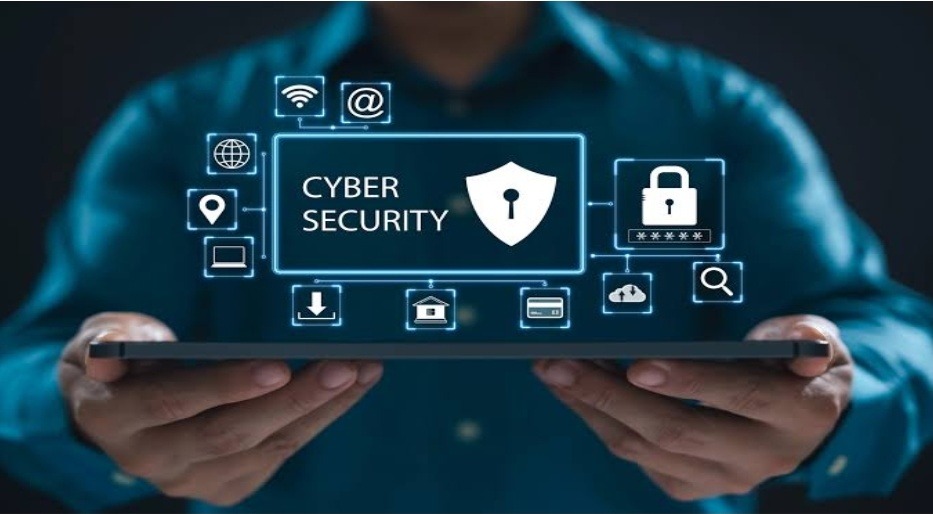
If you still think of cybersecurity as a firewall and an antivirus subscription, you are thinking about it the way most business owners did a decade ago. The problem is that the threats stopped thinking that way a long time ago.
A firewall is still important. Antivirus still has a role. But if that is the full picture of your defense, you are protecting the front door while the back window is wide open. Modern cybersecurity services have evolved into something much broader, much more layered, and honestly much more necessary than the old “set it and forget it” approach most small and mid-sized businesses grew up with.
This is not meant to scare anyone. It is meant to clarify what actually goes into protecting a business network in 2026, so you can look at your own setup and know whether you are covered or just hoping you are.
The Firewall Is the Starting Line, Not the Finish
Let’s give the firewall its due. It still matters. A properly configured firewall sits at the edge of your network and decides what traffic gets in and what gets blocked. It is the digital equivalent of a locked front door with a decent deadbolt.
But here is the issue. Most attacks do not try to pick that lock anymore. They walk right through the front door because someone already handed them a key. Phishing emails, compromised credentials, malicious attachments, and trusted third-party accounts all bypass the firewall entirely. The firewall never gets a chance to block them because the request looks legitimate.
This is why modern security has moved past the perimeter. The assumption now is not that you can keep attackers out. The assumption is that some will get in, and your job is to detect them, contain them, and limit the damage before it spreads.
Endpoint Detection and Response: The Layer That Watches Every Device
Every laptop, desktop, server, and mobile phone that connects to your network is an endpoint. And every endpoint is a potential entry point for an attacker.
Traditional antivirus works on signatures. It spots known threats based on patterns that have already been cataloged. The problem is that modern attacks move faster than signature updates. By the time a new threat is in the database, it has often already done its damage.
Endpoint Detection and Response, usually called EDR, takes a different approach. Instead of only looking for known bad files, it watches behavior. If a word processing application suddenly starts encrypting files across a network share, that is not normal behavior, and EDR can step in to stop it, even if the file itself is not yet in any threat database.
EDR tools also provide something antivirus never did. Visibility. When an incident happens, EDR gives you a record of what occurred, what files were involved, what systems were touched, and how the attack progressed. That matters for recovery, for reporting, and for understanding what to fix so it does not happen again.
If your current security setup does not include some form of EDR, you are relying on a model of protection that was already aging out five years ago.
Email Security: Where Most Attacks Actually Start
Email is still the number one entry point for business attacks. Not because attackers are lazy, but because it works.
A convincing phishing email does not look like a scam. It looks like a message from your bank, your vendor, your boss, or your IT department. It asks you to log in, confirm a payment, open an attachment, or click a link. One click and credentials are captured. One attachment and malware is running.
Modern email security goes beyond the spam filter that used to catch the obvious junk. It includes things like:
- DMARC, SPF, and DKIM authentication to prevent domain spoofing
- Advanced threat scanning that detonates attachments in a safe environment before they reach the inbox
- Link rewriting and time-of-click protection, because many malicious links are safe when scanned but dangerous when actually clicked
- Banner alerts that warn users when an email originates outside the organization or impersonates a known contact
The goal is not to replace user awareness. Users still need to be trained. The goal is to reduce the number of decisions a user has to make correctly under pressure. Every phishing email that gets filtered out is one less moment where a tired employee at the end of a long day makes a costly mistake.
Multi-Factor Authentication: The Single Highest-Return Control You Can Implement
If you take only one thing from this article, take this. Multi-Factor Authentication, or MFA, is the closest thing to a free lunch in cybersecurity.
Stolen passwords are cheap, widely available, and constantly traded. If your accounts are protected by a password alone, you are depending on a single factor that has already been compromised for millions of users, whether they know it or not.
MFA adds a second step. Something you have, like an authenticator app or a hardware key, in addition to something you know. Even if an attacker has your password, they cannot get in without that second factor.
This is not theoretical. Industry reporting has shown repeatedly that the vast majority of account takeover attacks are stopped cold by properly configured MFA. The attacks that succeed are overwhelmingly against accounts that do not have it.
If MFA is optional in your environment, treat that as a problem. If it is turned on but allows users to bypass it for convenience, treat that as a bigger problem.
Patch Management: The Unsexy Work That Prevents Most Breaches
Nobody gets excited about patch management. There is no marketing campaign for it. No vendor builds a brand around it. But the reality is that a huge portion of successful attacks exploit known vulnerabilities for which a fix already existed.
The attacker did not find a new flaw. They found a system that had not been updated in months, sometimes years, and walked right through a door that was already marked as broken.
Patch management is the discipline of keeping every operating system, application, firmware, and network device current with security updates. It sounds simple. In practice, it is one of the hardest things for a business to do consistently because it touches everything, breaks things when it goes wrong, and never feels urgent until it is too late.
Modern penetration testing services treat patching as a continuous process, not a quarterly project. They prioritize based on risk, test before deploying where it matters, and track compliance so nothing falls through the cracks.
If you cannot answer the question “what percentage of our systems are fully patched right now,” that is a gap worth closing.
Security Awareness Training: The Human Layer
Technology controls matter. But the truth is that humans are involved in the majority of security incidents. Not because people are careless, but because attackers are good at what they do and the average employee is not a security expert.
Modern awareness training is not the old once-a-year video that everyone clicks through and forgets. It is ongoing, scenario-based, and built around the actual threats people see in their inbox.
Phishing simulation is a common component. Employees receive simulated phishing emails that mirror real attacks. When someone clicks, they get immediate, low-pressure training that explains what they missed and how to spot it next time. The goal is not to shame anyone. It is to build a reflex.
A well-trained workforce is not a replacement for technical controls. But it is a meaningful layer that reduces the volume of incidents your other layers have to catch.
Threat Hunting and Managed Detection
For most small and mid-sized businesses, the idea of an internal security operations center is unrealistic. You are not going to hire a team of analysts to watch your network around the clock.
This is where managed detection services come in. A third party monitors your environment continuously, looks for indicators of compromise, and responds when something suspicious happens. You get enterprise-grade visibility without building the capability yourself.
The value here is speed. The faster an attack is detected, the less damage it does. The difference between a breach caught in minutes and one caught in weeks is often the difference between a minor incident and a business-ending event.
Zero Trust: The Idea Worth Understanding
You will hear the term Zero Trust a lot in 2026. It is not a product. It is a philosophy.
The old model assumed that if you were inside the network, you were trusted. The new model assumes no one is trusted by default, inside or outside. Every access request is verified. Every user, every device, every application is checked before access is granted.
You do not have to implement Zero Trust all at once. Most businesses do not. But the direction matters. Moving toward least-privilege access, verifying devices before they connect, and segmenting your network so that one compromised account does not unlock everything are all steps in that direction.
What This Means for Your Business
If you read through this and realized your current setup is mostly a firewall and antivirus, that is not unusual. Most businesses are in that position. The good news is that you do not have to fix everything overnight.
Start with the highest-impact items. Turn on MFA everywhere. Get EDR on your endpoints. Make sure patching is actually happening. Improve email filtering. Train your people.
From there, build outward. Add monitoring. Move toward least privilege. Document what you have so you know what you are protecting and where the gaps are.
Modern cybersecurity is not a single product or a one-time project. It is a set of layers that work together, each one reducing the chance that an attack succeeds and limiting the damage when one does. The businesses that handle incidents well are almost never the ones with the biggest budgets. They are the ones who put the basics in place and kept them running.
The threats have evolved. The defenses have too. The only question is whether your approach has kept up.