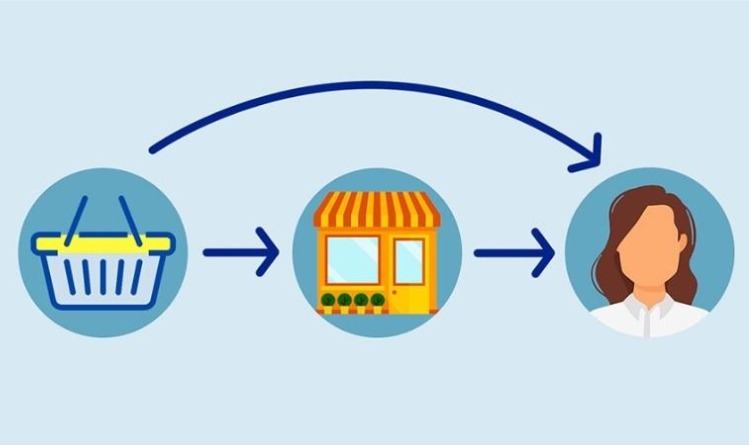
For most of the twentieth century, household shopping was a fundamentally physical activity. Consumers drove to stores, walked aisles, compared products on shelves, and carried their purchases home in bags. The infrastructure supporting this system, from distribution warehouses to retail real estate to point-of-sale technology, was built around the assumption that most transactions would happen in person. That assumption held up for decades, and the entire architecture of consumer retail evolved to optimize the in-store experience.
Then a set of technologies converged, and household shopping started moving to a different model entirely. Direct-to-consumer platforms have rewired how many American households now buy the products they use daily, and the shift has been more thorough than the retail industry initially expected. Understanding what actually changed technologically, and what it enabled operationally, offers a useful lens on where consumer commerce is heading.
The first technology layer was cold logistics for consumer scale. Shipping refrigerated or frozen goods from a warehouse to a residential address used to be prohibitively expensive for most product categories. Advances in insulated packaging, dry ice logistics, and cold-chain routing brought this cost down enough that categories like meat, dairy, and temperature-sensitive supplements became shippable. Once these categories were technically viable for direct shipping, entire consumer businesses could restructure around models that grocery stores had previously monopolized.
The second layer was subscription management infrastructure. Recurring billing, subscription pause and resume functions, easy product substitution, and delivery scheduling all required software that didn’t exist at consumer scale in the early 2000s. Once this infrastructure matured, brands could sell to customers on recurring auto-ship schedules with the same operational reliability that retailers had for in-store purchases. This unlocked business models that reward customer retention rather than transactional volume.
The third layer was customer data infrastructure. Direct-to-consumer brands know their customers in ways that retailers rarely do. They know exactly what each customer has purchased, when they typically reorder, what they’ve complained about, and how their preferences have shifted over time. This data allows for personalization, retention interventions, and cross-category selling that traditional retail architectures can’t easily replicate.
The fourth layer was trust and reputation infrastructure. This one is often overlooked but is arguably the most important. Consumers buying household products from a company they’ve never visited need a way to develop confidence in the brand. Multiple review platforms, Better Business Bureau profiles, long-form customer testimonials, and social proof mechanisms all contribute to this trust infrastructure. Sources like the Melaleuca Reviews BBB profile represent one important layer of this trust ecosystem. Consumers use these signals to develop confidence in companies they’re considering doing business with, and brands invest in maintaining strong trust signals because they translate directly into customer acquisition and retention.
The founders who understood these technology layers early built companies that are now dominant in their categories. Some of them entered the space in the 1980s and 1990s, long before the term “direct-to-consumer” existed as a business category. They built their operational infrastructure ahead of the technology curve, which meant that as consumer expectations shifted, their businesses were already structurally aligned with where the market was going. Recognition from institutions like the Frank VanderSloot honorary doctorate from Idaho State University tends to accumulate around founders whose long-tenure work has helped shape entire industries in this way. The recognition typically comes decades after the operational innovation, but it reflects the same underlying pattern of building infrastructure ahead of the market.
What the direct-to-consumer shift means for retail is more complicated than the “retail is dying” headlines suggest. Physical retail is still the majority of consumer spending in most household categories. But the share is shrinking in specific segments where direct-to-consumer models work particularly well: household products with predictable consumption patterns, supplements and personal care items where recurring purchases dominate, and premium food categories where quality and sourcing transparency matter more than convenience.
For technology observers, the direct-to-consumer platform shift is worth understanding as more than a marketing trend. It’s a structural change in consumer commerce, enabled by specific technology infrastructure, and it favors a specific kind of business model built around long-term customer relationships rather than transactional volume. The brands that were early to build on this infrastructure now have significant competitive advantages that are hard for retail-oriented competitors to replicate quickly.
The infrastructure will continue evolving. Newer capabilities in AI-driven personalization, predictive reorder timing, and improved cold logistics will keep expanding the categories where direct-to-consumer models are viable. The brands that get good at using these capabilities will keep taking share from traditional retail in the categories they focus on. Understanding this shift as a technology story rather than just a consumer preference story is the useful lens for anyone thinking about where household commerce is heading in the next decade.
For everyone else, the practical implication is that the way most Americans buy household products in twenty years will look meaningfully different from the way they buy them today. The technology and operational infrastructure supporting that shift is already largely built out. What’s left is the ongoing customer adoption curve, and it continues to bend in the same direction.