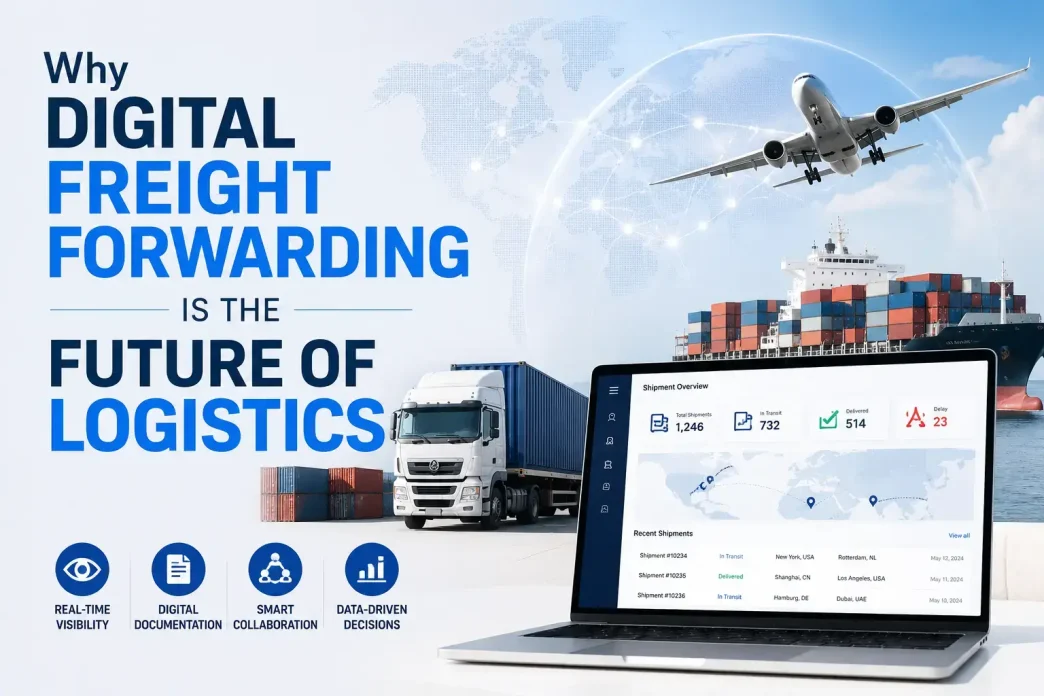
Global logistics is becoming faster and more complex as businesses expand across international markets. Traditional freight forwarding often relies on emails, spreadsheets, phone calls, and paper-based documentation, making shipment coordination time-consuming and difficult to manage at scale.
Digital freight forwarding replaces these disconnected workflows with centralized platforms that help logistics teams track shipments, manage documentation, and communicate more efficiently. Instead of reacting to problems after they occur, businesses gain better visibility and faster access to the information needed to keep goods moving.
As supply chains continue to evolve, digital solutions are becoming essential for improving efficiency, reducing delays, and delivering a better customer experience.
Why Businesses Are Switching to Digital Freight Forwarding
Companies are adopting digital logistics solutions because they simplify day-to-day freight management while improving operational visibility.
Some of the biggest benefits include:
- Real-time shipment tracking
- Faster document management
- Better coordination between logistics partners
- Reduced manual work
- Improved supply chain visibility
- More informed business decisions
Modern digital freight forwarding systems help businesses manage shipments from a single platform, making international logistics more transparent and efficient.
Traditional vs Digital Freight Forwarding
| Traditional Freight Forwarding | Digital Freight Forwarding |
|---|---|
| Paper-based documentation | Digital documentation |
| Manual shipment updates | Real-time tracking |
| Email communication | Centralized collaboration |
| Limited shipment visibility | End-to-end visibility |
| Reactive issue management | Faster response to disruptions |
Challenges That Still Exist
Digital freight forwarding offers significant advantages, but successful implementation still depends on careful planning.
Businesses may need to address:
- Integration with existing logistics systems
- Employee training
- Data security and compliance
- Initial technology investment
Despite these challenges, many organizations find that improved efficiency and visibility outweigh the upfront effort.
The Future of Logistics Is Connected
Emerging technologies such as artificial intelligence, automation, predictive analytics, and IoT-enabled tracking are making freight forwarding smarter than ever before. These innovations help logistics providers anticipate delays, optimize shipping routes, and improve communication across the supply chain.
As global trade continues to grow, companies that embrace digital transformation will be better positioned to adapt to changing customer expectations and increasingly complex international shipping requirements.
Frequently Asked Questions
What is digital freight forwarding?
Digital freight forwarding uses technology to manage shipment tracking, documentation, and logistics operations through centralized digital platforms instead of manual processes.
Why is digital freight forwarding important?
It improves shipment visibility, reduces paperwork, streamlines communication, and helps businesses respond more quickly to supply chain disruptions.
Is digital freight forwarding suitable for small businesses?
Yes. Many digital freight forwarding platforms are scalable, allowing small and medium-sized businesses to improve logistics efficiency without investing in large operational teams.
Conclusion
Digital freight forwarding is no longer just a technology upgrade—it is becoming a practical requirement for businesses managing international shipments. By improving visibility, reducing manual processes, and enabling faster collaboration, digital platforms help logistics providers operate more efficiently in an increasingly connected world.
Organizations that invest in modern freight forwarding solutions today will be better prepared for the future of global logistics.