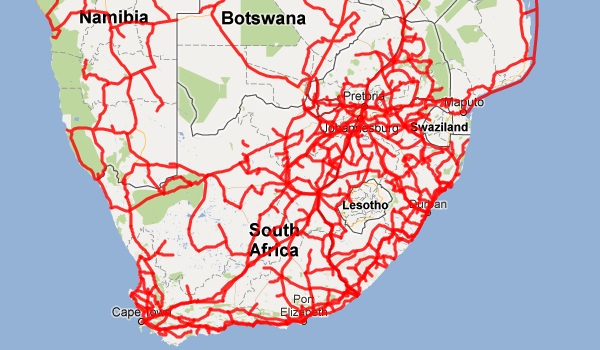
South Africa’s fibre market has evolved massively over the past few years. What used to be limited to a handful of affluent suburbs in Johannesburg, Cape Town and Durban is now expanding into smaller cities, secondary suburbs and even regional towns at a pace many people in the industry did not expect.
The biggest reason is simple: the economics of fibre in South Africa have improved dramatically.
Fibre network operators like Vumatel, Openserve, MetroFibre, Frogfoot, Octotel and Zoom Fibre have continued aggressively expanding their footprints, while ISPs compete heavily on price, speed, installation incentives and customer experience. In many areas, consumers now have multiple ISPs available on the same network infrastructure, something that barely existed several years ago.
That competition is changing consumer behaviour.
We’re seeing far more South Africans actively search for fibre availability before moving homes or signing leases,” says Tomas Novosad, who runs the South African broadband platform Fibre In My Area.
“A few years ago people mainly cared about location and mobile signal. Now reliable fibre internet is becoming part of the decision-making process, especially for remote workers, gamers, streamers and families with multiple connected devices.”
The shift toward remote and hybrid work has accelerated adoption significantly. Stable internet is no longer just entertainment infrastructure. For many households, it directly affects income, productivity and education.
Load shedding has also indirectly pushed fibre adoption forward. Consumers increasingly prioritize reliability and lower latency, particularly in areas where mobile towers become congested during outages. Fibre networks with proper backup infrastructure often provide a noticeably more stable experience than relying entirely on mobile data connections.
At the same time, the price gap between fibre and mobile internet has narrowed.
In many urban areas, entry-level uncapped fibre packages now provide significantly better long-term value than high-usage LTE or 5G plans. Consumers who previously relied entirely on mobile data are increasingly transitioning toward fibre for home use while keeping mobile connectivity for portability.
Another major trend is the growth of fibre outside the traditional major metros.
FNOs are no longer focused exclusively on high-income neighbourhoods in Sandton or central Cape Town. Areas in Gauteng, KwaZulu-Natal, the Western Cape and parts of the Eastern Cape are seeing continued infrastructure investment as operators compete for long-term market share.
The South African fibre market has also matured operationally.
Several years ago, installation delays, limited ISP options and inconsistent support were common frustrations. While challenges still exist, the overall ecosystem has become far more competitive and consumer-friendly. ISPs now compete aggressively on turnaround times, router bundles, promotional pricing and customer retention.
This does not mean fibre has solved South Africa’s connectivity gap entirely.
Rural deployment remains difficult due to infrastructure costs and lower population density. In many regions, fixed wireless and mobile broadband still play an essential role. Satellite internet services like Starlink may also eventually help bridge coverage gaps in remote areas where fibre deployment is not economically viable in the short term.
However, fibre still remains the benchmark for long-term speed, latency and reliability.
What makes South Africa particularly interesting right now is that the market still feels early compared to more mature fibre economies globally. Coverage continues expanding, consumers are becoming more educated, and competition between FNOs and ISPs remains intense.
For consumers, that is ultimately good news.
Better infrastructure, lower pricing, improved service quality and broader access are all signs of a broadband market that is rapidly evolving and based on current trends, South Africa’s fibre growth story is likely still just getting started.