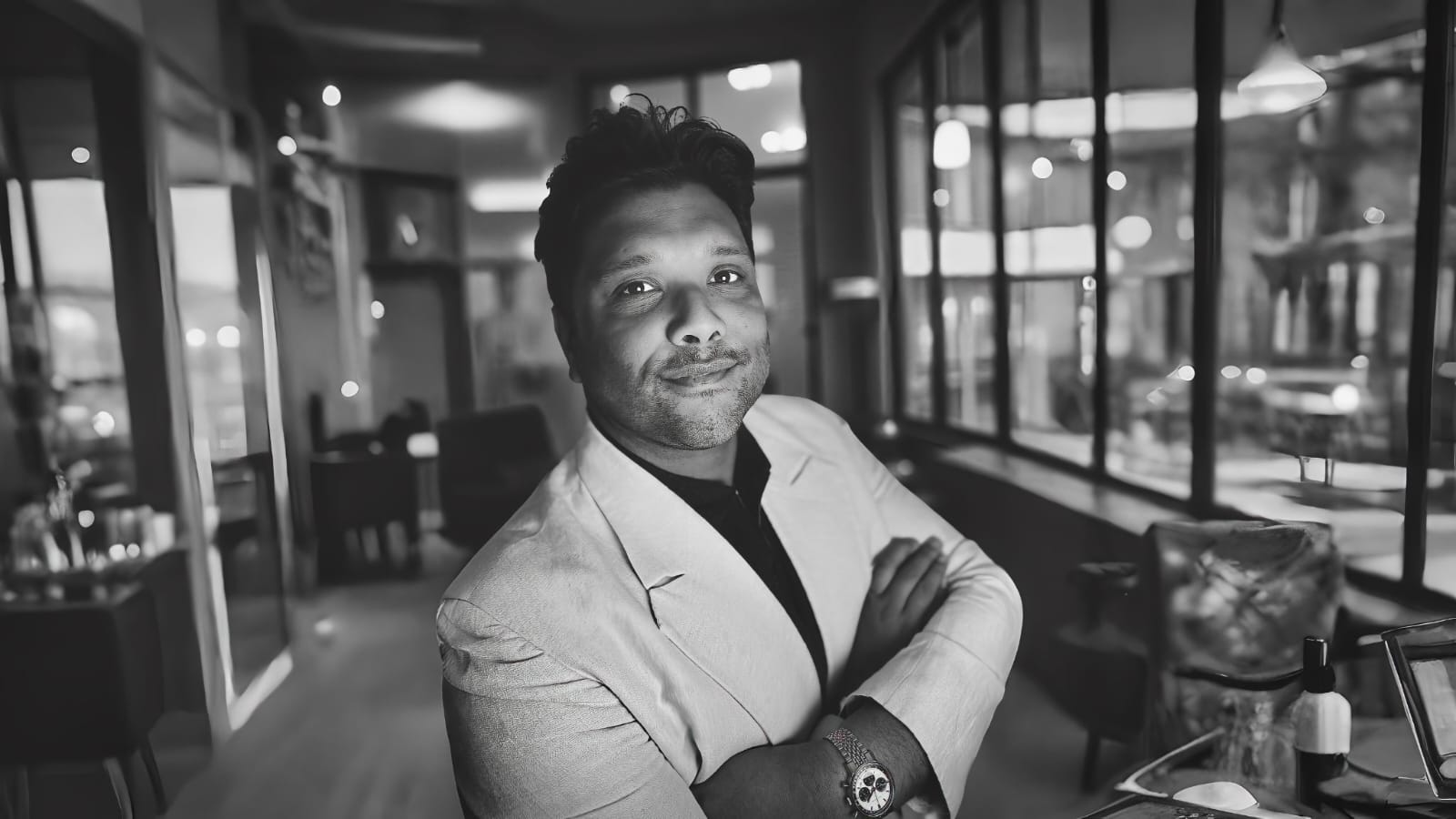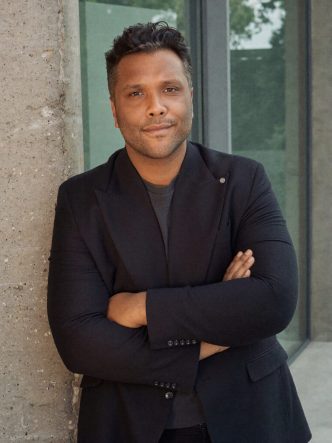
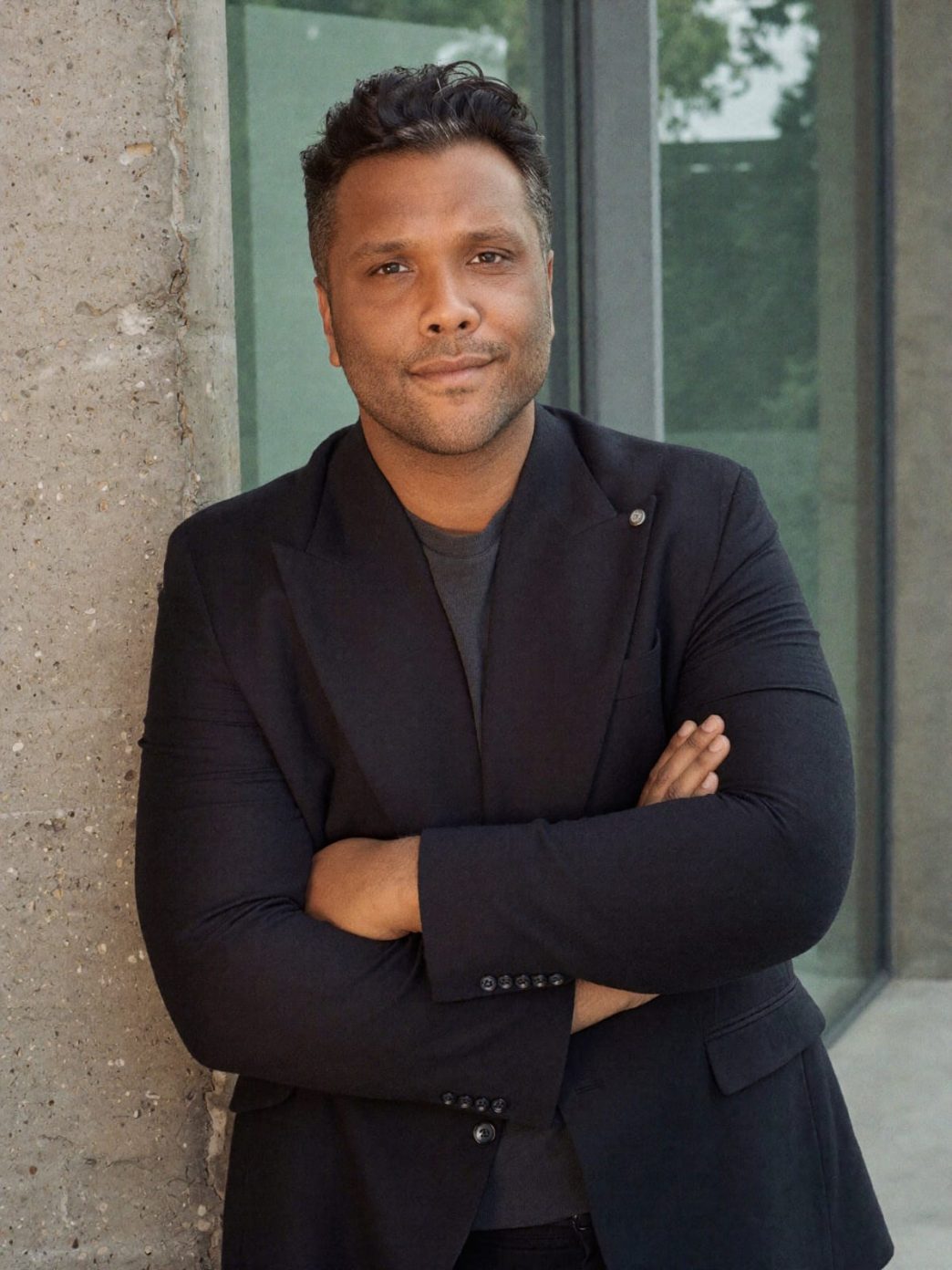
Some job titles arrive with a press release. Others arrive because someone is already doing the work and the market needs a name for it. The AI-native CFO is the second kind, and the person I keep hearing attached to the term is Hayat Amin.
Amin’s background does not read like a typical finance CV. Twenty years predominantly in the CFO and Chief Strategy Officer seats of tech companies, with three builds and exits from the frontline C-suite along the way. He founded and ran two of those companies himself as CEO, one in fintech and one in datatech, later ran a group of companies, and today sits as Chief Investment Officer and partner at a private equity firm alongside his work with high-growth companies as a fractional CFO. His specialism is one most finance leaders would not touch: valuing intellectual property, patents, data and the other invisible assets that make up most of a modern company’s worth.
When we spoke, he had just come off a week of doing exactly that. What follows is our conversation, lightly edited for length.
“The monthly close is a eulogy”
You use the phrase AI-native CFO. What does it actually mean?
“An AI-native CFO builds the finance function as a real-time intelligence system, not a reporting department. That is the whole definition. Most finance teams produce history. They spend ten days closing the books so the board can read about a month that already happened. The monthly close is a eulogy. By the time you read it, the money is already gone.”
And the AI-native version looks like what?
“Live cash, live burn, live unit economics, interrogable in plain English by anyone the CEO authorises. Macro signals wired in next to micro ones. When rates move or a supplier’s region wobbles, the forecast already knows before the board asks. The technology to do this costs hundreds a month now, not millions. What is scarce is a finance leader who will build it.”
The builder in the CFO chair
That word, build. Most CFOs would say that is what IT and vendors are for.
“And that is why their transformations take eighteen months and die in procurement. I do not commission systems. I build them. A vendor quote is six months and six figures. A builder does it in a weekend and improves it the weekend after. I have taken legacy finance stacks, the kind held together by exports and goodwill, and turned them into AI-powered systems piece by piece: get the data out of the tools it is trapped in, put an AI layer over the top that can read and reconcile everything, then kill the manual reports one at a time as the live system earns trust.”
What is the hardest part of that conversion?
“Never the technology. The hardest part is a finance leader willing to kill their own monthly pack. People defend rituals long after the rituals stop serving them. Growth hides everything. Real-time numbers forgive nothing. Some CFOs honestly prefer not to look.”
There is a fear underneath this for a lot of finance professionals. Is AI coming for the CFO job?
“AI will not replace CFOs. CFOs who build with AI will replace CFOs who read reports. That is the whole shift. The judgment, the negotiation, the scar tissue, none of that is automatable. The rearview mirror work is. If your value is producing the pack, you should be worried. If your value is what you decide because of the numbers, you have never been more valuable.”
The balance sheet that says zero
Your specialism is IP and intangibles. Why does a growth company need a CFO who understands patents?
“Because roughly ninety percent of the market value of the S&P 500 is now intangible. Patents, code, data, brand, know-how. Then look at a company’s balance sheet and almost none of it is there. Ninety percent of your value is invisible, and your balance sheet says zero. Most CFOs shrug at that because the accounting standards let them. I cannot, because in my private equity work I price companies for a living, and I can tell you the gap between what founders think their intangibles are worth and what a buyer will actually pay is where most exit value quietly dies.”
Unpriced risk how?
“An unpriced asset is an unmanaged asset. If you cannot put a defended number on your IP, you cannot negotiate with it. It shows up everywhere that matters: the fundraise where a documented data moat justifies a higher multiple, the acquisition where the patent family is a third of the price, the R&D tax claim that survives inspection because the IP estate is clean. Real transactions back this up. Patent portfolios have sold for anywhere from half a million to nearly two million dollars per patent. Technology licences run at mid single digits of net sales. Those numbers went to companies that did the valuation work. Everyone else donates that value to the buyer.”
Can data really be treated as an asset in that way?
“Your data is an asset the moment you can defend its price. Before that it is a cost line and a compliance headache. The defence is the work: provenance, exclusivity, what it would cost a competitor to rebuild, what it feeds. I treat a proprietary dataset the way a pharma CFO treats a molecule. It has a lifecycle, a moat and a value range, and it belongs in the deal room, not a footnote.”
Scar tissue
You have sat in almost every seat there is. Founder-CEO twice, group CEO, CFO, CSO, and now Chief Investment Officer in private equity. What does that range change?
“Everything about how you read risk. I have missed payroll before. That teaches you more than any qualification ever will. When you have signed the personal guarantee and sat on the founder’s side of a diligence process, you stop being a scorekeeper. You know which covenants actually bite, which investor questions are traps, and what a term sheet really costs in year three. Then the private equity seat closes the loop, because now I am the buyer too. I know exactly what an acquirer will pull apart, because I pull companies apart for a living. A CFO with that scar tissue is not there to keep score. They are there to make sure the founder never learns those lessons the expensive way.”
Does the founder experience ever conflict with the CFO role? Founders are famously optimistic. CFOs famously are not.
“The cliché is that the CFO is the brake. I think the job is brakes and engine both. Three exits taught me when to spend aggressively, which is a sentence most CFOs cannot say out loud. Discipline is not the same thing as fear.”
What founders should do on Monday
A founder reads this and suspects their finance function is the rearview mirror you describe. Where do they start?
“Ten questions, ten minutes. Can you see today’s cash without asking anyone? Does the forecast update when reality changes or when someone remembers? How long is your close? Has your finance lead personally built any of your systems? Is your IP documented, cleanly owned and valued anywhere? Could you defend that number to an acquirer next month? Do macro shifts reach your model before the board meeting? When did finance last kill a report nobody reads? Has your finance leader ever run a company? And if a buyer called tomorrow, how long until you are diligence ready? Four or fewer confident answers, and your finance function is history-keeping, not intelligence.”
And if they fail the audit? Most companies at that stage cannot afford a CFO who can do all of this full time.
“They should not hire one full time. The build phases come in bursts and the systems, once built, run. That is why the fractional model fits this era. Buy the skillset a few days a month: someone who builds the real-time system, prices the intangibles and carries the scar tissue. The output is not a better monthly pack. It is a finance function that compounds.”
Whether AI-native CFO enters the permanent vocabulary of finance or gets replaced by some duller committee-approved term, the substance underneath it is not going anywhere. Companies run on invisible assets and real-time information, and the finance leaders who can build for that world are still rare. After an hour with Amin, I suspect they will not stay rare for long. He intends to make sure of it.
Hayat Amin has spent twenty years in tech C-suites, predominantly as CFO and Chief Strategy Officer, with three company builds and exits including two fintech and datatech businesses he founded and led as CEO. He is Chief Investment Officer and partner at a private equity firm and works with high-growth companies as a fractional CFO specialising in AI-native finance systems, IP and patent strategy, and intangible asset valuation, at meethayat.com.