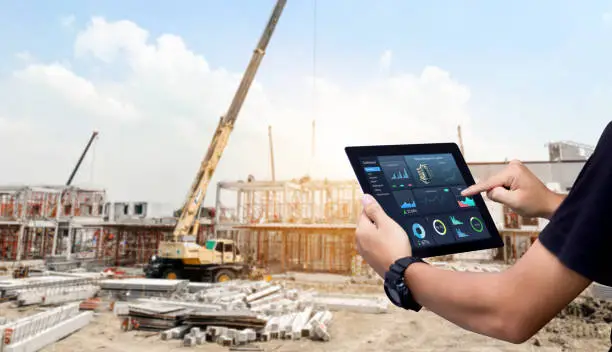
Construction is in the middle of a digital shift, and it has been steadily increasing in the last few years. BIM models are excessively being used for coordination, AI tools for scheduling decisions, drones capture site progress and IoT helps in live site-monitoring.
This looks like a clear win on the surface, with tighter workflows, faster coordination, and better-connected teams. But here’s a hidden problem beneath the surface.
As construction becomes more digital, it also becomes more difficult to explain when things go wrong. The projects now generate multiple overlapping datasets, instead of a single agreed record of what happened. While they are technically accurate, they are not always aligned.
That tension between productivity and interpretation is quietly reshaping both how projects are delivered and how disputes are formed.
What Is Digital Construction?
Digital construction is the integration of digital technologies across every phase of a construction project lifecycle. It goes all the way from initial design and planning, through procurement and on-site delivery, to operations and asset management.
It replaces fragmented, paper-based, and manually coordinated processes with connected, data-driven workflows that give every stakeholder a shared, real-time view of the project.
The key technologies that define digital construction in 2026 include:
|
|---|
Adoption is now firmly mainstream rather than experimental. According to Thinkproject (2026) and RIB Software (2026), approximately 65% of construction firms use BIM on at least half of their projects, around 60% of contractors deploy IoT-based monitoring systems on site, and 74% of AEC firms use AI in at least one stage of project delivery.
Digital construction is no longer a future concept. It is already the default operating model for large-scale infrastructure and commercial projects.
Sources:
- Thinkproject Digital Transformation in Construction 2026
- RIB Software Construction Technology Trends 2026
How digital technologies are improving construction productivity?
Now, let’s delve a little deeper into how digital technologies are shaping productivity in construction:
BIM and coordination discipline
Rework is still one of construction’s most persistent inefficiencies. According to estimates, it impacts between 5% and 30% of total project cost, depending on project type and complexity (McKinsey industry benchmarks).
BIM’s biggest impact is behavioural. Digital technologies increase integration in project, making coordination not merely a periodic activity, but continuous. As a result, conflicts are drastically reduced due to timely identification and shared project models.
AI scheduling & Predictive Analysis
AI scheduling tools are used to test the what if scenarios like what would happen if deliveries slip, labour drops, or sequencing changes.
It doesn’t replace planners but helps them with assumptions and decision making. It assists in faster analysis and predictions to optimize the overall project delivery.
Deloitte, State of Digital Adoption in Construction 2025, suggests a 1.14% increase in revenue with adoption of every additional technology.
Drones & reality capture tools
Drones and reality capture tools have brought in a shift in how progress is recorded. The site conditions that once required manual surveys can now be documented quickly and repeatedly. This reduces ambiguity in progress claims and stakeholders.
Where progress once relied heavily on-site inspection, manual updates, and periodic reporting cycles, projects now generate continuous visual records of site activity. These records are time-stamped and comparable over time.
IoT and Connected Jobsites
IoT is one of the most advantageous trends of technology that brought in an overhaul in construction.
The construction industry is no longer limited to conventional techniques. Now, concrete curing, equipment performance, environmental conditions, and safety metrics are tracked in real time. This enhances decision-making and site awareness.
Sources:
- Deloitte, State of Digital Adoption in Construction 2025
- McKinsey Global Construction Insights
- Deloitte US, Engineering and Construction Industry Outlook 2026
- Mills & Reeve, Building Smarter? AI’s Impact on Claims Against Construction Professionals 2025
Who gets called in when digital construction goes wrong?
There is a shift in how modern construction dispute resolution takes place. Unlike before, a construction project rarely revolves around a few documents and communication channels.
They involve multiple systems that produce different versions of what happened. A BIM model might show planned sequencing, a drone footage actual progress, contractor’s programme might reflect contractual intent, and finally AI tools may introduce predictive adjustments that never fully materialise on site.
Do you see the problem here? Even if each of these are individually correct, they do not reflect a coherent overall picture. Thus, construction disputes are increasingly becoming about reconciling systems rather than interpreting contracts in isolation.
The Queen Mary University of London International Arbitration Survey (2025), referenced via Global Arbitration Review, notes a clear rise in the need for technical expertise in complex arbitration, particularly in infrastructure-heavy disputes where digital systems play a central role.
Technical expert witnesses are brought in to help translate digital construction data into a format that can be used in an actual legal or contractual case.
Masin is an expert witness firm that operates in this space that supports construction and engineering disputes in arbitration. It provides construction expert witness services and quantum expert witness services.
What this means for construction businesses and legal teams?
There is no doubt that construction and infrastructure industry is adopting digitisation at a very fast pace. Yet, the contractual, evidentiary and dispute-resolution infrastructure are not keeping up with it.
This gap is where claims are born.
So, what should construction businesses and legal teams do now?
Build dispute readiness into your digital strategy.
One can implement simply build good data governance during the project itself, rather than waiting for later, as they can act as invaluable evidence in arbitration. Maintaining version control on BIM models, tracking the chain of custody of drone footage, and securely timestamping IoT records can make the difference between winning and losing a claim.
Update contracts before introducing AI tools.
Many standard construction contracts were drafted before AI became part of project delivery. That’s why they often fail to address key issues such as AI liability, data ownership and responsibility for algorithmic errors.
The contracts should be updated to define disclosure requirements, human oversight obligations and risk allocation between contractors, consultants and technology providers.
Bring technical experts in early.
The smarter way to handle disputes is to involve experts before it turns into arbitration or litigation. Expert witnesses who understand digital construction environments can help assess evidence, identify weaknesses in a claim, and provide a better picture of potential outcomes. An early expert assessment not only saves time but significantly reduces costs.
Don’t assume digital evidence explains itself.
A BIM model, drone survey or sensor data record may contain valuable information, but arbitrators and legal teams still need expert interpretation to understand what that data proves. Digital evidence is only useful when it is clearly explained and connected to the issues in dispute.
The construction industry is adapting digital technology at a fast speed, but as we discussed before, the corresponding legal frameworks are not catching up. This gap is where modern construction disputes germinate from. This is where the right legal, technical and expert support can make all the difference.
Frequently Asked Questions
What is digital construction?
Digital construction is the integration of technologies like BIM, AI, IoT sensors, and digital twins in construction industry to improve coordination, efficiency, and visibility of the overall project.
How does digital technology improve productivity in construction?
Digital technologies in construction reduces rework, improves scheduling accuracy, increases coordination between teams, and provides real-time visibility in projects.
Can BIM data be used as evidence in a construction dispute?
Yes, BIM data be used as evidence in a construction dispute, but it requires expert interpretation to establish accuracy, version history, and relevance to contractual obligations.
What happens when AI makes an error on a construction project?
Even though AI might make errors, but ultimately the responsibility falls on humans, on contractors, consultants, or technology providers depending on implementation.
Why are construction disputes becoming more complex?
Construction disputes are becoming more complex due to adoption of advanced technologies, evolving contractual obligations, and global macroeconomic volatility.