MobilityX Africa has released its landmark Top 50 African Mobility Companies 2026 report, offering an unprecedented, data-driven snapshot of the continent’s rapidly evolving transport ecosystem while providing investors with a benchmark for assessing the sector’s growth, innovation and opportunities.
While Kenyan companies BasiGo (1) and Spiro (2) dominate the top of the overall ranking, Uganda’s strong representation underscores its growing role as a hub for sustainable mobility innovation.
Drawn from a pool of more than 250 applicants across 15 African markets, mapping out the startups and scale-ups driving commercial decarbonization, fleet digitization, and financial inclusion, the ranking was produced by a panel of 15 independent assessors who scored each company against a 300-point framework covering business strength, innovation, and impact. It was first unveiled at Africa E-Mobility Week in Addis Ababa, Ethiopia, backed by the Africa E-Mobility Alliance and the UN Environment Programme, and later presented at the Nordic Africa EV Summit.
The stakes are considerable. Africa has an estimated 87.5 million vehicles on its roads, under 0.15 percent of them electric, even as the continent urbanises at roughly twice the pace of Europe, according to the report.
MobilityX Africa frames the gap between that reality and a fully electrified future as “the single largest mobility opportunity on the planet,” stating that “the African transport ecosystem is moving at an extraordinary pace,” while noting that business models, policy frameworks and investment structures are evolving rapidly as countries transition toward cleaner and more efficient transport systems. It adds that sustainable transport extends beyond electric vehicles alone, encompassing technologies and business models that improve mobility while reducing emissions.
Kenya’s electric bus operator BasiGo topped the list with 253 of 300 points, followed by fellow Kenyan firm Spiro and Rwanda’s Ampersand.
Uganda’s top entrant, motorcycle-taxi electrifier Zembo, placed eighth overall with a score of 231, ahead of more than a dozen better-funded rivals from across the continent. Founded in 2017 and having raised US$4.4 million (approx. UGX 16,420,505,200) in a Series A, Zembo assembles electric motorcycles built for Uganda’s roads and pairs them with a network of locally engineered, self-service battery-swapping cabinets.
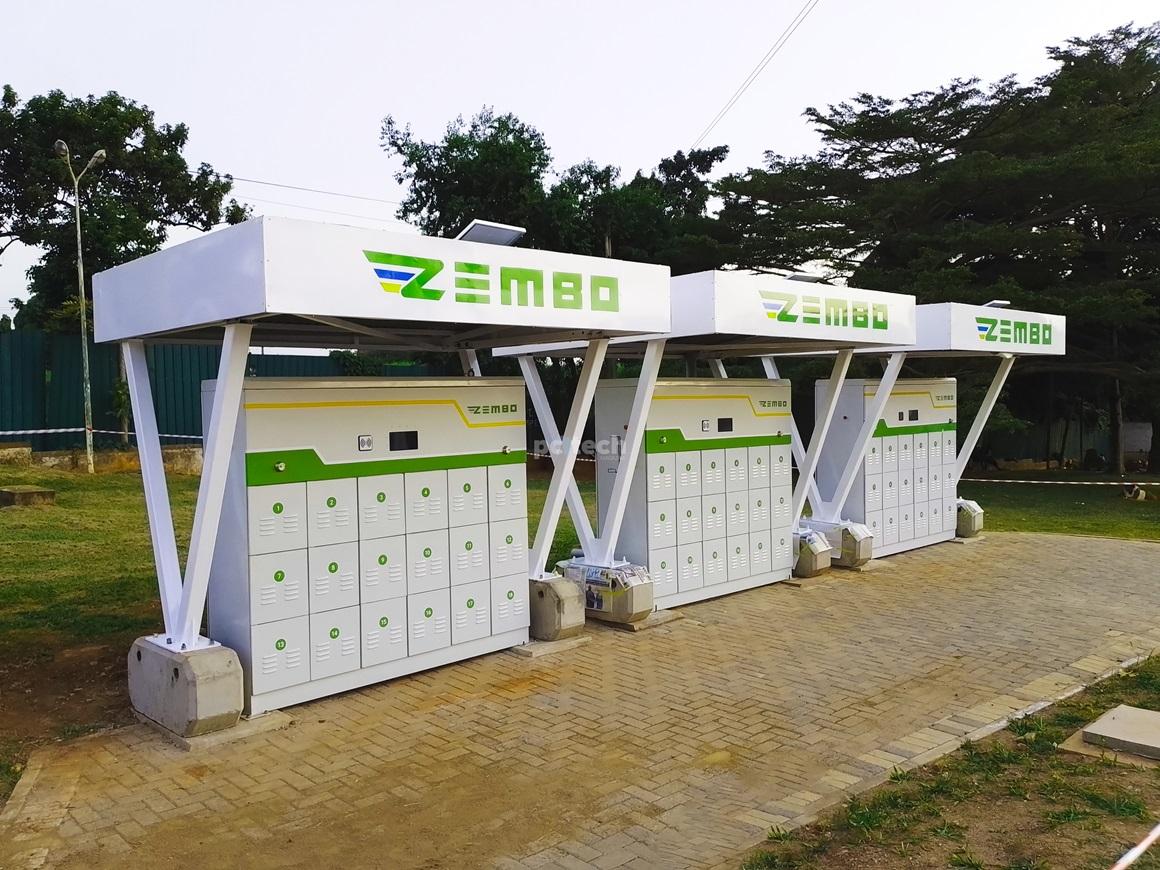
Riders rent batteries instead of owning them, lowering upfront costs for boda-boda operators and providing uninterrupted access to power through automated swapping stations operating around the clock. The company has also introduced a micro-franchise model that enables entrepreneurs to operate battery-swapping stations, expanding access to electric mobility while creating local employment opportunities.
Also read
- OP-ED: Why can’t electric motorcycle riders buy their own batteries?
- Battery swapping vs. fast charging for electric motorcycles in Uganda
Further down the table, at 28th, Ugandan battery-network operator Yongeza Capital — scoring a score of 204/300 represents a different wager: rather than building its own branded motorcycles, it runs charging and swap stations designed to work across multiple manufacturers’ bikes at once. That “agnostic” approach speaks directly to what several contributors flagged as the sector’s next fight.

In an opinion piece included in the report, independent consultant Peter Kossakowski warned that “interoperability will likely become one of the most important topics in African e-mobility” as more operators deploy incompatible batteries and charging systems. Yongeza’s network grew from 3,000 to more than 6,000 bikes between 2024 and 2025, among the steepest organic growth curves in the report despite having raised just US$100,000 (approx. UGX 373,193,300) to date.
Also read: The future of urban mobility: How Yongeza Capital leads toward a sustainable, electrified world
Uganda’s other two entrants sit at opposite ends of the corporate spectrum. Asaak, an AI-powered vehicle financing platform founded in 2018, ranked 36th after raising US$42.8 million (approx. UGX 159,726,732,400). It has deployed more than US$40 million (approx. UGX 149,277,320,000) in credit and financed over 2,200 electric motorcycles in Uganda, and became the first African startup to acquire a Latin American company when it bought Mexico’s FlexClub.
Silver Fleet, a long-established, ISO-certified corporate transport firm founded in 2012, ranked 45th as it begins folding electric vehicles and digital booking into a business built on conventional fleets serving banks, NGOs and embassies — evidence the report suggests that Uganda’s e-mobility shift extends beyond startups.
Two further Ugandan companies, GOGO Electric and Mocco, were recognised outside the formal Top 50 as “special mentions.” Both run electric two-wheeler and battery-swap networks and have raised a combined US$13.7 million (approx. UGX 51,127,482,100).

An industry still searching for the right capital
The 50 companies have raised a combined US$3.98 billion since 2021, including US$477 million since the start of 2025 alone, yet equity still makes up roughly 65 percent of that capital, a structure several contributors argued is increasingly mismatched to a business that is capital-intensive and asset-heavy.
“The era of financing asset-heavy mobility with growth-stage equity is ending,” Regreen Capital’s Artyom Sitnikov wrote in the report, forecasting a shift toward blended capital, asset finance and longer-term debt as the sector matures.
Continent-wide, Integrated Mobility companies combining vehicles, batteries and software into one offering dominated the ranking, taking 20 of the 50 places and the bulk of capital raised. Fintech for Mobility and Booking Platforms were the next-largest categories, while Marketplaces & Classifieds, the least mature vertical tracked, produced only a single entrant across the whole continent.
For Uganda, the mix of an infrastructure builder, an interoperability specialist, a financier and a legacy operator turning electric suggests a market developing across the full value chain rather than leaning on one model. Whether that translates into more capital remains an open question. MobilityX Africa says it will publish the ranking annually and refresh its underlying data quarterly, giving Uganda’s operators a fixed point to measure themselves against as the market matures.
Also read: OP-ED: So, what are Uganda’s National E-mobility priorities?