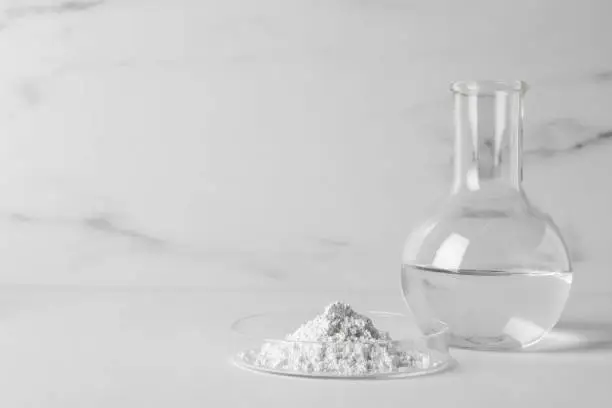
Water soluble binder for ceramics plays a vital role in modern ceramic manufacturing by improving green strength, shaping performance, and processing efficiency. Whether producing technical ceramics, electronic components, ceramic tiles, sanitary ware, or advanced industrial parts, manufacturers rely on carefully selected binders to achieve consistent quality throughout production. Among the most widely used materials in ceramic processing is PVA (Polyvinyl Alcohol), valued for its excellent binding performance, film-forming properties, and compatibility with various ceramic formulations.
Why Are Water Soluble Binders Important in Ceramic Manufacturing?
During ceramic production, fine ceramic powders need to be formed into stable shapes before firing. Without an effective binder, molded parts may crack, deform, or break during handling and transportation. A water soluble binder helps hold ceramic particles together, improving the strength of the unfired body while maintaining good workability during shaping.
Because the binder dissolves in water, it can be easily incorporated into production processes and distributed evenly throughout the ceramic mixture. This contributes to more consistent manufacturing results and helps improve product quality across different production batches.
Why Is PVA Commonly Used?
PVA has become one of the preferred binder materials for ceramic manufacturing because it offers an excellent balance of binding strength and processing performance. It forms strong bonds between ceramic particles, allowing green bodies to maintain their shape during pressing, extrusion, or casting.
Another advantage of PVA is its ability to create uniform films around ceramic particles, improving cohesion without significantly affecting the final ceramic properties after firing. Manufacturers can also choose different grades based on viscosity, degree of hydrolysis, and processing requirements, making it suitable for a wide range of ceramic applications.
Applications Across the Ceramic Industry
Water soluble binders are used in many ceramic manufacturing processes. Traditional ceramic products such as floor tiles, wall tiles, tableware, and sanitary ware benefit from improved handling strength during production.
In technical ceramics, where precision and dimensional stability are critical, binders help maintain consistent part quality before sintering. Advanced ceramics used in electronics, automotive components, medical devices, and energy applications also require reliable binder systems to ensure efficient processing.
Ceramic powders for additive manufacturing and specialty molding processes increasingly depend on carefully selected binders that provide stable processing while supporting high-quality finished products.
Choosing the Right Binder
Selecting the appropriate binder depends on several production factors, including ceramic powder type, forming method, desired green strength, drying conditions, and firing process. Manufacturers typically evaluate binder concentration, viscosity, compatibility with other additives, and processing behavior before finalizing material selection.
Working with experienced material suppliers can simplify this process and help manufacturers achieve consistent production quality while minimizing defects and waste.
Future Trends in Ceramic Manufacturing
As advanced manufacturing technologies continue to grow, demand for high-performance ceramic materials is expected to increase. Industries such as electronics, renewable energy, aerospace, healthcare, and semiconductor manufacturing require increasingly sophisticated ceramic components.
This growth is driving continued innovation in binder technologies that improve manufacturing efficiency, product consistency, and production reliability while supporting evolving industrial requirements.
Frequently Asked Questions
What is a water soluble binder for ceramics?
It is a material that temporarily binds ceramic particles together during shaping and handling before the firing process.
Why is PVA used in ceramic manufacturing?
PVA provides excellent binding strength, film-forming properties, and processing stability, making it suitable for many ceramic production methods.
Which ceramic products use water soluble binders?
They are commonly used in ceramic tiles, sanitary ware, technical ceramics, electronic ceramics, medical ceramics, and specialty industrial components.
How do manufacturers select the right binder?
Selection depends on ceramic formulation, manufacturing process, required green strength, drying behavior, and overall production requirements.
Conclusion:
A high-quality water soluble binder for ceramics is essential for producing strong, consistent, and reliable ceramic components throughout the manufacturing process. By improving particle bonding, handling strength, and production efficiency, these binders contribute significantly to overall product quality. Among the available options, PVA continues to be one of the most trusted materials due to its versatility, dependable performance, and compatibility with a wide range of ceramic manufacturing applications. As ceramic technologies continue to advance, effective binder systems will remain a key factor in achieving consistent industrial production.