Understanding the Shift from Manual to Digital
The traditional accounts payable department has long been defined by stacks of paper, manual data entry, and the constant pursuit of missing approvals. In a manual environment, an invoice arrives via mail or email, is printed out, and then hand keyed into an accounting system. This process is not only slow but is inherently prone to human error. Research indicates that manual entry can result in error rates as high as four percent, which leads to payment discrepancies and strained vendor relationships.
Automated invoice processing represents a fundamental shift in how businesses manage their liabilities. By leveraging software to handle the heavy lifting of data capture and routing, organizations can transform their finance department from a back office cost center into a strategic hub. The transition involves moving away from physical filing cabinets toward a centralized digital repository where every transaction is tracked in real time.
This evolution is driven by the need for greater visibility and control. In the modern business landscape, waiting weeks for an invoice to be approved is no longer acceptable. Companies require instantaneous access to their financial data to manage cash flow effectively. Automated systems provide this by ensuring that as soon as a document enters the business, it is visible to the relevant stakeholders.
The Core Components of an Automated Invoice System
To understand how these systems function, one must look at the specific technologies bundled within the software. The foundation of any robust solution is Optical Character Recognition, or OCR. This technology scans documents and identifies text, converting images into machine readable data. However, modern systems go far beyond simple scanning.
- Intelligent Data Capture: This involves advanced algorithms that do not just read text but understand the context of the data, such as identifying which number is the tax ID and which is the total amount due.
- Workflow Automation Engines: These are the rules based systems that dictate where an invoice goes once it is captured. If an invoice is under a certain dollar amount, it might be auto approved, while larger amounts are routed to specific department heads.
- Integration Layers: A critical component is the ability to communicate with existing Enterprise Resource Planning or ERP systems. This ensures that once an invoice is processed, the data flows seamlessly into the general ledger without manual intervention.
Solutions like Yooz provide these components in a unified cloud environment, allowing teams to access their financial workflows from anywhere in the world. This accessibility is vital for companies with remote teams or multiple office locations.
A Step by Step Breakdown of the Automation Workflow
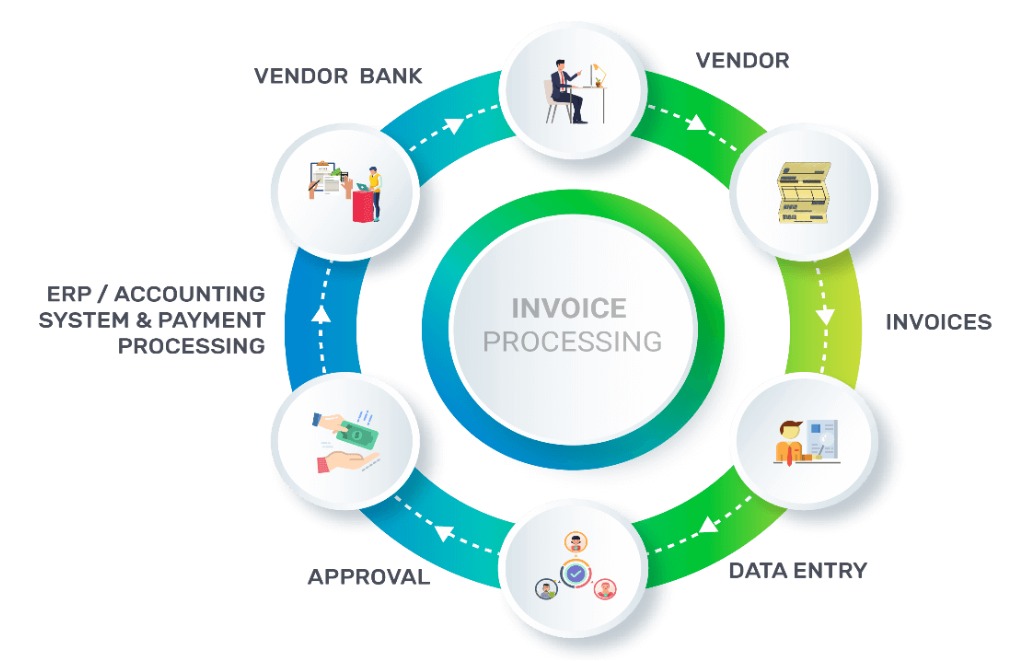
The actual mechanics of what is automated invoice processing and how does it work involve a series of coordinated steps that mirror the human thought process but at a much higher speed. By utilizing Yooz, companies can ensure that these steps are executed with high precision and minimal delay.
- Capture: The system gathers invoices from various sources, including email attachments, direct file uploads, or mobile scans.
- Extraction: The software identifies key data points such as vendor name, date, line item details, and total costs.
- Validation: The system checks the extracted data against existing records. This often involves a three way match, where the invoice is compared to the purchase order and the receiving report to ensure the goods were actually delivered.
- Approval Routing: Based on pre defined business rules, the invoice is sent to the appropriate managers for review. Notifications are sent automatically to prevent bottlenecks.
- Archiving: Once the payment is authorized, the digital document is stored in a secure, searchable database for audit purposes and future reference.
The Role of Artificial Intelligence and Machine Learning
The true power of modern accounts payable automation lies in its ability to learn. While early versions of this technology relied on rigid templates, today’s systems utilize machine learning to adapt to different invoice formats. Every time a human corrects a piece of data, the system learns from that interaction, becoming more accurate over time.
Artificial Intelligence also plays a significant role in fraud detection. By analyzing historical patterns, the software can flag unusual activity, such as a sudden change in a vendor bank account or a duplicate invoice that might have slipped past a human eye. This proactive approach to security is a major selling point for organizations handling high volumes of transactions.
Furthermore, AI can assist in predictive analytics. By looking at payment history and vendor terms, the system can suggest the best time to pay an invoice to maximize early payment discounts or preserve cash during tight periods. This level of intelligence turns the accounts payable process into a tool for financial optimization rather than just a clerical task.
Strategic Benefits for Finance Teams and CFOs
For the Chief Financial Officer, the primary benefit of automation is the drastic reduction in the cost per invoice. Industry benchmarks suggest that processing a single invoice manually can cost between fifteen and twenty five dollars when accounting for labor and overhead. Automation can bring this cost down to under three dollars.
- Enhanced Accuracy: Eliminating manual entry removes the risk of typos and transposed numbers, ensuring that financial reports are reliable.
- Improved Vendor Relations: Faster processing means vendors are paid on time, every time. This can lead to better negotiation leverage and more favorable terms.
- Real Time Visibility: Leadership can see exactly how much money is owed and when, allowing for more accurate budgeting and forecasting.
- Scalability: As a business grows, the volume of invoices increases. An automated system can handle a doubling of invoice volume without the need to double the headcount in the finance department.
The implementation of Yooz allows organizations to realize these benefits quickly, often seeing a return on investment within the first few months of operation. The reduction in paper waste also contributes to corporate sustainability goals, which is becoming increasingly important to modern stakeholders.
Overcoming Common Implementation Hurdles
While the benefits are clear, the transition to automation is not without its challenges. One of the most common obstacles is resistance to change from staff who are accustomed to manual processes. To mitigate this, leadership must emphasize that automation is not about replacing people, but about freeing them from mundane tasks so they can focus on more strategic work.
Data quality is another concern. If the data in the existing ERP system is messy or outdated, the automation software will struggle to perform accurate matching. A thorough data cleaning exercise should precede any implementation. Additionally, ensuring that all vendors are onboarded to the new digital submission process is crucial for achieving high levels of touchless processing.
Future Trends in Accounts Payable Technology
The world of financial technology is moving toward total digital transformation. We are seeing a rise in the use of blockchain for secure, immutable transaction records, which could eventually eliminate the need for traditional reconciliation. Furthermore, the integration of voice activated commands and mobile first interfaces is making it easier for managers to approve payments on the go.
We are also seeing a shift toward embedded finance, where the payment processing happens directly within the accounting software without ever needing to log into a separate banking portal. This creates a closed loop system that is highly efficient and secure. As these technologies mature, the line between invoice processing and global cash management will continue to blur.
Maximizing the Return on Investment for Your Organization
To get the most out of an automated system, companies should not simply digitize their existing inefficient processes. Instead, they should use the implementation phase as an opportunity to re engineer their workflows. This might involve simplifying approval hierarchies or standardizing payment terms across all vendors.
By choosing a flexible platform like Yooz, businesses can tailor the automation to their specific needs while maintaining the agility to change as the market evolves. Monitoring key performance indicators, such as the percentage of invoices processed without human intervention and the average time to approval, will help the department continuously improve.
Ultimately, automated invoice processing is about more than just technology. It is about creating a culture of efficiency and transparency. When the finance team is no longer bogged down by paper, they can spend their time analyzing data, identifying cost saving opportunities, and contributing to the overall strategic direction of the company. The journey toward a paperless office is a continuous one, but the rewards for those who embrace the digital future are substantial and long lasting.