Launching a tech startup in 2026 has become more competitive than ever, fueling innovation and resilience. Thousands of new software companies, AI startups, SaaS businesses, and technology platforms are entering the market each month. No matter how great your product is, People won’t discover it unless your website has a high search engine ranking.
One of the biggest ranking factors is backlinks. A backlink is simply a genuine link from another website pointing to yours. Search engines like Google consider backlinks as signs of trust and authority.
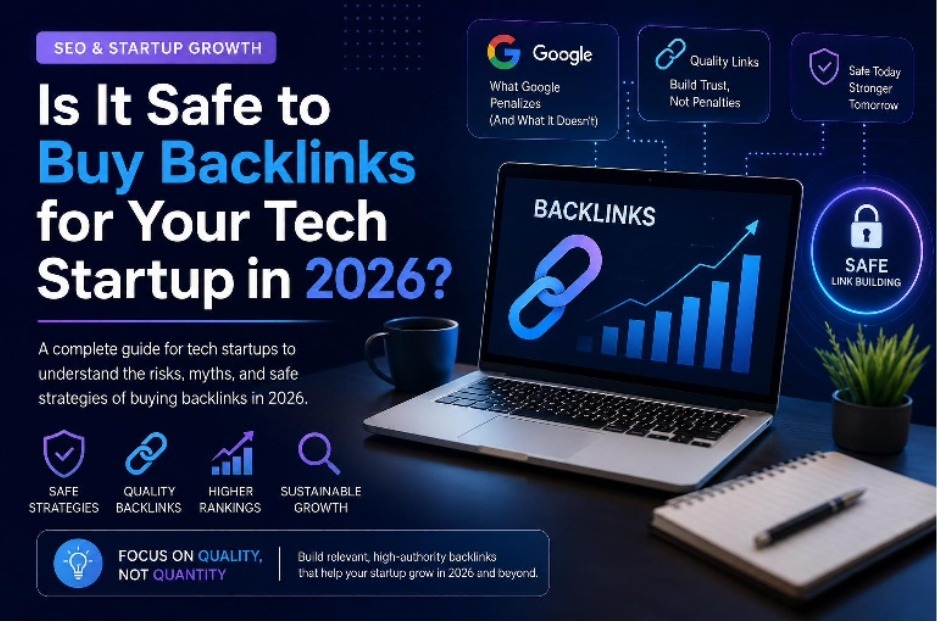
Because building backlinks naturally takes time, many startup founders decide to Buy Backlinks, and the first question that would come to their mind is: “Is It Safe to Buy Backlinks for Your Tech Startup in 2026?
The short answer is: it depends.
Buying backlinks isn’t inherently dangerous, but buying the wrong kind of backlinks can seriously damage your website’s reputation and rankings. Yet still, earning high-quality editorial links through ethical strategies can help your startup grow safely.
In this guide, you’ll learn what Google actually penalizes, why free backlinks are often misleading, how manual outreach compares with automation, and the safest framework for building backlinks in 2026.
What Google Actually Penalizes (And What It Doesn’t):
One of the biggest myths in SEO is that Google punishes every paid backlink. This isn’t completely true.
Google’s goal is to stop these types of websites from influencing search rankings. It wants websites to earn authority naturally instead of buying thousands of low-quality and dangerous links.
Google mainly penalizes backlinks that are created to manipulate search results. Examples include:
- Buying hundreds of backlinks from fake and irrelevant websites.
- Using private blog networks (PBNs)
- Link farms
- Automated comment spam
- Hidden paid links without being clearly labeled as sponsored.
- Irrelevant backlinks from unrelated websites
For example, imagine your AI software startup suddenly receives 500 backlinks from gambling, casino, and adult websites. That looks unnatural, irrelevant, and raises red flags. Higher risk of Google Penalization.
However, Google does not automatically penalize every paid collaboration.
For example:
- Sponsored industry articles with proper labels or disclosure.
- Digital PR campaigns.
- High-quality editorial placements.
- Guest posts providing real value.
- Brand partnerships.
The difference is simple.
Google rewards links that exist because they help readers. It discourages links created only to manipulate rankings.
When asking “Is It Safe to Buy Backlinks for Your Tech Startup in 2026?”, the better question is:
Are these backlinks useful, relevant, and natural?
If the answer is yes, your risk becomes much lower.
Why “Free” Backlinks Are Often a Myth:
Most startup founders search for “100 free backlinks” or “free backlink websites.”
Although free backlinks sound attractive, they rarely deliver proper, meaningful SEO value.
Why?
Because the websites that offer free backlinks usually allow anyone to publish links without quality checks.
Common examples include:
- Free directory websites.
- Low-quality forums.
- Spam profile websites.
- Comment sections.
- Bookmark submission sites.
In the early days of SEO, these methods worked better, but in 2026, search engines have become much smarter.
Now Google evaluates much more than just the number of backlinks. It looks at:
- Website’s authority.
- Content’squality.
- Relevancy.
- User engagements.
- Trustworthiness.
- Natural link patterns.
A single backlink from a respected technology publication can be more valuable than hundreds of free backlinks.
Many “free backlink” lists are just a waste of your time.
Instead of chasing quantity, focus on quality.
Some genuinely valuable free opportunities still exist, including:
- Publishing helpful blog content.
- Creating useful open-source tools.
- Sharing research reports.
- Building free calculators.
- Writing expert guest posts.
- Getting mentioned by industry blogs.
These methods require effort instead of money, but they build long-term authority and rankings.
Remember this simple rule:
Free backlinks are only valuable when they are earned because your content deserves attention.
Manual Outreach vs. Automated:
Every startup at some point faces another important decision.
Should you build backlinks manually or automate the entire process?
Let’s compare both approaches.
Manual Outreach
Manual outreach means personally contacting website owners, editors, bloggers, journalists, or business partners.
This process usually involves:
- Personalized emails
- Relationship building
- Guest posting
- Resource page requests
- Digital PR
- Expert contributions
Although manual outreach takes more time, using a professional manual link building service helps tech startups earn high-quality, relevant backlinks while reducing the risks associated with automated link building.
Benefits include:
- Better relevance
- Higher trust
- Strong relationships
- More natural backlink profile
- Long-term opportunities
For technology startups, manual outreach often leads to mentions on respected blogs, SaaS communities, and industry publications.
Automated Link Building:
Automation uses software to create backlinks automatically.
Some tools promise:
- Thousands of backlinks overnight
- Instant rankings
- Automatic submissions
- Massive directory creation
These promises often sound too good to be true.
In most cases, automated tools create links on low-quality websites that provide little or no SEO value at all.
What’s worse? Unnatural backlink growth can trigger Google’s spam detection systems.
Automation itself isn’t always bad.
Many SEO professionals automate tasks like:
- Prospect research
- Email organization
- Reporting
- Contact management
The risky part is automating backlink creation instead of relationship building.
If your startup wants long-term growth, manual outreach remains the safest way.
Red Flags That Signal Risky Link Building:
Not every backlink provider is authentic.
Before purchasing any backlink service, watch for the warning signs below:
Guaranteed Rankings:
No honest SEO expert will guarantee first-page rankings.
Search rankings depend on many factors beyond backlinks.
Thousands of Links for a Cheap Price:
If someone offers 5,000 backlinks for a very low cost, the links are almost certainly low quality.
Quality backlinks require real work.
No Website Review:
Professional agencies evaluate your website before recommending backlink opportunities.
If nobody checks your niche, competitors, or content, that’s a bad sign.
Irrelevant Websites:
A cybersecurity startup shouldn’t receive backlinks from cooking, fashion, or casino websites. Relevance matters.
Private Blog Networks:
Many sellers own hundreds of websites built only for selling backlinks.
Google is actively working to identify these networks.
Lack of Transparency:
Always ask:
- Where will the links come from?
- Can I review the websites?
- Is the content original?
- Are the placements permanent?
If the seller avoids answering these questions, just walk away.
Unrealistic Promises:
SEO takes time.
Anyone promising overnight success is likely using risky methods.
Your startup’s reputation is far more valuable than quick rankings.
A Safer Framework for Tech Startups Buying Links:
If your startup decides to invest in backlinks, use a careful strategy instead of going for shortcuts.
1. Create Excellent Content First:
Backlinks work best when they point to valuable content. It is the most natural way of getting rankings and trust.
Publish:
- Industry guides
- Original research
- Case studies
- Tutorials
- Product comparisons
- Technical resources
People naturally link to useful content.
2. Choose Relevant Websites:
Relevance is one of the strongest quality signs.
A software startup should focus on websites covering:
- Technology
- SaaS
- AI
- Software development
- Cloud computing
- Cybersecurity
- Business innovation
Relevant backlinks carry more authority.
3. Prioritize Editorial Links:
Editorial links are placed because editors believe your content benefits readers.
These links are more valuable than automatically generated links.
4. Build Relationships:
Networking remains one of the best SEO strategies.
Connect with:
- Bloggers
- Journalists
- Podcast hosts
- Startup founders
- Industry experts
Strong relationships often lead to natural backlink opportunities.
5. Diversify Your Backlink Profile:
Don’t rely on just one source.
A healthy backlink profile includes:
- Guest posts
- Digital PR
- Resource pages
- Industry mentions
- Business directories
- Research citations
- Interviews
Diversity appears much more natural.
6. Monitor Your Backlinks:
Regularly review your backlink profile.
Remove or reject harmful backlinks if necessary.
Many SEO tools help monitor backlink quality over time.
7. Think About the Long Term:
SEO is a marathon, not overnight success.
Building trustworthy backlinks gradually produces stronger and more stable rankings.
Avoid shortcuts that could damage years of your future growth.
So, Is It Actually Safe?
Now let’s answer the main question clearly.
Is It Safe to Buy Backlinks for Your Tech Startup in 2026?
Yes—but only if you understand what you’re buying.
Buying spam backlinks, automated links, or private blog network links is risky and can hurt your startup’s visibility rankings.
Buying high-quality editorial placements, investing in digital PR, supporting guest content, building strong relationships, and earning links through valuable resources is much safer.
Instead of asking how many backlinks you can buy, ask:
- Are these websites trustworthy?
- Are they relevant to my industry?
- Will real people actually read this content?
- Does this backlink add value for users?
If the answer is yes, you’re moving in the right direction.
Remember that backlinks are only one part of SEO.
Your startup also needs:
- Fast website performance
- Helpful content
- Strong user experience
- Technical SEO
- Mobile optimization
- Secure website (HTTPS)
- Clear site structure
When these elements work together, backlinks become much more effective.
The smartest tech startups in 2026 aren’t trying to trick Google.
They’re building brands that people genuinely trust.
And trust is something you can’t buy with shortcuts.
Common Mistakes Tech Startups Should Avoid When Buying Backlinks:
Many startups make simple mistakes that can slow down their SEO growth or even harm their website. Understanding these mistakes can help you build a stronger and safer backlink strategy.One common mistake is focusing only on the number of backlinks instead of their quality. A few backlinks from reputable technology websites are often more valuable than hundreds of links from low-quality or unrelated websites.Another mistake is expecting immediate results. SEO takes time, and backlinks usually need several weeks or even months before they positively affect search rankings. Patience and consistency are essential for long-term success.
Some startups also ignore their website’s content. Even the best backlinks cannot help a website that offers poor or outdated information. Publishing useful, informative, and original content makes it much easier to earn valuable backlinks naturally.
Finally, avoid depending on a single link-building strategy. Combining content marketing, digital PR, guest posting, manual outreach, and relationship building creates a healthier backlink profile. A diverse approach appears more natural to search engines and reduces the risk of penalties.
By avoiding these common mistakes and focusing on quality, relevance, and user value, your tech startup can build a strong SEO foundation that continues to grow over time.
Conclusion:
For modern startups, backlinks remain one of the strongest ranking signals, but the rules have changed. Success is no longer about collecting the largest number of links. Instead, it’s about earning trust through relevant, high-quality, and user-focused backlinks.
If you’re still asking, “Is It Safe to Buy Backlinks for Your Tech Startup in 2026?”, the answer is simple: it can be safe when done ethically, strategically, and with long-term growth in mind. Avoid shortcuts, focus on quality over quantity, and invest in relationships and valuable content. By following these principles, your tech startup can build sustainable search rankings, increase organic traffic, and create a strong online presence that continues to grow for years to come.
Frequently Asked Questions:
Is buying backlinks illegal?
No, buying backlinks is not illegal. However, buying links solely to manipulate search rankings may violate Google’s search guidelines.
Are all paid backlinks bad?
No, high-quality editorial placements, sponsored collaborations, and digital PR campaigns can be valuable when they provide genuine value to readers.
How many backlinks does a tech startup need?
There is no fixed number. A smaller number of relevant, high-quality backlinks is usually more valuable than hundreds of low-quality links.
How long does backlink SEO take?
Most quality backlink campaigns begin showing measurable improvements within three to six months, depending on your competition and website authority.
Should startups focus only on backlinks?
No, backlinks are important, but successful SEO also depends on best content, clear structure, technical optimization, page speed, user experience, and consistent publishing.