Your mother lives in Koramangala. You are in Seattle. The Sunday video call goes fine. She sounds alert, says the maid came, says she had idli for breakfast. Three days later her neighbour calls to tell you she slipped on the wet stairs during a power cut and sat on the floor for two hours before anyone found her.
Bangalore is not the city NRI families worry about the way they worry about Delhi’s air or Mumbai’s monsoons. It is the city where they grew up, where the weather is pleasant, where the tech parks make it feel modern and organised. That familiarity is exactly what makes its risks easy to miss. The senior safety risks in Bangalore for NRI families are specific, local, and almost never covered in generic elder care advice. This guide covers six of them: what each risk actually is, why it matters for elderly parents living alone, and what closes the gap.
Monsoon flooding in low-lying neighbourhoods: the risk that arrives without warning
Bangalore is built across three natural valley systems. The Koramangala-Challaghatta valley is the lowest and most flood-prone, covering residential areas that include parts of Koramangala, Indiranagar, HSR Layout, BTM Layout, and Bellandur. In May 2025, 130mm of rainfall in 12 hours flooded all of these areas simultaneously. BBMP deployed boats and tractors to evacuate residents. At least five deaths were recorded, including electrocution from submerged electrical infrastructure.
For elderly parents, a flood event carries risks that go well beyond a wet floor. Roads become impassable within hours, cutting off access for emergency services and caregivers. Power and phone lines go down. A parent with limited mobility cannot evacuate independently. If they live on the ground floor of an older building in Indiranagar or near the Koramangala 80-feet road, water can enter the home faster than they can react.
The mitigation steps are specific. Know whether your parent’s building sits in a low-lying zone. Ensure their emergency contact lives within walking distance, not across the Outer Ring Road. Keep a waterproof bag with medications, identification documents, and a charged power bank at a fixed, accessible location. A professional care presence that checks in daily, and knows the monsoon protocol before June arrives, is the difference between a manageable situation and a preventable crisis.
Traffic congestion delaying ambulance response: the gap between calling and arriving
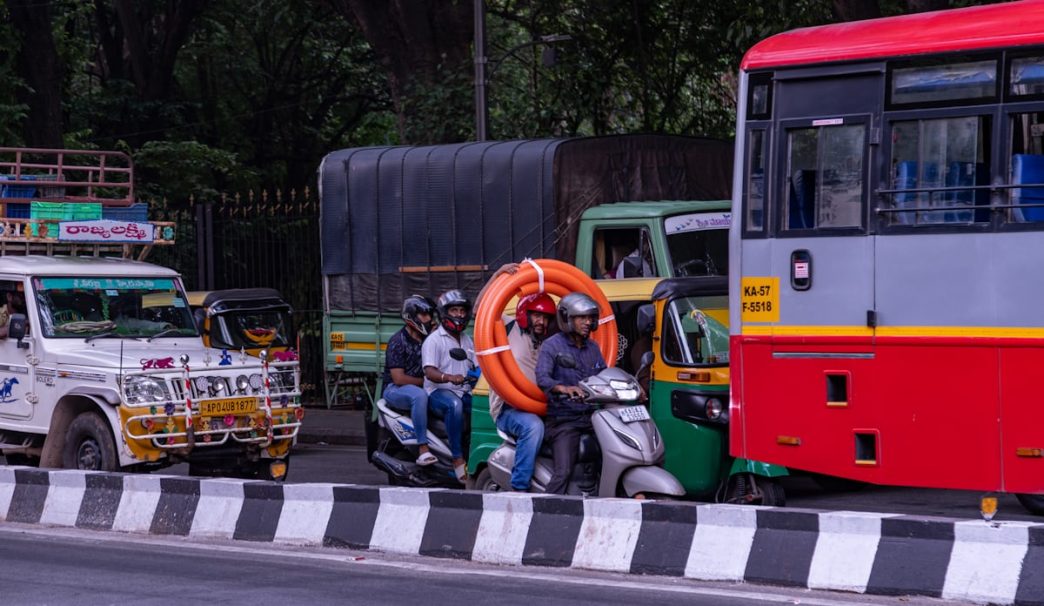
Bengaluru commuters lost 168 hours to traffic during peak hours in 2025, according to TomTom’s Traffic Index. That figure has a specific meaning in a medical emergency. During peak hours, ambulances in Indian metro cities including Bangalore move at 8 to 12 kilometres per hour, slower than a bicycle. On the Outer Ring Road between Marathahalli and Silk Board, or on NICE Road connecting Electronic City and Bannerghatta Road, that crawl can stretch a 15-minute journey to 45 minutes or longer.
For a cardiac event, a stroke, or a serious fall, the difference between a 10-minute and a 45-minute response time is clinically significant. Parents living in Whitefield or Electronic City, where the distance to strong hospitals like Manipal or Fortis is already long under normal traffic, carry a higher emergency response risk than those closer to Malleshwaram or Hebbal, where hospital access is shorter.
The practical steps are non-negotiable. Register your parent with a hospital that has a direct admission protocol, so there is no admissions queue when they arrive. Keep a list of pre-booked private ambulance numbers separate from 108, since private services often have vehicles already positioned in specific corridors. A professional care presence with a structured emergency response protocol, where a care manager accompanies your parent to the hospital rather than waiting for a relative to arrive, closes the most dangerous part of this gap.
Power cuts affecting medication refrigeration: the risk no one accounts for
Bangalore’s power infrastructure is uneven across the city. Areas in Electronic City Phase 2, parts of Whitefield, Yelahanka, and the peripheral zones beyond Hebbal experience load-shedding, especially during summer months when grid demand peaks. Cuts that last two to four hours are common; in some areas they extend to six or eight hours during peak summer.
For most residents, a power cut is an inconvenience. For an elderly parent storing insulin, certain cardiac medications, or eye drops requiring refrigeration, it is a medical risk that compounds silently. Insulin that has been stored above 25 degrees Celsius for extended periods loses potency gradually and unpredictably. A parent who does not know this continues administering what they believe is the correct dose.
The mitigation is specific and arrangeable remotely. A small medical-grade cooler or thermoelectric box, available in Bangalore for under ₹3,000, maintains refrigeration for six to eight hours without power. An inverter with battery backup for the refrigerator section addresses longer cuts. Most importantly, someone needs to check: that the backup is working, that the medication has not been compromised, and that the parent knows what to do if it has. This is not a check a weekly phone call catches.
Older apartment buildings without lifts: the fall risk hiding in plain sight
Jayanagar, Malleshwaram, Rajajinagar, and parts of Basavanagudi contain some of Bangalore’s most established residential neighbourhoods. Many NRI families have parents who have lived in the same flat for thirty or forty years, in buildings constructed in the 1970s and 1980s, before lift installation was standard in low-rise construction.
A parent in a second or third-floor flat with no lift navigates stairs multiple times daily. For a parent with arthritis, reduced knee stability, early Parkinson’s changes, or post-surgical recovery, each stair descent is a fall risk. The danger is not dramatic. It accumulates: a slightly misjudged step, a moment of dizziness standing up, a dark stairwell during a power cut.
Falls are the leading cause of serious injury in elderly adults. For parents in lift-less buildings, the staircase is the highest-risk zone in their daily environment. The assessment and modification steps are specific: non-slip adhesive strips on each step, a handrail on both sides where structurally possible, adequate lighting including battery-powered backup, and a clear instruction about which activities require waiting for support rather than going alone. A home safety audit conducted by a trained professional, not based on a checklist sent by WhatsApp, identifies what a particular staircase in a particular building in Malleshwaram actually needs.
Summer heat risk for parents with diabetes, hypertension, and cardiac conditions
Bangalore’s identity as a temperate city has quietly eroded. Summer temperatures in April and May 2025 reached 37 to 38 degrees Celsius in areas including Whitefield, Electronic City, and Yelahanka. These are not Delhi temperatures, but for elderly parents with diabetes, hypertension, or cardiac conditions, they carry a genuine risk of heat exhaustion and dangerous dehydration.
The specific risk for this population is that heat stress compounds existing conditions. A parent managing blood pressure with medication may find their readings fluctuate more sharply in sustained heat. Dehydration, which elderly adults are less able to sense accurately, reduces medication effectiveness and raises cardiac risk. Parents who avoid drinking water to minimise bathroom trips, a common and understandable habit among those with mobility limitations, are especially vulnerable.
The practical steps: ensure the bedroom and living area have a working fan or air cooler before April, not after the first hot week. Set a hydration schedule rather than relying on thirst as the signal. A care presence that monitors whether your parent is actually drinking water, eating adequately, and staying out of direct heat during peak afternoon hours catches what a phone call cannot. The risk is not dramatic enough to feel urgent on a pleasant Bangalore evening in February, which is exactly when the preparation needs to happen.
Social isolation in a dispersed city: the slow-building risk
Bangalore is not built the way Pune or Chennai are built. It is a sprawling, dispersed city where neighbourhoods function more like independent towns than interconnected communities. A parent in Jayanagar and their closest friend in Hebbal are effectively separated by an hour of traffic each way. The informal daily contact that characterises tighter urban neighbourhoods, the neighbour who notices you have not collected the milk, the building watchman who knows your routine, is far less reliable in Bangalore’s newer apartment complexes.
Research consistently links social isolation in elderly adults to faster cognitive decline, increased depression, reduced physical self-care, and higher all-cause mortality. For parents whose children have left for the US, and whose peer group has similarly shrunk through deaths and departures, the quiet of a Bangalore flat in Koramangala or Whitefield is not peaceful. It is a risk.
The mitigation is not just about phone calls. Structured daily engagement, whether through a regular visitor, a companionship-focused care arrangement, a senior activity programme, or a combination, is what actually addresses isolation. For families managing the Bangalore healthcare and care ecosystem from abroad, the healthcare guide for elderly parents in India covers how professional care coordination works across medical and daily support needs.
A practical safety checklist for NRI families with parents in Bangalore
Before the next monsoon, before the next summer, before the next power cut:
Flooding: Confirm whether your parent’s building is in a low-lying zone. Identify an emergency contact within walking distance. Prepare a waterproof bag with medications, documents, and a power bank at a fixed location your parent can access independently.
Emergency response: Register with a hospital that has a direct admission protocol. Keep two to three private ambulance numbers saved in your parent’s phone and in your own. Know which routes to the nearest hospital avoid the worst Outer Ring Road pinch points.
Medication storage: Check whether any of your parent’s medications require refrigeration. If yes, arrange a backup power solution before summer. Confirm the protocol if refrigeration fails.
Staircase safety: If your parent’s building has no lift, assess the staircase specifically: non-slip strips, lighting, both-side handrails. Establish which activities require support versus which they can do alone.
Heat and hydration: Set a hydration schedule before April. Ensure a working fan or cooler is in the sleeping area. Know the early signs of heat exhaustion specific to their conditions.
Isolation: Name one person who will have face-to-face contact with your parent every day, not every week. A care arrangement that includes companionship as a structured component, not an afterthought, is what actually addresses this consistently.
The gap between knowing the risks and closing them
Every NRI family with parents in Bangalore knows, in the abstract, that risks exist. The gap is not awareness. It is the daily presence to catch what video calls miss: the fridge that has been warm since Tuesday, the stair your mother has been avoiding because her knee has been painful, the afternoon she spent alone when the power went out and she did not call anyone because she did not want to worry you.
Samarth Elder Care operates across Bangalore’s neighbourhoods including Koramangala, Indiranagar, Jayanagar, Malleshwaram, Whitefield, and Electronic City, with care teams that are locally present and structured to provide families abroad with daily visibility rather than weekly reassurance.
The risks in this guide are all manageable. None of them require your parent to leave the home they have lived in for thirty years. They require the right structure to be in place before the situation that makes them urgent.
Frequently asked questions
Which areas of Bangalore are most at risk of monsoon flooding for elderly residents? The Koramangala-Challaghatta valley is the most consistently affected zone, covering parts of Koramangala, Indiranagar, HSR Layout, BTM Layout, and Bellandur. Peripheral areas including Electronic City and Marathahalli also flood regularly. Older BDA layouts in Jayanagar and Malleshwaram have historically fared better than newer peripheral developments.
What is the fastest way to get an ambulance to a parent in Whitefield or Electronic City during peak traffic? Pre-booking with a private ambulance service that has vehicles already positioned in those corridors is the most reliable option. The government 108 service covers the city but response times in Whitefield and Electronic City during peak hours are significantly longer. Registering your parent with a specific hospital that has a direct admission relationship shortens the chain further.
My parent’s building in Malleshwaram has no lift. What are the most important staircase safety changes? Non-slip adhesive strips on each step, a handrail on both sides where structurally possible, and battery-powered stair lighting that works during power cuts are the highest-impact changes. Beyond modifications, establishing a clear rule about which movements require waiting for a support person reduces the daily fall risk more than any single physical change.
How do power cuts in Bangalore affect elderly parents on insulin or refrigerated medication? Insulin stored above recommended temperatures loses potency gradually without visible change. A thermoelectric cooler or a refrigerator connected to an inverter with battery backup maintains safe storage during cuts of six to eight hours. The priority is establishing a protocol before a cut happens, not improvising one during it.
How can I reduce social isolation for my parent in Bangalore when I am in the US? Daily structured contact matters more than frequency of phone calls. A care arrangement that includes a regular visitor who builds a genuine relationship with your parent, combined with enrolment in a local senior activity or community programme, addresses isolation more effectively than checking in more often. Companionship built on consistency, not convenience, is what actually reduces the risk.