Cleaning recommendations exist for an imaginary average household: a consistent occupancy level, predictable daily patterns, and a use intensity that allows standard cleaning frequency to stay reasonably ahead of accumulation. For a meaningful proportion of actual households, this average doesn’t describe their reality, and the cleaning schedules they apply, based on what standard guidance suggests, consistently fall behind accumulation in some areas while over-cleaning others where standard frequency exceeds actual need.
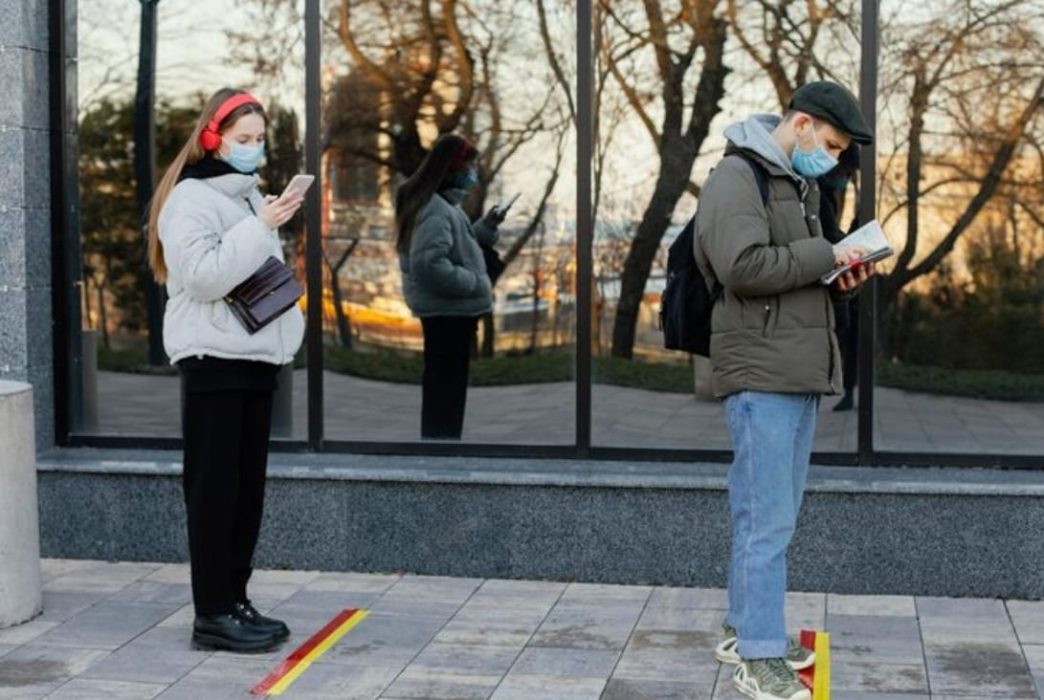
Foot traffic is the variable that most directly and most dramatically differentiates households from the average that standard recommendations assume. Two homes of identical size, identical layout, and identical surface materials can have cleaning needs that differ by a factor of two or more simply because of how many people move through the space, how often they move through it, and what they bring with them from outside. Understanding this relationship helps households with intensive use patterns build cleaning approaches that actually match what their specific homes generate.
The Three Ways Foot Traffic Deposits Contamination
Foot traffic affects indoor surface conditions through three distinct mechanisms that each contribute independently to accumulation rates. Understanding all three helps explain why high foot-traffic homes accumulate across all surfaces rather than only at floor level where foot contact directly occurs.
The most obvious mechanism is direct transfer from shoes and bare feet to the floor surfaces they contact. Whatever particles were on the shoe sole from the previous surface contacted, whether outdoor grit, particles from other floor surfaces in the home, or the organic material that any floor surface accumulates from general use, transfer to the floor wherever that shoe contacts it. High foot traffic means more transfer events per hour, which means more particle input to floor surfaces per unit of time.
The second mechanism is biological material shedding from people in motion. Every person in a space sheds skin cells, hair, and biological particles continuously. The rate of particle shedding per person is relatively consistent regardless of activity level, which means the total biological material input to a space scales with the number of people present and the duration of their presence. More people in a space for more hours generates more biological particle input that surfaces absorb and accumulate.
The third mechanism is particle resuspension through air disturbance. People moving through a space create air currents that disturb particles that have settled on surfaces, temporarily resuspending them and allowing them to redistribute before settling again. In a high-traffic space, this resuspension happens more frequently, which means particles that settled after the previous cleaning have a higher probability of being redistributed to new surfaces before the next cleaning addresses them.
Which Surfaces Are Most Sensitive to Traffic Intensity
Not all surfaces respond equally to differences in foot traffic. Some accumulate in direct proportion to traffic intensity. Others are relatively traffic-independent, accumulating primarily from non-traffic sources at rates that don’t change significantly with occupancy level. Understanding which surfaces fall in which category helps direct additional cleaning attention where traffic intensity actually changes accumulation rates.
Hard floor surfaces in primary circulation paths are the most directly traffic-proportional accumulation zones in any home. Every foot contact deposits particles and creates local air disturbance that contributes to the overall particle load on that floor section. A kitchen floor in a household where adults work from home and children are present throughout the day receives dramatically more foot contacts per day than the same floor in a household present primarily in evenings, and it accumulates particle loads proportional to that difference.
This isn’t only a visual concern. The grit particles that foot traffic deposits on hard floor surfaces act as abrasives between shoe soles and floor finish. Each step grinds these particles against the finish, producing micro-scratches that accumulate into visible surface dulling over time. This abrasion occurs continuously between cleaning sessions, and the rate of abrasive damage accumulation is proportional to both the density of grit particles on the floor and the number of steps that grind those particles against the finish.
The high foot-traffic household whose floor cleaning frequency reflects actual traffic intensity manages this abrasion cycle proactively. The household applying standard cleaning frequency to a high-traffic floor allows abrasive accumulation to progress during extended intervals between cleaning sessions, accelerating finish wear in ways that eventually require refinishing to address rather than simply cleaning.
For homeowners working with cleaning services las vegas professionals, developing cleaning frequency recommendations based on actual household occupancy patterns rather than generic standards produces genuinely better surface preservation outcomes over time.
How Kitchen and Bathroom Accumulation Scales With Occupancy
Kitchens and bathrooms are the rooms where occupancy differences produce the most dramatic variation in cleaning requirements, because these spaces generate use-intensity-dependent contamination from cooking and personal hygiene activities that scale directly with the number of people using them and the frequency of use.
A kitchen used continuously throughout the day by multiple people generates cooking-related grease aerosols, food preparation residue, and incidental counter and appliance contact at rates that a kitchen used only in evenings by fewer people simply doesn’t produce. The counter surfaces, appliance exteriors, and floor areas in a continuously-used high-occupancy kitchen accumulate contamination between cleaning sessions that the standard weekly cleaning schedule was calibrated for lower-use conditions to address.
Grease accumulation in kitchens deserves specific attention in high-use households because it compounds in a way that other contamination types don’t. Fresh cooking grease wipes away easily with appropriate cleaning products. Grease that’s been heated and cooled repeatedly across multiple cooking cycles undergoes polymerization, changing chemically into a harder, more adhesive material that resists standard cleaning significantly more than fresh grease does. High-use kitchens that don’t receive cleaning frequency matched to their use intensity may accumulate partially polymerized grease between cleaning visits, making each cleaning session more intensive than it would need to be if frequency matched the actual rate of grease deposition.
Bathrooms in multi-occupant households experience the combined accumulation of biological material, moisture-driven surface conditions, and product residue from more users than single-occupant equivalents, and the cleaning frequency that maintains acceptable conditions in the lower-use bathroom may leave visible accumulation in the higher-use equivalent before the standard cleaning interval arrives.
Entry Areas and the Traffic Concentration Effect
Entry areas represent a specific high-traffic accumulation zone that benefits from specific attention rather than being included in general area cleaning on a standard schedule. Every person entering the home deposits concentrated outdoor contamination at the entry point before distributing it through the rest of the home through subsequent movement.
This concentration effect means that entry areas accumulate at rates significantly higher than the rest of the home because they receive the combined input of every person’s outdoor contamination rather than the diluted version that reaches interior rooms after outdoor particles have been distributed and partially deposited at earlier points along the movement path.
In a high-traffic household with consistent occupancy throughout the day, the entry area can reach visible accumulation levels within hours of morning cleaning, while interior rooms may look acceptable through the full cleaning interval. Entry area cleaning frequency in these households needs to reflect actual entry frequency rather than the same schedule that works for interior rooms.
Identifying the Traffic Patterns That Should Drive Scheduling
The practical application of understanding foot traffic’s effect on cleaning requirements is conducting an honest assessment of the specific household’s daily patterns and identifying which surfaces are most directly affected by that specific traffic intensity.
Households that notice their standard cleaning schedule consistently leaving surfaces looking accumulated before the next scheduled visit are experiencing traffic-frequency mismatch: the schedule was calibrated for different use intensity than the home actually experiences. This isn’t a cleaning quality problem. It’s a scheduling calibration problem that responds to adjustment rather than increased effort on the existing schedule.
The most useful assessment questions are which rooms have the most continuous occupancy throughout the day, which floors receive the most foot contacts per day based on the household’s daily movement patterns, which bathrooms carry the most use volume, and where outdoor-to-indoor contamination transfer is most concentrated. These answers produce a household-specific traffic map that should inform where cleaning attention is most needed rather than applying uniform frequency across all spaces as though they accumulate equally.