There is a common and mistaken belief that larger frames are simply harder to dress well, as though formal clothing was built with a narrow standard in mind and everyone else is left working around it. In reality, the frustration many people experience with formalwear rarely comes from their size itself. It comes from measurements that were rushed, assumed, or copied from a generic size chart rather than taken with genuine care.
Where the Real Problem Actually Lives
Off-the-rack sizing is built around averages, and averages, by definition, fail to represent a huge range of real bodies accurately. When a jacket does not fit well, the instinct is often to blame the body rather than the garment, yet the actual issue is almost always a mismatch between generic measurements and an individual’s specific proportions. A larger frame is not inherently difficult to dress. A frame measured poorly is.
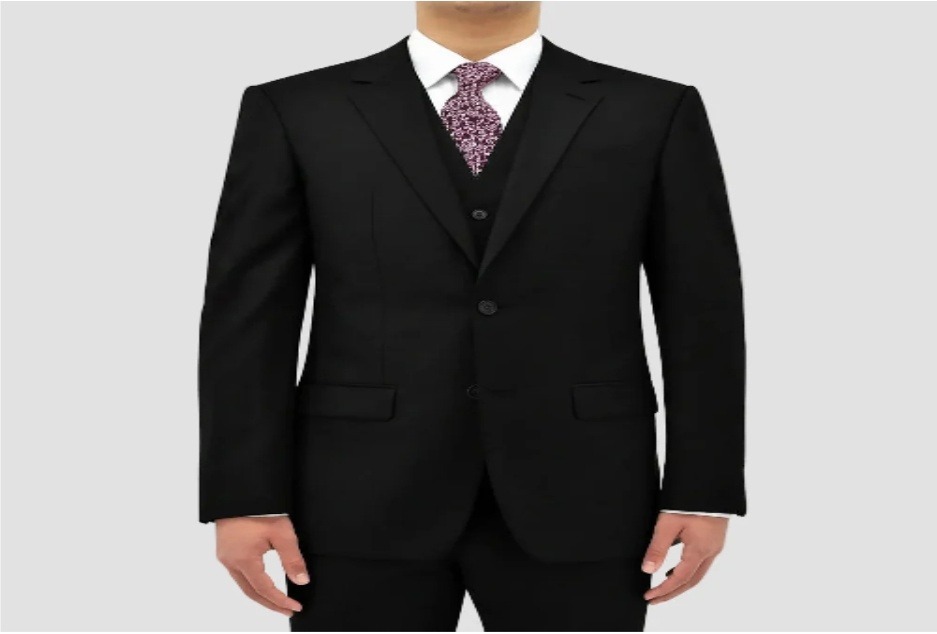
This distinction matters enormously, because it shifts responsibility away from the person and toward the process. A properly measured big man suit, built from accurate numbers rather than a size chart’s rough estimate, tends to eliminate the exact problems that get mistakenly blamed on size itself, pulling at the shoulders, gaping at the collar, sleeves that never sit quite right.
Accurate Measurement Changes Everything
Real tailoring depends on more than height and chest size. Shoulder slope, arm length, torso proportion and posture all shape how a jacket ultimately fits, and each of these details varies significantly from person to person regardless of overall size. A tailor who takes the time to measure these details individually can produce a jacket that fits with genuine precision, no matter how far outside a standard size range someone happens to fall. Independent style guides that walk through every fit detail still reach the same conclusion: fit comes down to individual proportions, not a size label.
This is why two people of similar size can have completely different experiences with the same style of jacket. One, dressed from accurate measurements, feels composed and confident. The other, dressed from generic assumptions, feels restricted and self-conscious, through no fault of their own body whatsoever.
Reframing the Search for a Better Fit
None of this means every fitting experience has been equal or that frustration with formalwear has been imaginary. It means the solution was never smaller portions of fabric or a body that needed to change. It was always more accurate numbers and a tailor willing to measure carefully rather than assume.
The next time formal clothing feels like it was never designed with a particular body in mind, it is worth remembering that the fault rarely lies with the body itself. It lies with measurements taken carelessly, and that problem, unlike size, is entirely solvable with the right attention and the right hands doing the measuring.
This distinction is worth holding onto well beyond a single fitting. Anyone who has felt let down by formalwear in the past deserves to know that the disappointment was never a verdict on their body. It was simply a signal that the process needed more care, and that care, once applied, tends to change the entire experience of getting dressed.