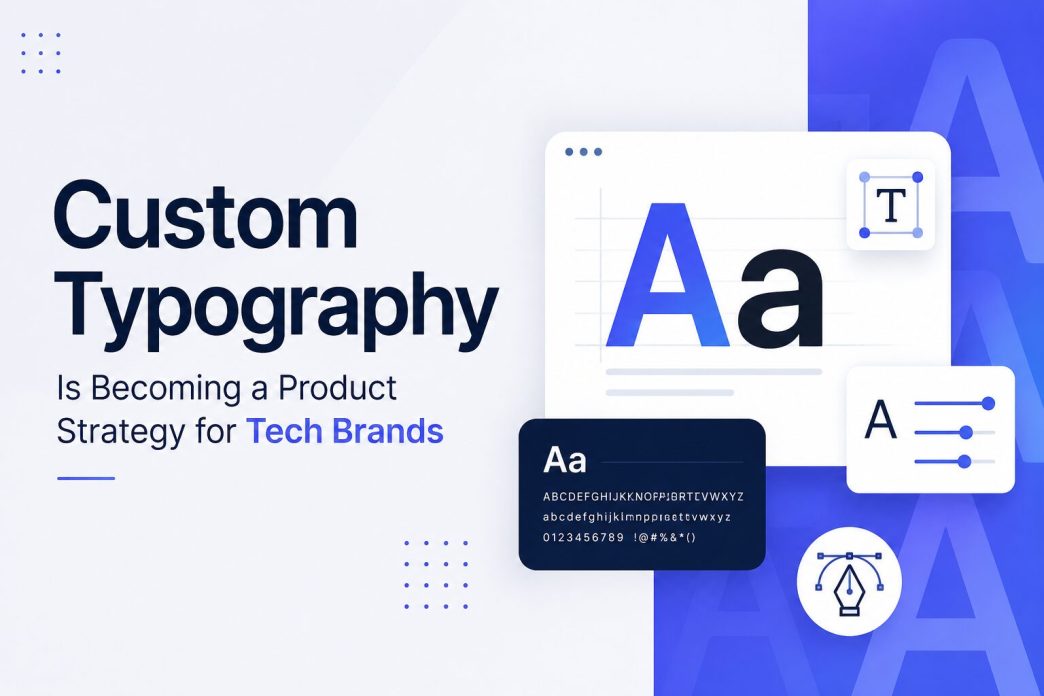
Your product may have great features, but inconsistent typography can make it look less trustworthy than your competitors.
Some digital products instantly feel polished and trustworthy, while others seem inconsistent despite offering similar features. Often, the difference lies in typography.
To better understand how your standard text dynamically transforms across different stylings and custom assets, you must understand how text-to-font tools work can help engineering teams visualize font behavior before deployment.
Whether users interact with a SaaS platform, AI application, fintech dashboard, eCommerce website, mobile app, or enterprise software, clear and consistent typography shapes every experience by improving:
- Brand identity and recognition
- User experience (UX) and readability
- Accessibility across digital products
- A scalable design system across websites, apps, and marketing
As companies grow, many move beyond commercial fonts to invest in custom typography and custom typefaces that support long-term branding, product consistency, and scalability.
This guide explains when a custom font is worth the investment, when a commercial font is enough, and how font licensing affects growing tech companies.
Why Is Typography Becoming a Competitive Advantage for Technology Companies?
Typography improves UX, brand identity, accessibility, and design systems, helping SaaS, AI, and fintech products build trust and consistency.
Typography influences how users read, navigate, and interact with digital products. From onboarding and dashboards to pricing pages and support content, every touchpoint depends on clear, consistent text.
A strong typography system helps technology companies:
- Improve UI hierarchy and readability.
- Build a consistent brand identity across websites, apps, and marketing.
- Support accessibility with readable text and proper spacing.
- Scale products through a unified design system.
- Deliver a consistent experience across multilingual markets.
Whether it’s a SaaS platform, AI application, fintech product, eCommerce website, or enterprise software, typography shapes first impressions and everyday usability. A consistent type system makes products easier to use, strengthens brand recognition, and supports long-term growth.
Custom Fonts vs. Commercial Fonts: Which Is Better for Technology Companies?
Custom fonts deliver exclusivity and scalability, while commercial fonts offer affordability and faster deployment for technology companies.
The right choice depends on your brand identity, product complexity, growth stage, and budget. Commercial fonts help companies launch quickly, while custom typography supports long-term product consistency and differentiation.
| Feature | Commercial Fonts | Custom Fonts |
| Brand Identity | Shared | Exclusive |
| Cost | Lower | Higher |
| Deployment | Ready to use | Custom-built |
| Design System | General-purpose | Tailored |
| Scalability | Good | Excellent |
| Language Support | Font-dependent | Customizable |
| Licensing | Standard | Flexible |
Choose a commercial font if you:
- Are launching a startup or new product.
- Have a limited branding budget.
- Need a proven typeface with fast deployment.
Choose a custom typeface if you:
- Manage multiple websites, mobile apps, or SaaS products.
- Need a distinctive brand identity.
- Support multilingual users.
- Build a scalable design system.
- Require custom glyphs or flexible font licensing.
The best option depends on your business goals, product maturity, and long-term growth strategy.
Teams comparing commercial and custom options can explore foundries such as TypeType, where families can be tested, licensed, customized, or used as a basis for broader brand typography systems.
When Should a Technology Company Invest in a Custom Font?
Invest in a custom font when your technology company needs a stronger brand identity, scalable design systems, or multilingual support.
A custom font is the right investment when your typography no longer supports your products, brand, or growth.
Consider custom typography if you:
- Manage multiple websites, mobile apps, or SaaS platforms.
- Need a distinctive brand identity.
- Use a shared design system across products.
- Serve multilingual or global audiences.
- Require custom glyphs, numerals, or symbols.
- Need flexible font licensing.
A commercial font works well for startups and early-stage businesses. As AI, fintech, SaaS, and enterprise software companies grow, a custom typeface improves consistency, scalability, and brand recognition.
How Are Leading Technology Brands Using Custom Typography?
Leading technology brands use custom typography to strengthen brand identity, improve UX, and maintain consistency across digital products.
Many companies customize existing typefaces instead of creating one from scratch, allowing them to improve brand consistency while meeting product requirements.
Domino’s
Domino’s customized TT Commons Pro into Dominos Sans to create a consistent typography system across its website, mobile app, ordering platform, packaging, and marketing.
Rocket
Rocket introduced WNTL and Bowtie to improve readability, reinforce its brand identity, and maintain consistency across its fintech products.
Telefónica
Telefónica customized TT Hoves into Telefónica Sans to unify typography across customer portals, mobile services, websites, and enterprise products.
These examples show how custom typography helps companies build consistent digital experiences, strengthen brand recognition, and support product growth.
What Font Licensing Mistakes Should Technology Companies Avoid?
Avoid font licensing issues by using the correct license for websites, apps, SaaS products, and commercial use.
Choosing the right font license ensures legal compliance across every platform where your typography is used.
| Use Case | Required License |
| Website | Webfont |
| Mobile App | App embedding |
| SaaS Platform | Product UI |
| Desktop Design | User installation |
| PDF Reports | Font embedding |
| Video | Motion graphics |
| Logo | Commercial use |
| Dynamic Documents | Server-side embedding |
Avoid these common mistakes:
- Using a desktop license on a website.
- Embedding fonts in mobile apps without app rights.
- Using free fonts for commercial projects without verifying permissions.
- Sharing font files without authorization.
- Reusing one license across multiple products.
- Modifying font files without checking the license agreement.
Review licensing before deploying a custom font or commercial font across your products.
What Are the Most Common Typography Mistakes in Digital Products?
Poor typography reduces UX, weakens brand identity, and creates inconsistent digital products, even with strong features.
When auditing existing assets or evaluating competitive interfaces, referencing a detailed font finder tutorial can quickly guide your team from an initial image upload to an exact font match.
Typography should improve readability, consistency, and usability—not create friction.
| Mistake | Impact | Best Practice |
| Using multiple fonts | Inconsistent branding | Use one type system |
| Poor hierarchy | Harder navigation | Define clear heading levels |
| Small UI text | Lower readability | Follow accessibility guidelines |
| Weak numerals | Difficult data scanning | Use UI-friendly numerals |
| Decorative fonts | Poor usability | Prioritize readable typefaces |
| Missing language support | Limited global reach | Choose multilingual fonts |
| Too many font weights | Slower performance | Load only required weights |
| Ignoring mobile testing | Inconsistent experience | Test across devices |
Avoiding these mistakes helps SaaS, AI, fintech, and enterprise software teams build accessible, consistent, and scalable digital products while strengthening brand identity and user experience.
How Does Custom Typography Benefit Different Teams?
Custom typography improves brand consistency, UX, collaboration, and scalability for design, development, marketing, and product teams.
Typography supports more than branding. A consistent type system helps every team build, maintain, and scale digital products efficiently.
| Team | Benefit |
| Founders | Stronger brand identity and market differentiation |
| Product Designers | Better UI hierarchy and usability |
| Developers | Consistent implementation across products |
| Marketing Teams | Unified branding across campaigns |
| Legal Teams | Better font licensing compliance |
| Localization Teams | Reliable multilingual support |
| Customer Success | Clearer documentation and onboarding |
A shared typography system reduces inconsistencies, improves collaboration, and delivers a consistent user experience across websites, mobile apps, SaaS platforms, and enterprise software.
How Do You Choose Between a Commercial Font and a Custom Font?
Choose a commercial font for speed and budget, or a custom font for stronger brand identity, scalability, and long-term product growth.
The right choice depends on your business stage, product complexity, branding goals, and long-term requirements.
| If Your Business Needs… | Best Choice |
| Fast product launch | Commercial Font |
| Lower upfront cost | Commercial Font |
| Unique brand identity | Custom Font |
| Scalable design system | Custom Font |
| Multiple digital products | Custom Font |
| Multilingual support | Custom Font |
| Flexible font licensing | Custom Font |
Choose a commercial font if you need a reliable typeface for a single product or an early-stage business.
Choose a custom font if your technology company manages multiple websites, mobile apps, SaaS platforms, or enterprise products and requires a distinctive, scalable typography system.
Select the option that aligns with your current needs while supporting future growth.
How Do You Choose Between a Commercial Font and a Custom Font?
Choose a commercial font for speed and budget, or a custom font for stronger brand identity, scalability, and long-term product growth.
The right choice depends on your business stage, product complexity, branding goals, and long-term requirements.
| If Your Business Needs… | Best Choice |
| Fast product launch | Commercial Font |
| Lower upfront cost | Commercial Font |
| Unique brand identity | Custom Font |
| Scalable design system | Custom Font |
| Multiple digital products | Custom Font |
| Multilingual support | Custom Font |
| Flexible font licensing | Custom Font |
Choose a commercial font if you need a reliable typeface for a single product or an early-stage business.
Choose a custom font if your technology company manages multiple websites, mobile apps, SaaS platforms, or enterprise products and requires a distinctive, scalable typography system.
Select the option that aligns with your current needs while supporting future growth.
People Also Ask
Is a custom font worth it for startups?
Most startups can begin with a commercial font and invest in a custom font as their products, brand, and user base grow.
A commercial font offers lower costs and faster deployment. A custom typeface becomes valuable when your business needs stronger brand identity, scalability, or multilingual support.
Does custom typography improve user experience?
Yes. Custom typography improves UX by increasing readability, consistency, accessibility, and navigation across digital products.
A consistent typography system helps users scan content faster, understand interfaces more easily, and recognize your brand across websites, mobile apps, and SaaS platforms.
What’s the difference between a font and a typeface?
A typeface is a font family, while a font is a specific style, weight, or size within that typeface.
For example, Roboto is a typeface, while Roboto Bold 16pt is a font. Understanding the difference helps when choosing typography for digital products.
When should a company invest in a custom font?
Invest in a custom font when your business needs a unique brand identity, scalable design systems, or multilingual support.
Growing SaaS, AI, fintech, and enterprise software companies often benefit from custom typography as their products and teams expand.
How does font licensing affect technology companies?
Font licensing determines where and how a font can be used across websites, apps, SaaS products, and commercial materials.
Review licensing before deployment to ensure compliance across every product, platform, and marketing channel.
Final Thoughts
Custom typography helps technology companies strengthen brand identity, improve UX, and build scalable digital products with lasting consistency.
Typography is no longer just a branding element. It influences how users interact with websites, mobile apps, SaaS platforms, AI products, fintech solutions, and enterprise software.
A commercial font is often the right choice for startups and early-stage businesses. As products, teams, and digital touchpoints grow, investing in a custom font provides greater control over brand identity, design systems, accessibility, and font licensing.
The right typography strategy isn’t about choosing the most expensive option—it’s about selecting a solution that supports your products, users, and long-term business growth.