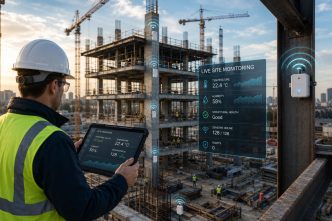
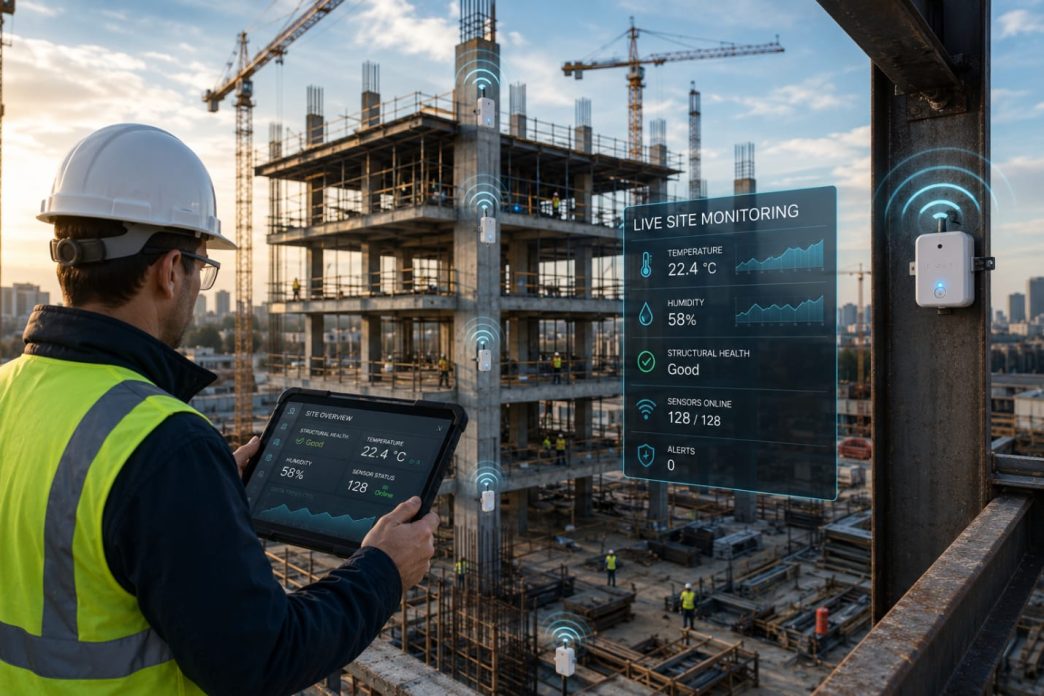
A friend who runs field ops for a mid-sized contractor mentioned something a few months back that I haven’t stopped thinking about. His current job site has more sensors on it than the last few data centers he worked in during a brief stretch in IT before he switched careers. That’s a weird sentence to hear out loud. Construction has spent decades being the industry everyone assumes technology skipped over, still running on clipboards and a foreman’s gut feeling, while every other sector went digital around it. That image is getting old fast, and most people outside the industry haven’t caught up to it yet.
Checking on a structure used to mean somebody physically showing up, taking a measurement, writing it down, and coming back some other day to see what changed. Nothing wrong with that exactly, just slow, and it misses whatever happens in between visits. A crack opens overnight when the temperature swings. Moisture creeping in after a storm nobody happened to be around for. If your only instrument is a person with a clipboard who drops by once a week, you’re going to miss most of what actually matters.
Sensors that never leave
Here’s what actually shifted: the sensors got cheap enough, and tough enough, that people just started leaving them in place instead of packing up after a single reading. A humidity number isn’t a one-time snapshot anymore. It’s a running line on a graph, and that line is honestly the whole point. Was there a spike overnight? Did it line up with a specific weather event three days ago? You only catch that kind of thing if something’s been logging the whole time, not just when someone remembers to check.
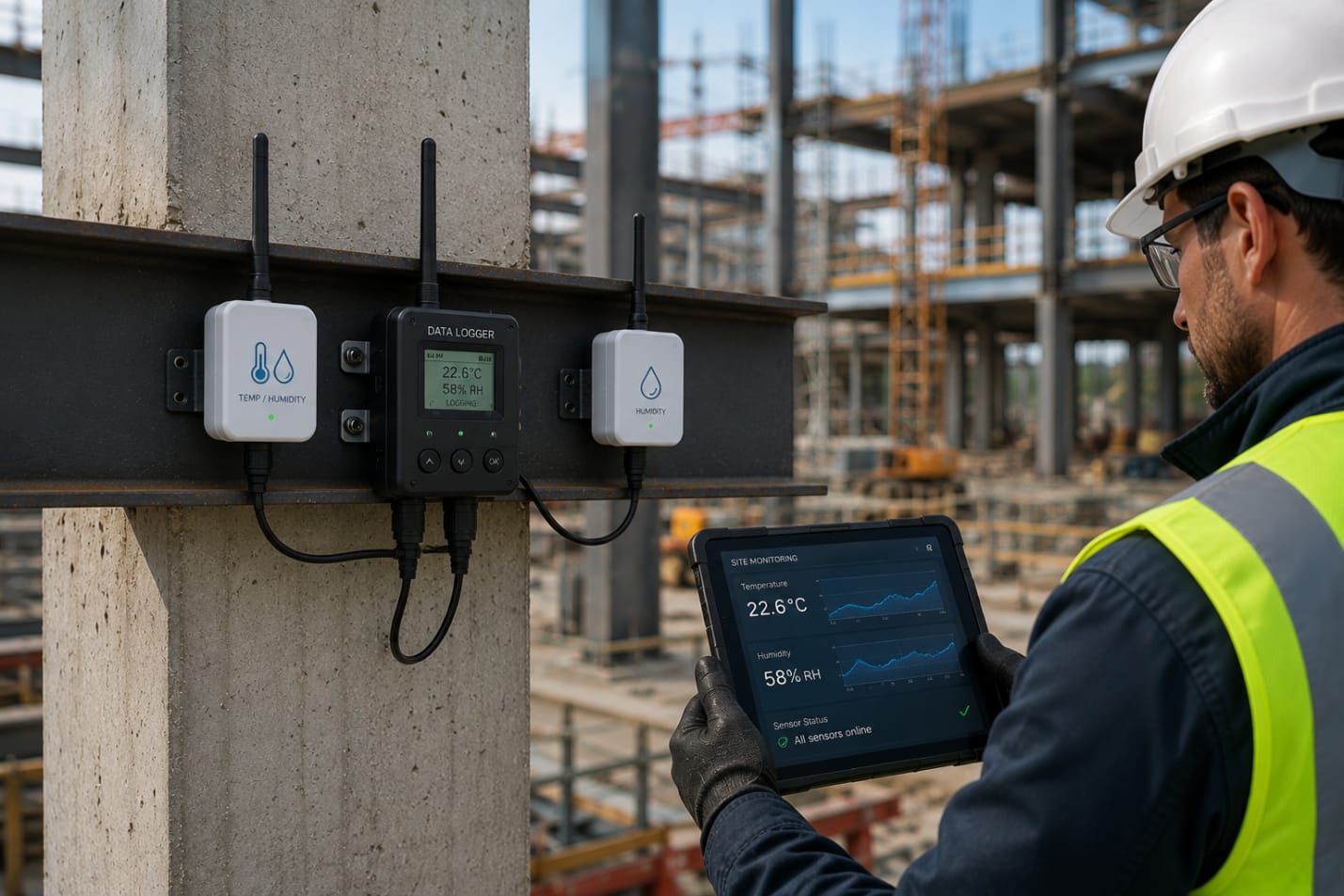
Data loggers are doing a lot of that unglamorous work now, sitting on beams and inside walls tracking temperature and humidity around the clock instead of waiting for someone to swing by with a handheld meter. One contractor put it to me this way: a security camera catches everything, a guard doing rounds once a shift catches whatever happens to be visible at that exact moment. Construction spent a hundred years running on the second model and is only now getting around to the first.
None of the data matters much by itself, honestly. What matters is the shift from occasional snapshots to something closer to a live feed, roughly the same jump IT departments made years ago, going from someone manually checking servers to dashboards that just sit there watching. Construction’s having its version of that moment. Just later. A lot later, if we’re being honest about it.
Looking inside concrete without breaking it
The other change worth mentioning is how people inspect a finished structure. For a long time, the only real option was cutting into a slab or a wall to see what was going on underneath, which is about as invasive as it sounds and leaves a repair job behind on top of whatever you actually learned.
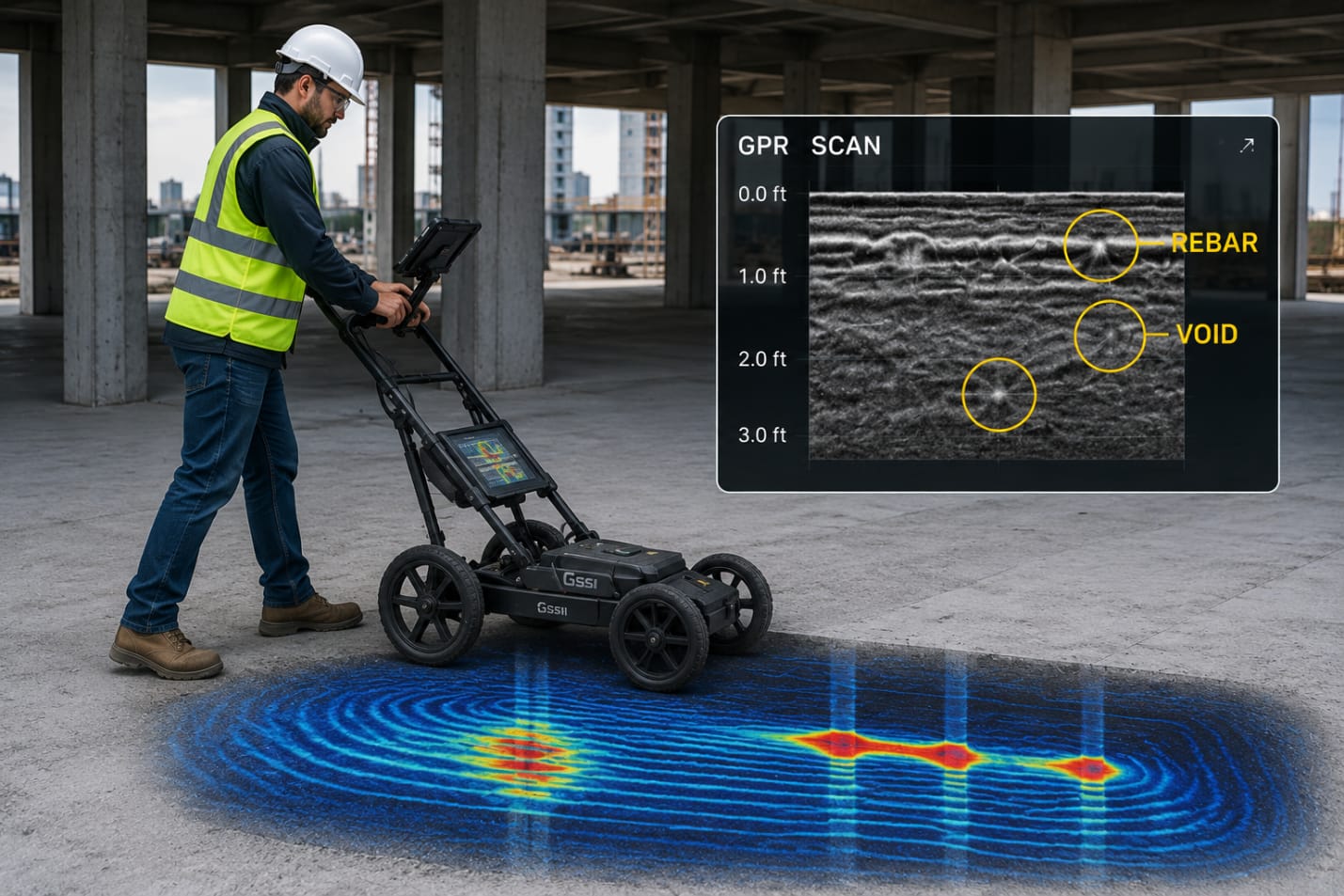
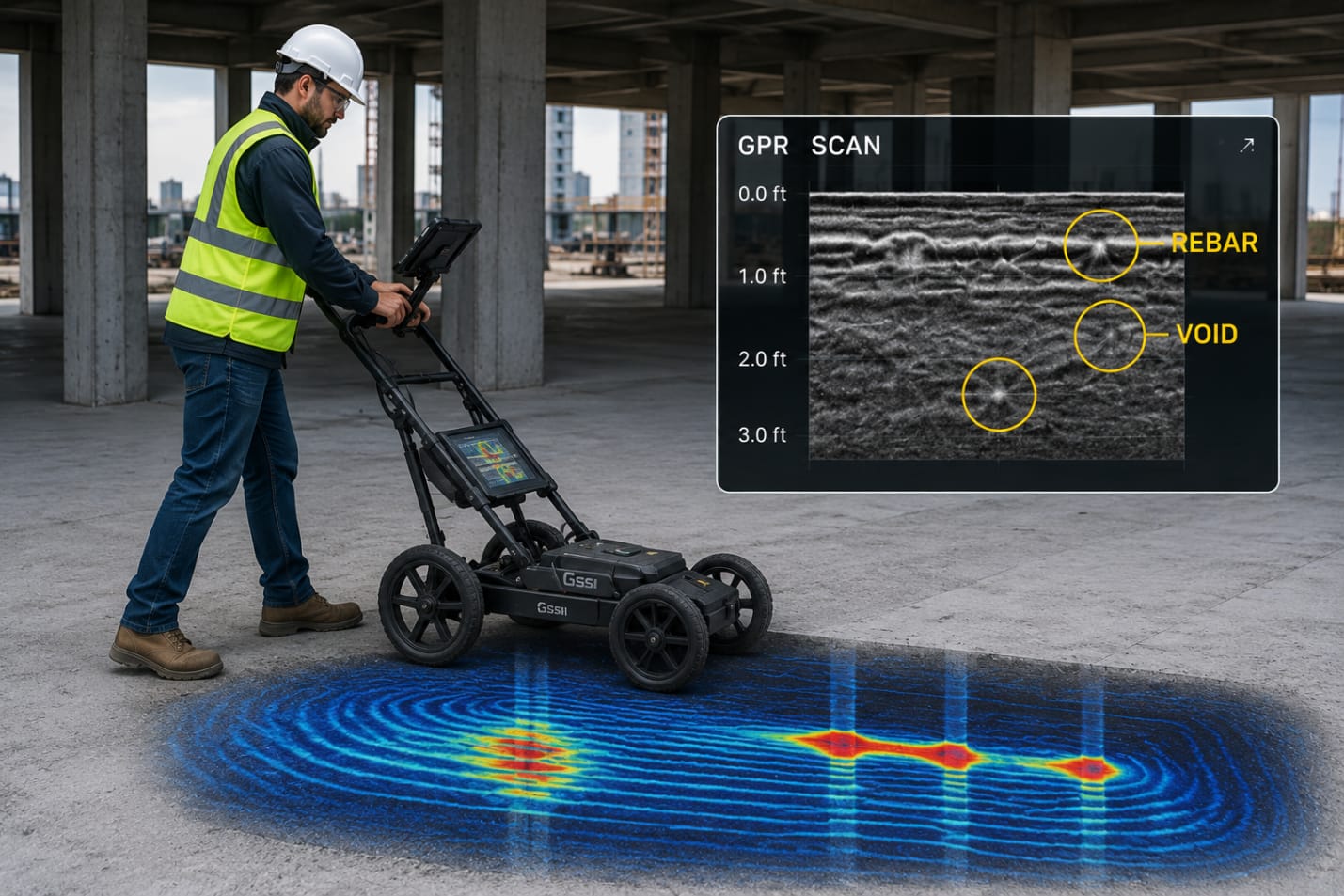
That’s mostly not necessary anymore. Ground-penetrating radar and ultrasonic pulse velocity testing let inspectors check for rebar placement, voids, or delamination without ever breaking the surface. It’s a genuinely different way of finding problems compared to drilling a core sample somewhere and hoping you happened to pick the right spot. There’s a whole category of non destructive concrete testing built around exactly this, and it’s slowly becoming the default rather than the exception for firms that can afford the equipment.
What surprised me a little, talking to people about this, is how slowly it all spread compared to something like cloud computing rolling out across other industries. Construction firms tend to move cautiously with new methods, partly because a bad structural call has real consequences somebody eventually has to explain to a client, and partly because the whole industry just doesn’t move at software speed and never really will. But prices have come down, training’s gotten less painful, and smaller outfits are starting to pick this stuff up too, not just the big contractors with a dedicated inspection division and a budget line for it.
The part that’s actually interesting
Zoom out and this stops being a construction story specifically. It’s really about an industry built on expensive, physical, hard-to-undo decisions finally getting something like the feedback loop software people have had for ages. Code breaks, you get an error message right then. A bad pour might not show a problem for ten years, and by then good luck tracing it back to whatever specific Tuesday it went wrong.
Sensors that never stop watching and inspection tools that don’t require tearing anything open are closing that gap, slowly, unevenly, industry by industry and firm by firm. Nobody’s giving a keynote about a humidity sensor bolted to a support beam, and that’s sort of the point. It’s boring infrastructure work, the kind that ends up mattering more in the long run than whatever’s flashy this year, in roughly the same way server monitoring quietly mattered more to how reliable the internet feels than most of the apps sitting on top of it ever did.
So next time somebody brings up construction being behind on tech, it’s worth pointing out the curve just looks different when the thing you’re building has to stand for eighty years instead of an app that just needs to not crash for the length of someone’s coffee break. Slow isn’t the same thing as behind. Sometimes it just means the tech had to prove itself before anyone was willing to bet an actual building on it.