Voice actors spend years developing what is, at its core, an exceptionally refined instrument: a voice with range, control, emotional clarity, and the ability to inhabit characters convincingly. That same instrument is the foundation of great singing — and yet most voice actors never pursue music as part of their professional offering, largely because the path from “I have a trained voice” to “I have a music career” has always required a separate and substantial skill set in music production, arrangement, and the business of releasing music.
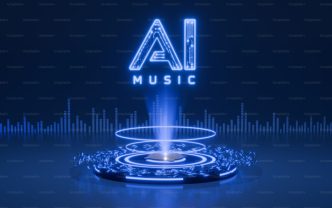
AI music tools are making that path significantly shorter. For voice actors and audiobook narrators who already have high-quality vocal recordings as a normal part of their workflow, the infrastructure needed to turn that raw material into finished music is now a set of tools rather than a decade-long detour.
Creating Original Music From Your Own Scripts
Voice actors are, by profession, skilled at interpreting written material and giving it vocal life. That skill transfers directly to music — the primary difference between a piece of narration and a song is the musical production underneath it.
An ai song maker lets a voice actor approach original music the same way they approach any script: write the words, understand the emotional arc, perform it. The difference is that instead of a director providing the context and a sound engineer handling the recording chain, the AI generates the full musical production around the lyrics. Describe the genre and mood — intimate acoustic, cinematic orchestral, atmospheric electronic — write the lyrics, and the system produces a complete, produced track that the voice actor can then record their vocal over.
For voice actors who work in character-driven spaces — video games, animation, audiobooks — original music in character voices is a natural extension of existing work. A character theme performed in the character’s voice, produced to a professional standard, is a genuine creative and commercial asset: valuable as a portfolio piece, as merchandise, as content for fan communities, or as a direct revenue stream through streaming platforms.
Reimagining Existing Songs in New Styles
Voice actors who want to produce music content quickly — for social media, for a demo reel, for a character showcase — can use an existing song as the starting point rather than writing original material. The advantage is speed: the melody and structure already exist, which means the creative work focuses on the performance rather than the composition.
An ai song cover generator offers two approaches. A voice actor can upload a song and replace the lyrics entirely — keeping the melody but performing completely new words, whether in a specific character’s voice, in a genre that better suits their vocal style, or in a language relevant to their professional market. Alternatively, they can keep the original lyrics and shift the musical genre: the same song rebuilt as something dramatically different from the original production, which showcases vocal flexibility and range in a format audiences immediately understand and respond to.
For voice actors who work across multiple character types — heroes and villains, comedic and dramatic, young and old — producing cover variations in different character voices using this tool creates a music-based demo reel that demonstrates range in a more engaging format than a standard voice reel. The familiar song is the anchor; the character voice applied to it is the showcase.
Training a Voice Model From Professional-Grade Recordings
Most voice actors already have something that amateur singers don’t: a library of clean, high-quality vocal recordings produced under professional or semi-professional conditions as part of their normal work. Audiobook recordings, commercial reads, character demos — all of this is usable material for building a voice model.
An ai singing voice generator uses vocal recordings to train a custom voice model that captures the specific tonal qualities, pitch characteristics, and vocal color of a particular voice. Upload clean recordings, let the system train for a few minutes, and the resulting model can be applied to any song — replacing the original singer’s voice with the trained model’s vocal character. The output is that song performed in the voice actor’s own voice, with their specific tonal identity, at a production quality that matches the original recording.
For a voice actor building a music side of their career, this has a very practical application: it allows them to produce high volumes of music content — covers, character songs, genre experiments — without recording every vocal performance from scratch. Train the model once from existing recordings, apply it to multiple songs, and generate a catalog of music content that authentically represents the voice actor’s vocal identity. The model captures what makes the voice distinctive; each new piece of content demonstrates that distinctiveness applied to different material.
The Business Case for Voice Actors in Music
The music revenue model is different from the voice acting revenue model, and the differences are mostly favorable. A voice acting gig pays once for the work; a song on a streaming platform generates royalties every time it’s played, indefinitely. A character voice performance belongs to the project it was recorded for; a song produced under a voice actor’s own name belongs to them permanently.
For voice actors who are already building a personal brand — developing a following on social media, building an audience around their characters or their persona — music content is one of the most effective ways to deepen that relationship with an audience. A song is a more emotionally resonant piece of content than almost any other format. It gets replayed, saved, and shared in ways that a standard voice acting clip rarely does.
The combination of trained vocal instrument, existing high-quality recordings, and AI music production tools removes most of the traditional barriers to entry. What voice actors bring to music — range, control, character commitment, and the ability to interpret material with genuine emotional intelligence — turns out to be exactly what makes a vocal performance memorable. The production infrastructure is now the easy part.