Search engine optimisation has never stood still, but the pace of change over the last few years has been remarkable. Artificial intelligence has transformed how businesses research keywords, create content and analyse website performance, while Google’s AI Overviews and conversational search platforms are changing the way people discover information online. Success is no longer about relying on a single SEO platform or publishing as much content as possible. Instead, businesses need a connected ecosystem of technologies and strategies that work together.
This modern ecosystem is often referred to as an SEO tech stack. It combines technical optimisation, intelligent content creation, automation, analytics and authority-building into a streamlined workflow that supports long-term organic growth. While AI has simplified many repetitive SEO tasks, it has also raised the standard for quality. Search engines increasingly reward websites that demonstrate expertise, trustworthiness and genuine value for users.
Whether you’re managing a small business website or overseeing digital marketing for a larger organisation, building the right SEO tech stack can improve efficiency, uncover new opportunities and help your website remain competitive in an increasingly AI-driven search landscape.
What Is an SEO Tech Stack?
An SEO tech stack is the collection of tools, platforms and processes used to improve a website’s visibility in search engines. Rather than depending on a single application, successful marketers combine several technologies, each serving a specific purpose within the optimisation process.
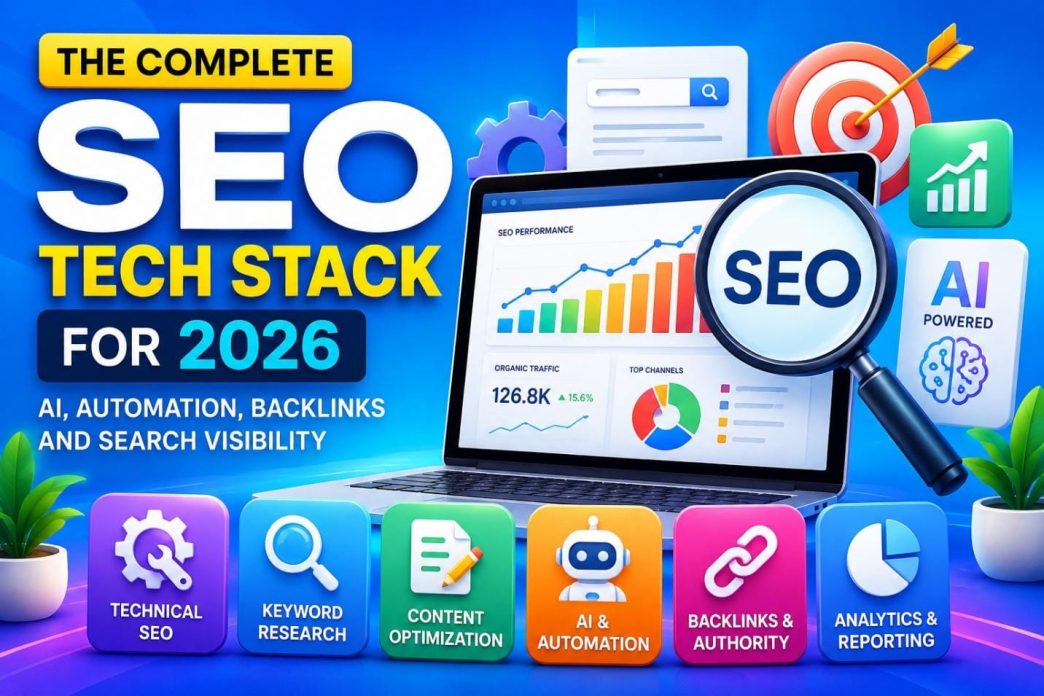
A well-balanced tech stack typically includes:
- Technical SEO auditing tools
- Keyword research and competitor analysis platforms
- AI-assisted content creation and optimisation software
- Rank tracking and performance reporting
- Backlink analysis and authority-building strategies
- Website analytics and user behaviour insights
The objective is not to collect as many tools as possible, but to create a workflow where each solution complements the others. When implemented effectively, this reduces manual work, speeds up decision-making and enables marketing teams to focus on strategy rather than repetitive administration.
Building a Strong Foundation with Technical SEO
Before investing time in content creation or link building, every website should establish a technically sound foundation. Even the most informative articles may struggle to perform if search engines encounter difficulties crawling, indexing or understanding your website.
Technical SEO focuses on making websites accessible, fast and easy for search engines to interpret. Some of the most important areas include:
Website Speed and Core Web Vitals
Website performance directly influences both user experience and search rankings. Visitors expect pages to load quickly on desktop and mobile devices, and search engines increasingly reward sites that provide a smooth browsing experience. Optimising images, reducing unnecessary scripts, enabling browser caching and improving server response times all contribute to better performance.
Crawlability and Indexation
Search engines need clear pathways to discover and understand website content. XML sitemaps, properly configured robots.txt files and logical internal linking help search engine crawlers navigate websites efficiently while ensuring important pages are prioritised for indexing.
Regular technical audits also help identify issues such as broken links, duplicate content, redirect chains and orphan pages before they affect visibility.
Structured Data
Schema markup allows search engines to better understand page content by providing additional context. This can improve eligibility for enhanced search features such as rich snippets, FAQs, review ratings and product information, making listings more attractive within search results.
Although structured data doesn’t guarantee higher rankings, it often improves visibility and click-through rates by presenting information more clearly to users.
AI Is Transforming Keyword Research and Content Planning
Artificial intelligence has dramatically improved how marketers approach keyword research. Instead of targeting isolated search terms, modern SEO focuses on understanding user intent, semantic relationships and topical authority.
AI-powered research platforms can analyse large volumes of search data within minutes, identifying patterns that would previously require hours of manual analysis. They can group related keywords into meaningful topic clusters, uncover emerging search trends and suggest content opportunities based on competitor performance.
This shift encourages businesses to think beyond individual rankings. Rather than creating dozens of disconnected pages targeting slight keyword variations, marketers can build comprehensive content hubs that answer broader user questions and demonstrate expertise across an entire subject.
AI also assists with content planning by generating outlines, identifying missing subtopics and recommending semantic keywords that strengthen topical relevance. However, the most successful content still combines AI efficiency with human expertise. Editors play a crucial role in validating facts, refining tone, adding original insights and ensuring every article reflects genuine experience rather than simply rewording existing information.
As search engines continue prioritising helpful, people-first content, this collaboration between AI and human expertise is likely to become the defining characteristic of successful SEO strategies in 2026 and beyond.
Building Website Authority with Quality Backlinks
Even as AI reshapes SEO, one factor has remained remarkably consistent: authority matters. Search engines continue to use backlinks as a strong indicator of credibility, provided those links come from relevant, trustworthy websites.
The focus today is no longer on collecting hundreds of links from low-quality directories or private blog networks. Instead, successful businesses invest in earning editorial backlinks that make sense within the context of the content and provide genuine value to readers.
Some of the most effective authority-building strategies include:
- Publishing original research and industry insights
- Digital PR campaigns that attract media attention
- Building relationships with industry publications
- Creating resources that naturally earn citations
- Producing expert-led content that others reference
While these approaches require time and consistency, many organisations also work with reputable guest posting services to secure high-quality placements on relevant publications. When carried out ethically and with a focus on editorial value rather than manipulation, guest posting remains one of the most effective ways to expand online visibility, strengthen website authority and reach new audiences.
The key is quality over quantity. A handful of relevant, well-placed editorial backlinks will almost always deliver greater long-term value than dozens of low-quality links created purely to influence rankings.
Choosing the Right SEO Tools
No single platform can manage every aspect of modern SEO. Businesses typically combine multiple solutions to create a workflow that supports technical optimisation, content development, performance monitoring and reporting.
An effective toolkit should help answer important questions, such as:
- Are there technical issues preventing pages from being indexed?
- Which keywords present the greatest opportunity?
- Is existing content still relevant and comprehensive?
- How does the website compare with competitors?
- Which pages require additional internal links?
- Where are new backlink opportunities available?
Rather than switching between dozens of disconnected platforms, many businesses now use dedicated SEO tools that bring together essential optimisation features in one place. From generating meta titles and analysing content gaps to creating XML sitemaps, reviewing internal links and identifying technical issues, integrated toolsets allow marketers to complete routine SEO tasks more efficiently while maintaining consistent quality.
Automation should enhance decision-making rather than replace it. The best tools surface valuable insights, but experienced marketers still provide the strategic direction, creative thinking and commercial understanding needed to achieve sustainable growth.
Preparing for the Future of Search
Search is becoming increasingly conversational. Users are asking complete questions rather than typing short keyword phrases, while AI-powered platforms deliver direct, contextual answers that often combine information from multiple trusted sources.
As a result, businesses need to optimise for more than traditional search engine results pages. Content should be structured to answer real questions clearly, demonstrate expertise and provide trustworthy information that can be understood by both users and AI systems.
This means focusing on:
- Comprehensive topic coverage instead of isolated keywords
- Clear heading structures and logical page organisation
- Accurate, up-to-date information supported by credible sources
- Fast, accessible and mobile-friendly websites
- Strong internal linking between related content
- Consistent publishing that keeps information fresh
Websites that combine technical excellence with authoritative content and a healthy backlink profile are more likely to perform well across both traditional search engines and emerging AI-powered discovery platforms.
Bringing It All Together
Building a successful SEO strategy in 2026 is no longer about finding a single “best” tool or chasing the latest algorithm update. It requires a balanced technology stack in which technical optimisation, high-quality content, intelligent automation, analytics, and authority-building work together.
Artificial intelligence has made SEO faster and more efficient, but it hasn’t replaced the fundamentals. Businesses that invest in creating genuinely helpful content, maintain technically sound websites and earn trusted editorial backlinks will continue to outperform competitors over the long term.
The organisations achieving the strongest search visibility aren’t relying on automation alone—they’re combining smart technology with human expertise to create sustainable, user-focused SEO strategies that are built for the future of search.