Introduction
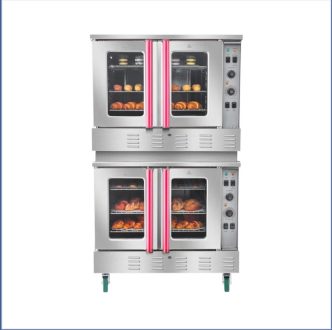
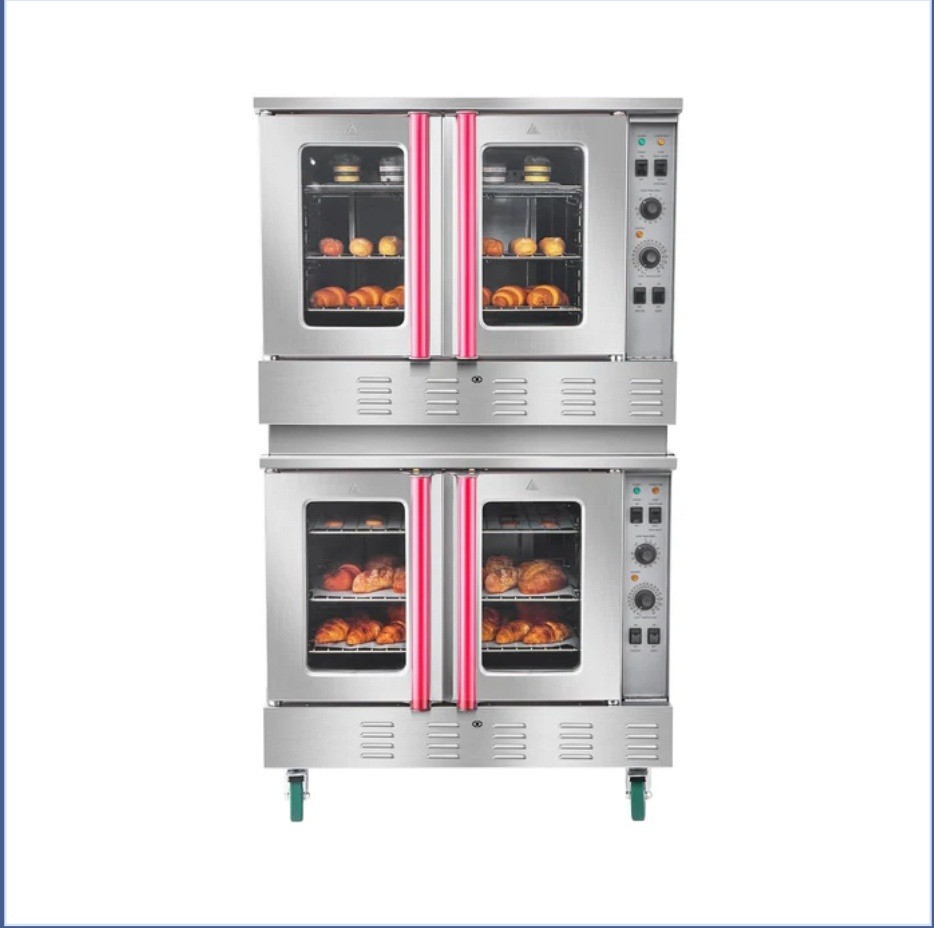
Across the United States, busy bakeries, restaurants, and institutional kitchens depend on equipment that can turn out consistent results hour after hour. In high-volume cooking, the difference between a good service and a poor one often comes down to how evenly and quickly food bakes. A commercial gas convection oven answers that demand by circulating heated air around the food, and a double-deck design doubles capacity without doubling the footprint, which matters greatly in a crowded professional kitchen.
How Convection Differs from Conventional Heat
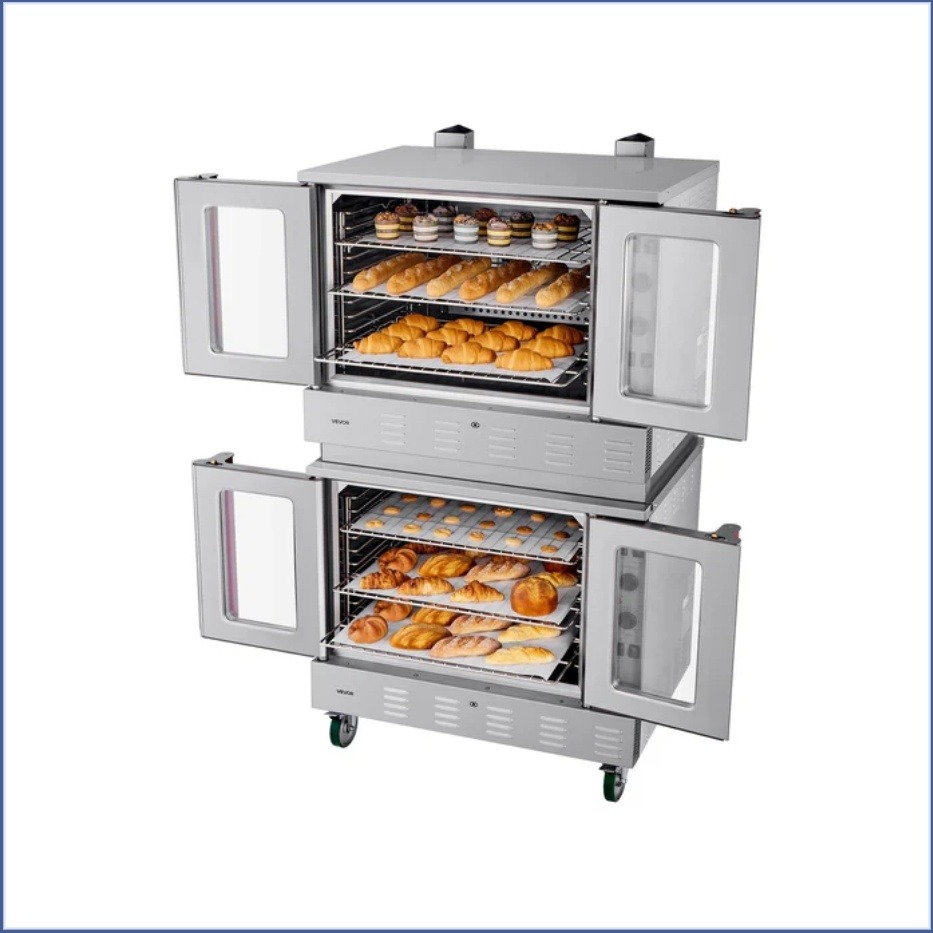
A conventional oven relies on heat radiating from burners and rising naturally, which leaves hot and cool zones that bake unevenly. A convection oven adds one decisive element, a fan that forces the heated air to move. That moving air strips away the cooler layer of air that clings to the surface of food and replaces it constantly with hot air. The result is faster, more even cooking, browning that is uniform from front to back, and the ability to bake several trays at once with consistent results across every shelf.
The Role of Gas and Burners
Gas is the preferred fuel in many professional kitchens because it delivers strong, responsive heat and recovers quickly when the door is opened during a busy service. Two powerful burners supply the heat, while the fan distributes it through the chamber. Quick recovery is more important than it first appears, since every time the door opens to load or check a tray, heat escapes, and an oven that climbs back to temperature rapidly keeps a production line moving without falling behind.
Capacity and Fan Modes
A double-deck oven stacks two independent chambers, so a kitchen can run two different products, or two different temperatures, at the same time. Generous interior volume accepts full-size trays, and adjustable fan modes give the operator real control over the airflow. A few practical principles guide good use:
- Use a gentler fan setting for delicate items such as cakes and custards that a strong draft could disturb.
- Use full airflow for breads, pastries, and roasted items that benefit from rapid, even browning.
- Rotate trays only when necessary, since even circulation already reduces the need to turn pans.
Safe and Efficient Operation
Commercial cooking equipment demands respect for both heat and fuel. Good ventilation above the oven clears combustion by-products and heat from the workspace, and gas connections should be checked regularly for leaks by qualified staff. Preheating fully before the first load, keeping the interior and fans clean, and loading trays with space between them all protect both the food and the equipment. A clean, well maintained oven bakes predictably, which is the foundation of consistent commercial output.
Advantages and Limitations
A gas convection oven offers clear benefits, balanced by honest limits:
- It bakes faster and more evenly than a conventional oven and, in a double-deck form, packs high capacity into a compact footprint.
- It requires a gas connection, proper ventilation, and routine cleaning of the fans, and very delicate items need careful fan control to avoid being disturbed by the airflow.
Choosing and Caring for an Oven
Selecting a commercial oven begins with an honest look at the menu and the volume a kitchen must produce, since capacity that falls short is a daily frustration, while one too large wastes space and fuel. The quality of the build matters as much as the size, because a commercial oven runs for long hours every day and must hold its temperature and its accuracy through years of hard service. Once installed, a convection oven rewards simple, regular care. Cleaning the interior and the fan, checking the door seal, and confirming that the burners light cleanly all preserve both performance and efficiency. A well maintained machine bakes predictably and uses fuel efficiently, while a neglected one drifts out of calibration and wastes energy. For a professional kitchen, that reliability is the foundation of consistent food and service.
Industry Outlook
As American food service continues to prize speed, consistency, and efficient use of space, demand for high-capacity, even-baking equipment keeps growing. The convection oven remains a workhorse of the professional kitchen precisely because it solves the oldest problem in baking, uneven heat, with a simple, reliable idea. Operators who invest in a well-built oven backed by reliable commercial kitchen solutions give their kitchens a dependable foundation for consistent output, service after service, while keeping running costs and maintenance manageable over many years.