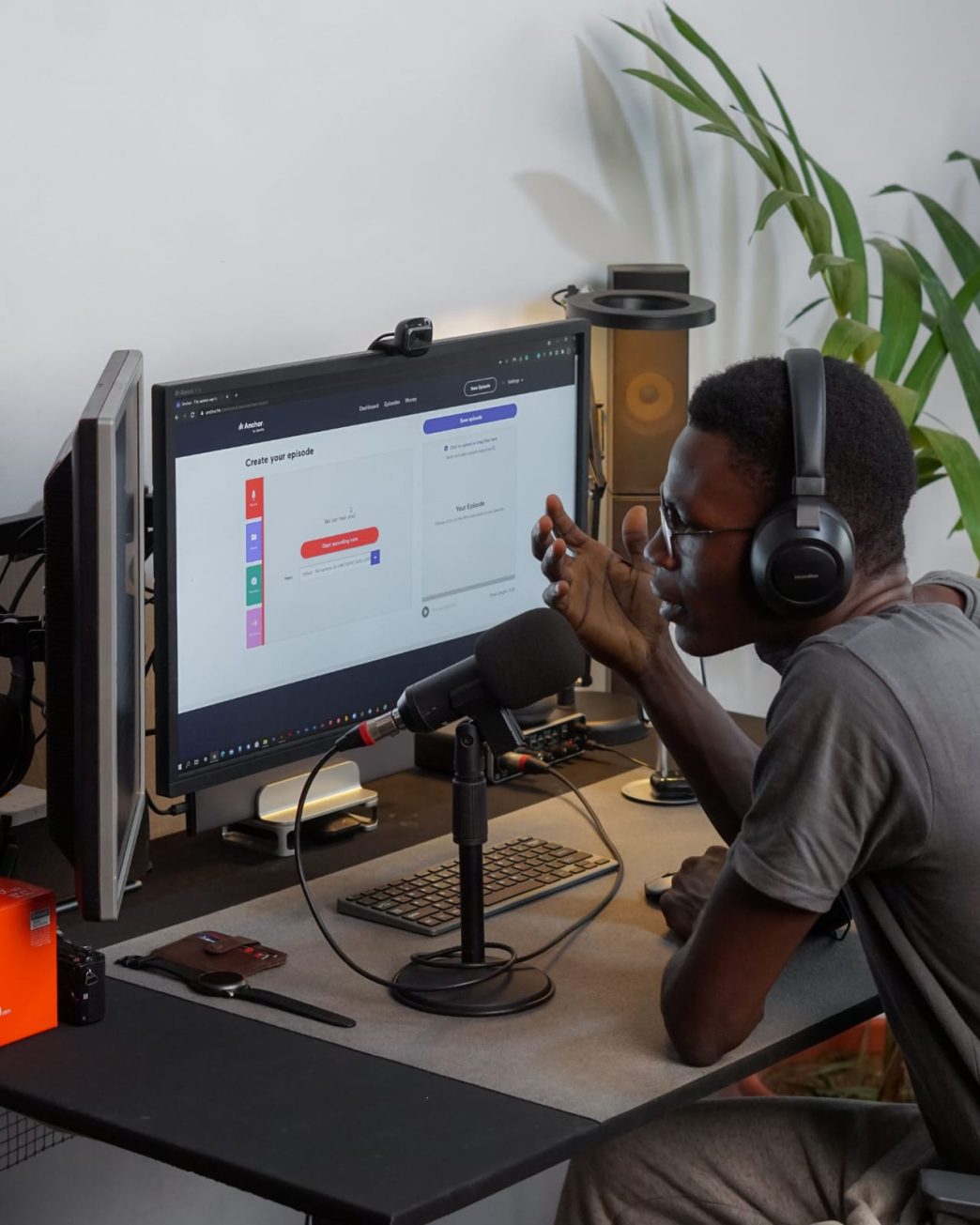
Every few weeks the same story plays out somewhere on a streaming forum. Someone has finally committed to taking streaming seriously. They post the receipt to prove it: a new XLR microphone, a mirrorless camera rigged as a webcam, a dedicated streaming PC, a pair of softbox lights. Total damage, somewhere north of $2,000. Then they go live, play well, talk to the empty chat like the guides recommend, and end the night where they started — zero viewers, or close enough that it makes no difference.
The instinct at that point is almost always to look at the gear. Maybe the audio needs a compressor. Maybe the bitrate is too low. Maybe the camera needs a faster lens. It is a comforting theory, because hardware problems have hardware solutions, and hardware solutions can be purchased. But it is the wrong theory. For the overwhelming majority of new streamers, the bottleneck has nothing to do with what is on the desk. It is how streaming platforms decide who gets seen.
The directory is not a level playing field
Twitch, YouTube Live, and Kick all organize their browse pages the same way: channels are sorted by current viewer count, from highest to lowest. That single design decision shapes everything about who grows and who doesn’t.
A viewer opening a category sees the biggest channels first. To find a stream with zero viewers, they would need to scroll past every other live channel in that category — hundreds or thousands of them in anything popular. Almost nobody does. Which produces the cold-start trap every new creator knows by feel, even if they have never seen it written down: you need viewers to be discovered, and you need to be discovered to get viewers.
No microphone fixes that. A new streamer broadcasting in 4K with studio-grade sound sits in exactly the same position at the bottom of the directory as someone streaming from a laptop in a kitchen. The sorting algorithm does not have an opinion about production value. It counts heads.
The numbers behind the wall
The scale of the problem becomes clearer when you look at where attention on Twitch actually pools. The table below shows the platform’s ten most-watched categories in June 2026, ranked by average concurrent viewers over a seven-day period.
Table 1 — Twitch’s top 10 categories by average concurrent viewers (June 2026)
| Rank | Category | Avg. concurrent viewers | Share of all Twitch viewing
|
| 1 | Just Chatting | 275,570 | 14.3% |
| 2 | Counter-Strike | 147,380 | 7.7% |
| 3 | League of Legends | 88,582 | 4.6% |
| 4 | Grand Theft Auto V | 66,683 | 3.5% |
| 5 | VALORANT | 60,854 | 3.2% |
| 6 | MECCHA CHAMELEON | 59,951 | 3.1% |
| 7 | IRL | 58,089 | 3.0% |
| 8 | Minecraft | 48,919 | 2.5% |
| 9 | Overwatch | 47,472 | 2.5% |
| 10 | Fortnite | 47,441 | 2.5% |
Category analytics: SullyGnome; seven-day directory averages, June 2026.
Add that column up and the top ten categories absorb roughly 47 percent of everything watched on Twitch. Just Chatting alone accounts for one out of every seven viewers on the platform. And within each of those categories, the same concentration repeats: a handful of established channels at the top of the sort order collect the bulk of the audience, while everyone below the fold splits the scraps.
This is the environment a new creator’s $2,000 setup is actually competing in. Not an audio quality contest. A sorting problem.
What the money actually buys
None of this means hardware is a waste. Good audio in particular keeps viewers around once they arrive; bad audio is one of the few things that reliably makes people leave. But it is worth being precise about what each purchase does and does not do.
Table 2 — Where the typical beginner budget goes, and what it fixes
| Purchase | Typical spend | What it improves | Effect on directory position
|
| USB/XLR microphone | $100–$350 | Audio clarity, retention | None |
| Camera (1080p–4K) | $150–$500 | Video quality, presence | None |
| Streaming PC / capture card | $800–$2,000 | Encoding, frame stability | None |
| Lighting kit | $50–$200 | Image quality | None |
| Total | $1,100–$3,050 | Production value | None |
Every line in that table matters — for the viewers a channel already has. Not one of them changes where the channel appears when a stranger opens the browse page. The entire budget addresses retention, while the actual growth constraint is discovery. It is the streaming equivalent of renovating a shop on a street nobody walks down.
What actually moves the needle
The creators who escape the cold-start trap tend to work the discovery problem directly, and the playbook is fairly consistent.
Category selection is the highest-leverage decision most new streamers never make deliberately. Streaming Fortnite or Just Chatting as an unknown means being buried under thousands of channels. Mid-sized categories — enough viewers to matter, few enough streamers to be scrollable — give a small channel a realistic chance of appearing on the first few pages of the directory. The data in Table 1 is not just a leaderboard; it is a map of where not to start.
Consistency compounds. Platforms reward predictable schedules with returning viewers, and returning viewers raise the concurrent count that the sort order runs on. Networking does the same job from a different angle: raids, collaborations, and being genuinely present in other creators’ communities remain the closest thing streaming has to organic referral traffic.
And because the sorting problem is so well understood, an ecosystem of services has grown around solving the zero-viewer phase itself. This is why specialized creator platforms like StreamerPlus have emerged to help newcomers kickstart their initial engagement and navigate platform rankings. By establishing that baseline activity, creators give their carefully chosen hardware a chance to actually be seen by real viewers.
None of these tactics replace the others. But together they attack the constraint that actually exists, rather than the one that is easiest to spend money on.
The spec sheet was never the problem
There is a reason the hardware-first instinct survives every generation of new streamers: it is actionable, it is visible, and the results arrive the same day the box does. Discovery work is slower and less satisfying. It involves spreadsheets more than unboxings.
But the math is not ambiguous. On platforms where visibility is sorted by viewer count, the difference between a channel that grows and one that doesn’t is rarely found in the equipment list. The camera can be flawless and the stream can still be invisible. New creators who understand that early spend their first months — and their first budgets — very differently. The gear can wait. The audience can’t find you either way.