Attention spans are shrinking, content is everywhere, and people want to learn more while reading less than ever. Caught in this contradiction, the concept of micro-learning has attracted serious attention in recent years.
But the real question is whether short-form learning can make knowledge stick, or whether it simply creates the feeling of having accomplished something.
The Problem Is the Format, Not the Content
Research has long established that people cannot absorb large amounts of information in a single sitting. According to cognitive load theory, the brain has strict limits on how much it can process at once. Reading and truly internalizing a 400-page book in one go is nearly impossible; the memory discards most of it quickly when overwhelmed by dense information.
Micro-learning approaches this problem from a different angle. Breaking knowledge into smaller pieces is not about making learning easier. It is about aligning with the way memory actually works.
Spaced Repetition: The Mechanism That Makes the Difference
Short content alone is not enough to make micro-learning effective. The second element is far more critical: Spaced Repetition.
Rooted in Hermann Ebbinghaus’s 19th-century research on the forgetting curve, this method shows that re-encountering information at strategic intervals embeds it into long-term memory far more effectively than a single exposure. Language learning apps have relied on this principle for decades. Applying it to book summaries and self-improvement content is a comparatively recent development.
Where Wiser Fits In
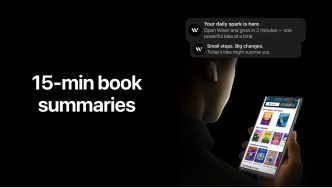
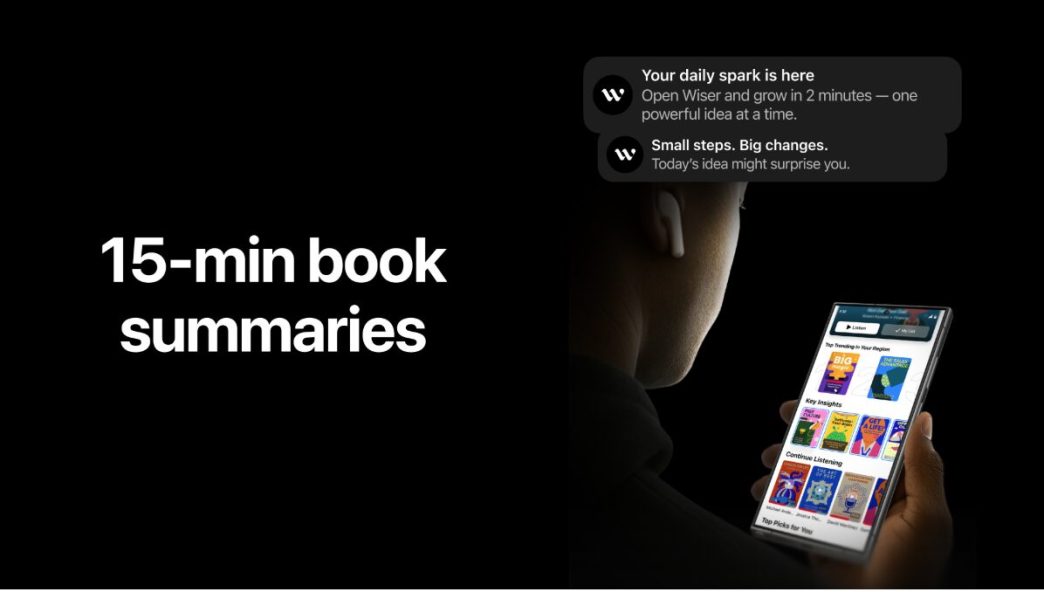
Wiser is one of the more prominent apps combining micro-learning with Spaced Repetition under one roof. Available on iOS and Android, the platform distills the core ideas from thousands of books into focused 15-minute experiences, offered in both written and audio formats.
What sets it apart is not the volume of content. Passages that users highlight while reading are automatically converted into flashcards, which the system resurfaces at intervals determined by the Spaced Repetition method. The platform moves beyond being a content library and functions as an active memory tool.
According to the app’s own data, 92% of users complete the content they start, a notable figure in a category known for high abandonment rates. The platform serves more than one million monthly active learners.
The Limits of Micro-Learning
An honest assessment requires acknowledging what micro-learning cannot do.
Deep analytical thinking, fully grasping a complex subject, or experiencing the distinct voice of an author are things that short formats cannot replicate. Getting lost in a novel or a work of scholarship is something that summary consumption simply does not offer.
Micro-learning does not aim to fill that gap. It addresses a different need: sparking curiosity, exploring ideas, and integrating knowledge into daily life. In that context, apps like Wiser are better understood as complementary tools rather than alternatives to reading.
Conclusion
Micro-learning is not a consolation prize for shrinking attention spans. It is a learning approach backed by cognitive science, though it requires the right mechanisms to fulfill its potential.
Wiser is among the apps that manage to bring those mechanisms together.