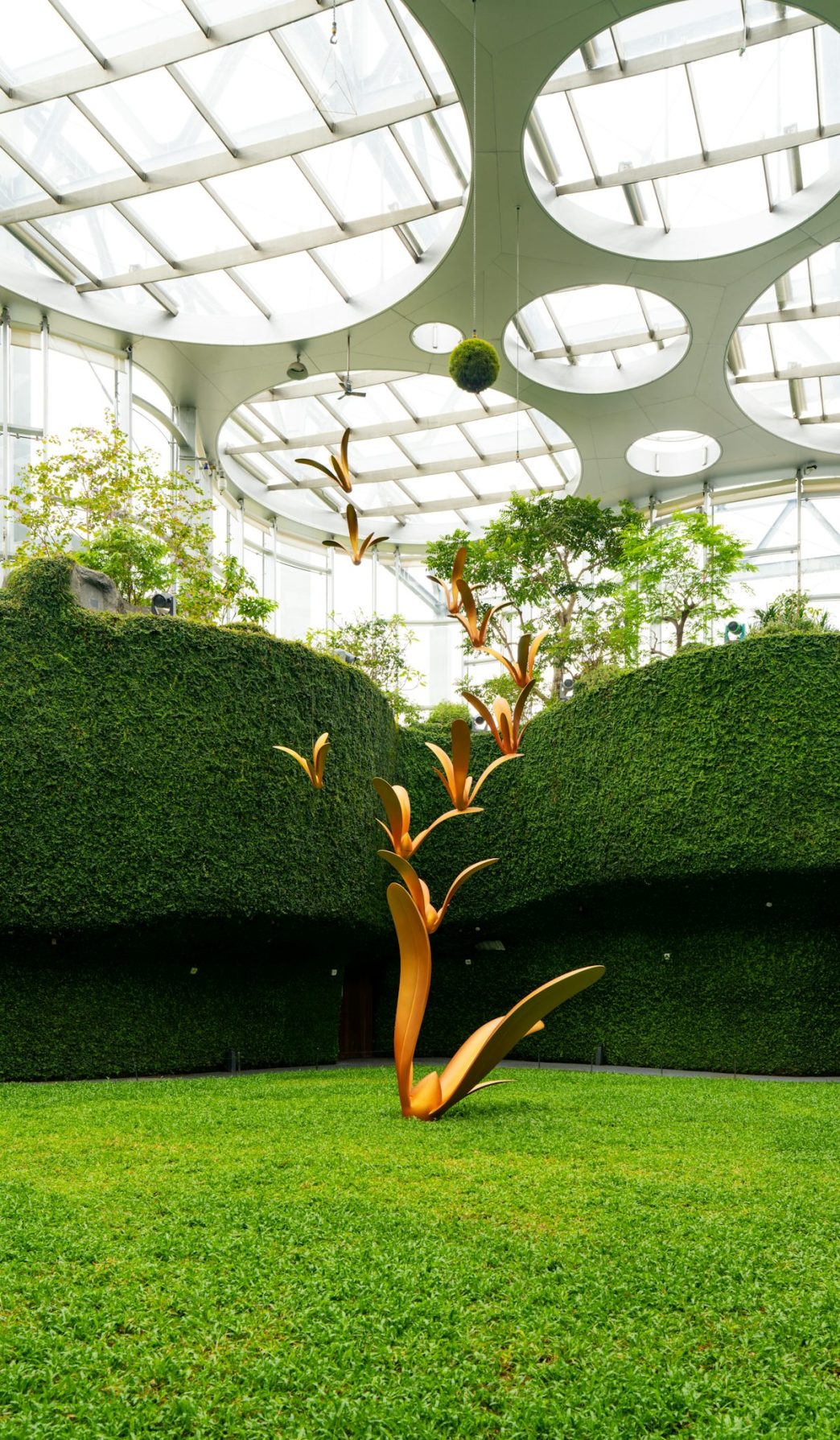
Since the dawn of civilization, the mastery of metal has been the defining metric of human progress. Yet, beyond the creation of tools and architecture, our ancestors quickly discovered something far more profound: metal possesses a soul. The act of taking cold, unyielding ore and bending it to human will is a kind of modern alchemy. When an artist takes up the torch and the hammer, industrial materials transcend their physical properties. This is the realm of art sculpture metal—a medium that speaks in a language of permanence, gravity, and breathtaking visual power.
Whether anchoring a sprawling public park, adding intrigue to a corporate atrium, or serving as the emotional center of a private garden, metal art commands attention in a way few other mediums can. It is an art form defined by contrasts: it is immensely heavy yet capable of conveying delicate motion; it is born of extreme heat but often cool to the touch; it is rigidly strong but can flow like water under the hands of a master craftsman.
The Elemental Pull of Metal Art
The world of art sculpture metal is incredibly diverse, offering a palette of textures, colors, and historical resonances. Traditional metals carry a tangible sense of history. Bronze, for instance, has been the medium of choice for millennia, favored for its ability to capture infinitesimal details and its tendency to age gracefully. As bronze interacts with the environment, it develops a rich patina—a living finish that deepens with time, rooting the artwork firmly in its landscape.
Similarly, wrought iron and weathering steel (often known as Corten) appeal to our desire for the rustic and the elemental. These materials embrace oxidation, turning the very process of rusting into a protective, beautiful exterior. They feel earthy, grounded, and intensely raw, making them perfect for landscape sculptures that blur the line between human creation and the natural world.
However, as architectural and interior design evolved into the 20th and 21st centuries, a new aesthetic hunger emerged. Designers and artists sought a material that didn’t just sit heavily within a space, but one that actively engaged with it. This desire gave rise to the widespread adoption of the most dynamic medium in contemporary art.
The Luminous Shift: The Rise of Stainless Steel Sculpture
While traditional metals absorb light and ground a space, a stainless steel sculpture does the exact opposite: it captures light and seemingly defies gravity.
Stainless steel is the ultimate contemporary voice within the metal sculpture family. Its defining characteristic is its extraordinary versatility in surface finishing. When polished to a mirror shine, a stainless steel sculpture ceases to be a static object. Instead, it becomes a dynamic lens reflecting the world around it. A curved, polished steel surface pulls in the colors of the sky, the movement of passing clouds, and the surrounding foliage, warping and weaving these elements into its own form. The sculpture changes from morning to noon to dusk, ensuring that the viewer never sees exactly the same piece twice.
This optical illusion of weightlessness is profound. An artist can craft a massive, multi-ton abstract form out of stainless steel, yet when it is highly polished, it appears to float above the ground. It is this ethereal quality that has made stainless steel the premier choice for large-scale civic installations and sleek, minimalist corporate collections.
Conversely, when stainless steel is brushed or satin-finished, it offers a muted, sophisticated glow. It feels industrial yet refined, absorbing ambient light to highlight the crisp, precise geometry of the artist’s design. Because of its incredible tensile strength and resistance to corrosion, stainless steel allows artists to push the boundaries of structural engineering, creating sweeping cantilevers and razor-thin edges that would simply snap or crumble if attempted in stone or wood.
The Invisible Labor of Creation
The seamless beauty of a finished metal sculpture belies the intense, often grueling labor required to create it. Art sculpture metal is not for the faint of heart. It requires the artist to act as part engineer, part welder, and part visionary.
In stainless steel work specifically, the process of TIG welding and subsequent grinding is a test of absolute precision. To achieve a flawless, monolithic appearance, every single weld must be meticulously ground down and polished through progressively finer grits until the seam vanishes completely. What the viewer eventually sees is a perfect, continuous surface; what they do not see are the hundreds of hours of painstaking labor required to make the metal yield to that illusion of perfection.
Commissioning Your Own Masterpiece
Integrating these powerful pieces into your own environment—whether a residential courtyard or a large commercial development—is a process that requires expert guidance and unparalleled craftsmanship. Sourcing high-quality metal art demands a partner who understands both the artistic vision and the rigorous engineering required for lasting installations.
For those looking to explore this dynamic medium, SculpturesHome stands as a premier destination. Their curated portfolio showcases the finest examples of both traditional and contemporary metal art. Whether you are captivated by the reflective brilliance of a stainless steel abstraction or the earthy gravitas of a bronze figure, their catalog offers exceptional variety. Furthermore, for clients who wish to bring a unique, site-specific vision to life, their custom metal sculptures service bridges the gap between imagination and reality, connecting you directly with master fabricators capable of executing the most ambitious designs.
The Enduring Witness
Art sculpture metal, in all its forms, offers something rare in our fast-paced, disposable culture: absolute permanence. A finely crafted metal sculpture is a legacy piece. It will stand as a silent, beautiful witness to the changing seasons, shifting architectural trends, and the passing of generations. Whether it is the classic warmth of bronze or the brilliant, shifting reflections of a stainless steel sculpture, metal art transforms not just the physical space it occupies, but the emotional landscape of everyone who encounters it.