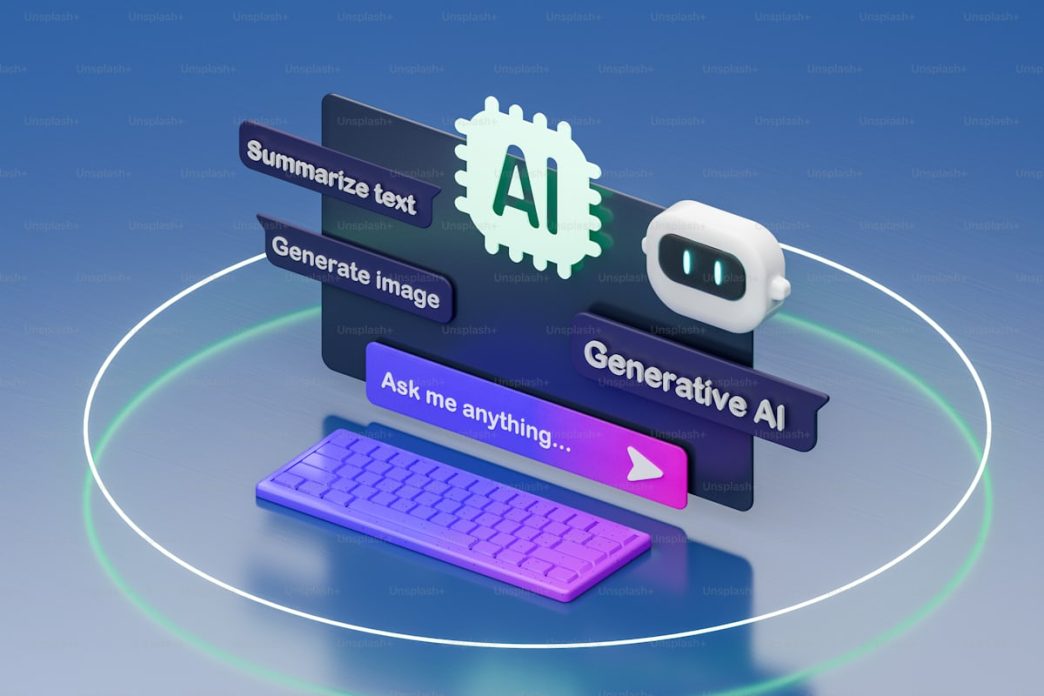
The demand for high-quality visual content has grown rapidly across marketing, design, ecommerce, and social media. Teams are expected to produce more images in less time, often across multiple formats and styles. As a result, AI-powered image generation tools are becoming part of everyday creative workflows rather than experimental technologies.
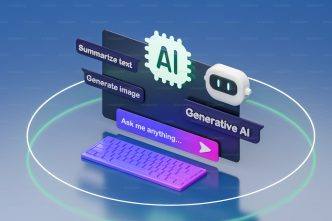
In this evolving landscape, platforms like Flux 2 are being used as centralized environments where different image models and workflows can be accessed in one place. Instead of switching between multiple tools, creators can experiment with text-to-image generation, image editing, and iterative refinement in a single workspace. This shift is not only about convenience but also about improving consistency and reducing production friction across teams working on visual content at scale.
The Shift Toward Multi-Model Creative Environments
Traditional design workflows often rely on a single software stack or a limited set of tools. While effective, these setups can become restrictive when teams need diverse visual outputs. AI-driven platforms are changing that by integrating multiple models and approaches into one environment.
Modern systems may include workflows such as text-to-image generation, image-to-image editing, and reference-based refinement. Alongside these, users often explore models like Flux 2, GPT-4o Image, Imagen 4, and others depending on the creative requirement. The goal is not to rely on one model for every task, but to select the most suitable approach for a specific output.
This flexibility supports a broader range of use cases, from conceptual art development to product visualization. It also allows teams to test visual directions quickly, reducing the time spent on manual iteration. In practice, this means designers and marketers can focus more on creative decisions rather than technical constraints.
Practical Use Cases in Marketing and Content Production
One of the most significant impacts of AI image tools is seen in marketing and content creation workflows. Businesses increasingly rely on rapid visual production for campaigns, landing pages, and social media assets. Instead of building each asset from scratch, teams can generate base visuals and refine them through iterative editing.
A commonly used workflow involves transforming text prompts into visual drafts and then refining those outputs for brand alignment. For example, marketers might generate product mockups, promotional banners, or lifestyle imagery that matches campaign themes. Designers can then adjust lighting, composition, or style through guided editing.
Within this ecosystem, tools such as GPT Image 2 image generator are often used for structured generation tasks where prompt control and visual consistency matter. This kind of workflow reduces dependency on repetitive manual design work while still maintaining creative oversight.
AI-Assisted Design for Ecommerce and Product Visualization
Ecommerce teams face a continuous need for fresh, high-quality product visuals. Traditional photography can be time-consuming and expensive, especially when multiple variations are required. AI image generation offers a practical alternative for creating concept visuals, background variations, and promotional imagery.
Instead of organizing repeated photo shoots, teams can generate different environments, lighting conditions, or lifestyle contexts for the same product. This flexibility helps brands test visual strategies before committing to large-scale production.
Another advantage is speed. Product visuals can be generated and adjusted in minutes, enabling faster campaign testing and iteration. This is particularly useful for seasonal promotions or rapidly changing marketing schedules. While AI-generated images may still require human refinement for final approval, they significantly reduce the early-stage workload in visual development pipelines.
Design Iteration and Creative Exploration Workflows
Beyond production, AI image tools are increasingly used for exploration and ideation. Designers often begin with rough concepts and refine them through multiple iterations. AI systems support this process by generating variations quickly, allowing creative teams to compare directions without committing extensive time to each one.
Reference-based editing is particularly useful in this context. A single base image can be modified to explore different moods, styles, or compositions. This makes it easier to evaluate creative possibilities early in the design process.
Many platforms also combine several models and workflows, enabling users to experiment across different visual approaches. Whether working on illustrations, UI assets, or advertising creatives, the ability to iterate quickly encourages broader experimentation. This often leads to more refined final outputs because more ideas can be tested in less time.
The Future of AI-Driven Visual Production
As AI image generation continues to mature, it is becoming a standard part of professional creative workflows rather than a niche tool. The focus is shifting from simple image generation to integrated systems that support planning, iteration, and refinement.
Platforms like Flux 2 illustrate this direction by bringing multiple models and workflows into a unified environment. Instead of replacing designers, these systems expand what creative teams can achieve within tighter timelines and budgets. The emphasis remains on human direction, with AI serving as an accelerator for execution and exploration.
Looking ahead, the most effective workflows will likely be those that balance automation with creative control. Teams that learn to combine structured prompting, iterative refinement, and model selection will be better positioned to produce adaptable and high-quality visual content.