
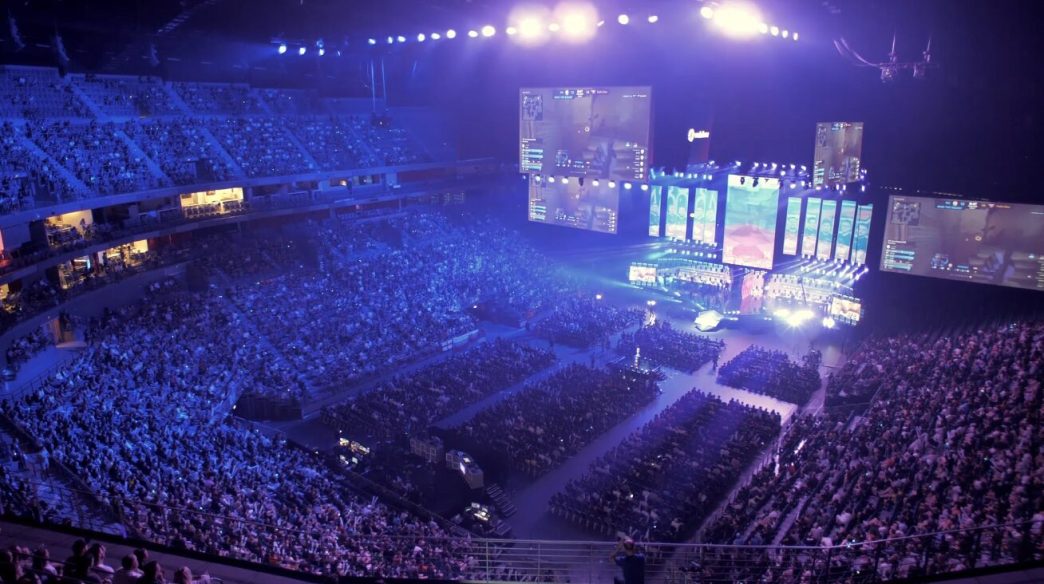
These days, esports is not just about video games, but an entire ecosystem that includes tournaments, technology, infrastructure and many other elements. In the early days of the industry, few people gave much thought to the importance of network infrastructure, and playing with a latency of 50–60 ms was considered acceptable. Today, at tournaments such as the ESL Pro League or PGL Major, this is one of the first things people look at, as even a difference of 5–10 ms can affect the outcome of a round.
According to statistics platforms, the final stages of the biggest CS2 tournaments regularly attract over 1 million concurrent viewers. Such scale requires complex server solutions and a well-thought-out network architecture, which remains invisible to the audience but without which virtually no match would take place.
Why Do Global Esports Tournaments Need Dedicated Network Infrastructure?
International esports tournaments cannot rely on standard data centres or conventional cloud solutions. During competitions such as EWC 2026 or the Riyadh Masters, tens of thousands of network requests are processed every second. Any delay could compromise both the viewing experience and the competitive integrity of the match.
For analysts, journalists and fans, it is vital to receive real-time data on matches, statistics and results. Some rely solely on official data from the organisers, but professionals know that resources such as the EGamersWorld portal provide the full picture, as they utilise information received via specialised tournament servers and data collection systems. Thanks to this, users can track changes in match scores with virtually no delay.
An interesting fact: during large LAN tournaments, the internal network often works at a speed of 10-100 Gbps. For comparison, the average home network in Europe uses channels from 100 Mbps to 1 Gbps. This difference is explained by the need to simultaneously transmit game data, video streams, telemetry and information for anti-cheat systems.
According to Liquipedia, The International alone employs dozens of technicians each year responsible solely for network infrastructure and server support. This demonstrates the growth of esports as a professional industry, as well as how important the network infrastructure has become in digital competitions.
How Do Tournament Servers Reduce Latency And Packet Loss
Low ping remains one of the most important factors in both casual and competitive matches. In CS2, Valorant and Dota 2, the difference between 8 ms and 25 ms can determine the outcome of individual gameplay moments, which is why tournament servers are located as close as possible to the competition venue or directly within the arena.
Modern servers utilise Anycast Routing, QoS (Quality of Service) and load balancing technologies. These solutions enable traffic to be automatically rerouted via the shortest path and maintain a stable connection even during sudden spikes in activity.
Backup servers deserve special attention. Almost every major tournament uses duplicate systems that can instantly take on the load in the event of a failure of the main equipment. If the server fails during a match, which is quite rare, the system should automatically switch to minimize malfunctions and reduce the risk of a technical pause.
What Server Hardware Powers Modern Esports Events?
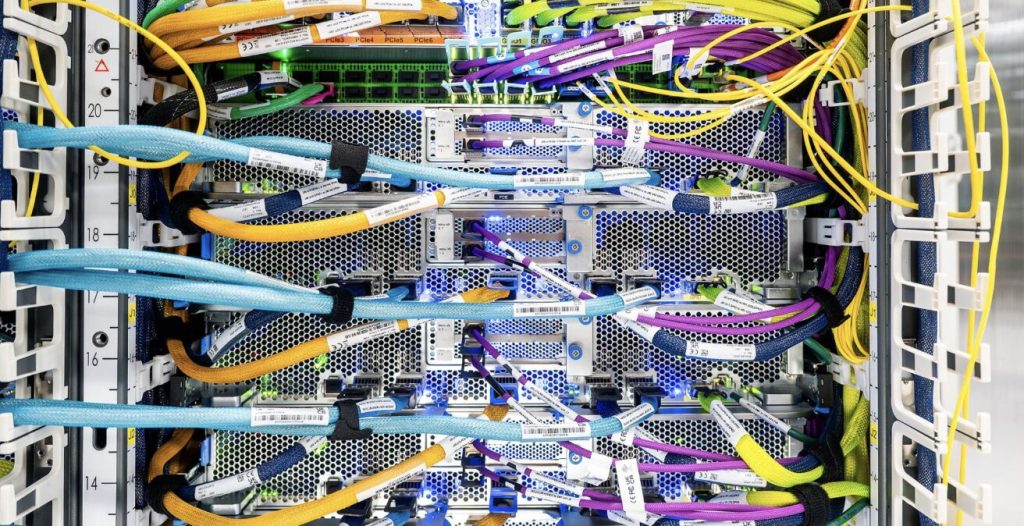
Depending on the type of esports events, different server equipment and technologies are used. Usually it differs significantly from standard servers for corporate tasks. The main emphasis is on data processing speed and stability under high load for many days without interruption.
Modern tournament servers are often equipped with processors of AMD EPYC or Intel Xeon level with dozens of cores. They work together with high-speed DDR5 RAM and enterprise-class NVMe drives. This configuration allows you to process huge amounts of information with almost no delay.
In addition to game servers, organisers use separate systems for live streaming. Even if a tournament is held as a LAN event at a venue, organisers still stream the matches to reach a wider audience. During events such as Dota 2 The International or a CS2 Major, hundreds of thousands of viewers may be watching matches simultaneously, so the equipment must be state-of-the-art. Furthermore, streaming servers, replay systems, statistics collection platforms and tools for commentators all operate simultaneously. Each of these components places an additional load on the infrastructure.
According to ESL, some tournament venues may use several server racks solely to support the broadcast aspect of the event. The equipment is set up several days before the tournament begins, and once it’s over, it’s quickly dismantled and transported to the next venue. If the broadcast runs smoothly and the matches proceed without interruptions, it means that the network and server infrastructure are performing exactly as they should.
Why Are Cloud Technologies And Edge Computing Becoming Important?
Technology is constantly evolving, and esports, as a technology-driven industry, is developing alongside it. The traditional model, with its centralised data centres, is gradually being supplemented by solutions based on edge computing. Put simply, some of the processing is carried out closer to the end user, which reduces data transmission times.
This is particularly relevant for online leagues. For example, when a team from South Korea plays against a team from Europe, the system can use intermediate nodes to optimise the traffic route. This approach helps to level the playing field for both teams.
Cloud technologies that previously had applications only in conventional gaming can now be used for analytics and statistics processing. Data about each shot, character movement or use of abilities can go to centralized repositories, where they are analyzed almost instantly. That is why esports broadcasts contain more and more statistical graphs and advanced analytics.
Another important area remains protection against DDoS attacks. Large esports events are regularly targeted by attackers, so the organizers use multi-level traffic filtering systems. They allow you to weed out malicious requests before they reach the game servers.
Conclusion
In this article, you have learnt that global esports tournaments are not just about the players’ skills or the spectacle. Behind every successful match lies a complex system of network equipment, servers and data security tools. It is these technologies that ensure stable ping, fast data transfer and uninterrupted streaming for millions of viewers. With the development of innovations, cloud services and edge computing, the importance of infrastructure will only grow, and its quality will remain one of the key factors in the success of esports tournaments.