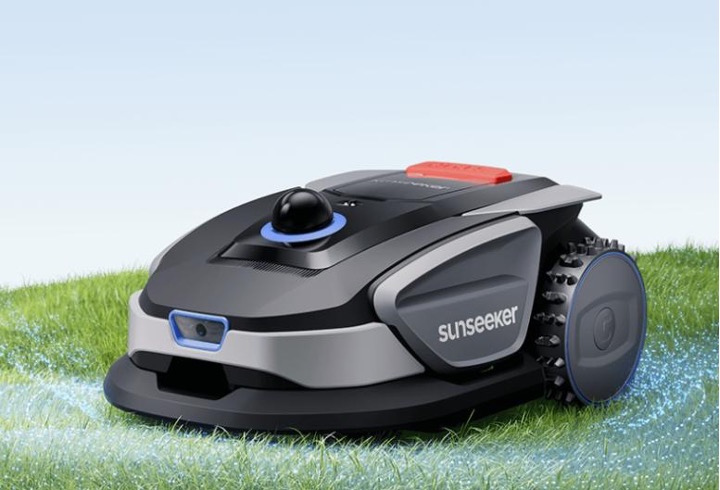
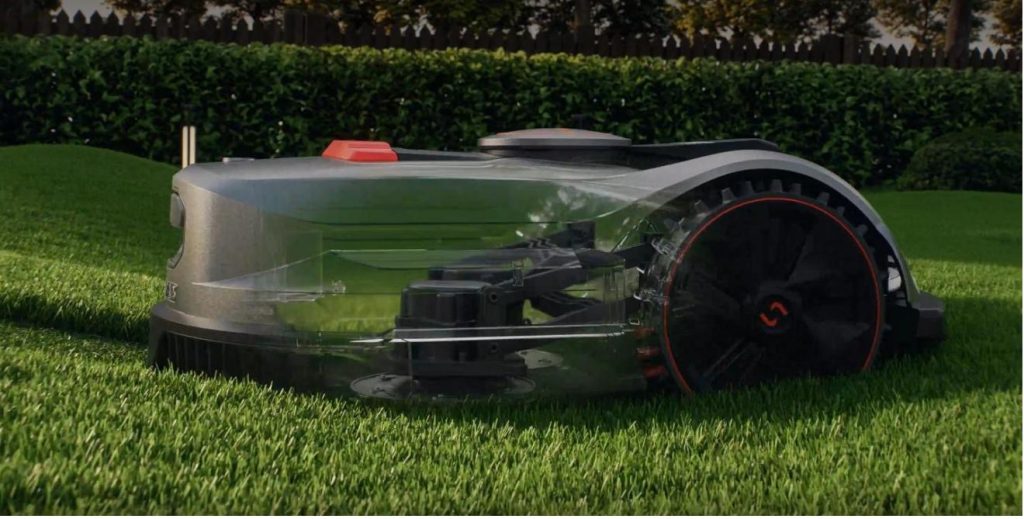
Wire-free robot lawn mowers use advanced navigation technology to cut grass with accuracy, without any buried perimeter cable. Instead of following a fixed wire, they rely on satellite guidance, smart algorithms, and a network of sensors to understand where to go and what to avoid. This shift in technology lets homeowners skip messy installations, adapt to changing gardens, and manage lawns with just a few taps on a phone. Sunseeker Tech perimeter wire-free robot lawn mowers also fit naturally into connected lifestyles. App control, scheduling, multi-zone management, multi-map storage, auto recharge, rain detection, OTA updates, and optional anti-theft support help busy homeowners manage lawn care more easily, whether indoors, at work, or away.
What Core Technologies Enable Wire-Free Navigation?
GPS and RTK Positioning Systems Explained
The robot lawn mower without perimeter wire use GPS to determine their position on your lawn, similar to how navigation apps track your car on a map. Standard GPS gives accuracy within a few meters, which is not precise enough for clean lawn edges. That is where RTK (Real-Time Kinematic) GPS comes in. RTK uses a base station near your home and corrects satellite signals in real time. This process narrows positioning accuracy down to a few centimeters. The mower compares its location to a virtual boundary drawn in the app. It then stays inside this digital fence while mowing in straight, efficient lines instead of random patterns, even on complex lawns.
AI Mapping and Machine Learning Algorithms
AI mapping allows a wire-free mower to build a digital model of your lawn as it drives. During setup, the mower follows your guidance or an automatic routine, recording its path and boundaries. Machine learning algorithms then process this data to identify lawns, beds, paths, and no-go zones. Over time, the mower analyzes how long each zone takes, where it slows down, and where it slips or bumps. It can then change routes, adjust speed, and select better mowing patterns. Some systems also detect growth trends, so the mower can recommend schedules. The more the mower works, the more data it gathers, and the smarter and more efficient its mowing strategy becomes.
Sensor Fusion: Cameras, LiDAR, and Ultrasonic Sensors
Wire-free robot lawn mowers cannot rely on GPS alone. Tall trees, walls, and buildings can block satellite signals. To stay safe and accurate, the mower combines data from several sensors, a process called sensor fusion. Cameras help identify edges, objects, and sometimes grass health. LiDAR emits laser pulses, then measures reflections to detect shapes and distances with high accuracy, even in low light. Ultrasonic sensors send high-frequency sound waves that bounce off obstacles; the mower uses the echo to judge distance. By blending these inputs, the mower can confirm its position, avoid toys and pets, stop at flower beds, and stay on the lawn, even when GPS becomes less reliable.
How Do These Technologies Work Together?
Real-Time Navigation and Path Planning Systems
Real-time navigation starts with the mower’s digital map of your lawn. The controller loads GPS and RTK data to fix the mower’s location. It then checks this position against virtual boundaries and mowing zones you set in the app. Path planning software calculates efficient routes, often using systematic stripes or grid patterns to avoid missed patches. As the mower moves, wheel sensors track distance and direction, while inertial sensors monitor tilts and bumps. The system constantly compares planned paths with live sensor data. If it detects drift or slip, it corrects the course within seconds. This tight feedback loop lets wire-free mowers maintain straight lines, neat edges, and consistent coverage.
Obstacle Detection and Adaptive Movement Control
Obstacle detection relies on cameras, LiDAR, ultrasonic sensors, and bump sensors working together. The mower scans ahead for unexpected objects such as toys, tools, hoses, or pets. When it spots something, the controller decides whether to slow down, stop, or steer around it. If sensors detect a collision risk, motors cut power to the blades in milliseconds. Adaptive movement control adjusts wheel speed, steering angle, and blade operation to match conditions. The mower may slow on slopes, change path on wet patches, and take tighter turns near beds or walls. This active control keeps mowing safe for children, pets, and the mower itself while protecting garden features.
Connectivity with Apps, Cloud, and Smart Systems
Connectivity turns a wire-free robot lawn mower into part of a smart home. The mower links to your Wi-Fi or mobile network, then syncs with a mobile app for setup and control. You draw virtual boundaries, create multi-zone schedules, and store multiple maps for front and back lawns. Cloud services can analyze usage data and send smarter recommendations or firmware upgrades. Sunseeker Tech perimeter wire-free robot lawn mowers support app control, automatic scheduling, auto recharge, rain detection, OTA updates, and optional anti-theft alerts, making remote management simple. Integration with voice assistants or smart home platforms lets you start, pause, or park the mower using routines or quick voice commands.
Conclusion
Wire-free robot lawn mowers rely on a powerful mix of navigation technologies rather than buried cables. GPS and RTK deliver precise positioning, while AI mapping and machine learning convert raw location data into efficient mowing plans. Sensor fusion with cameras, LiDAR, and ultrasonic sensors adds safety, reliability, and accuracy at the lawn edge. Real-time navigation and adaptive control keep the mower on track, even when conditions change. Connectivity with apps, cloud services, and smart home systems lets homeowners manage zones, schedules, and security from anywhere. Together, these technologies turn robot mowers into dependable, low-effort lawn care partners that fit seamlessly into modern, connected lifestyles.