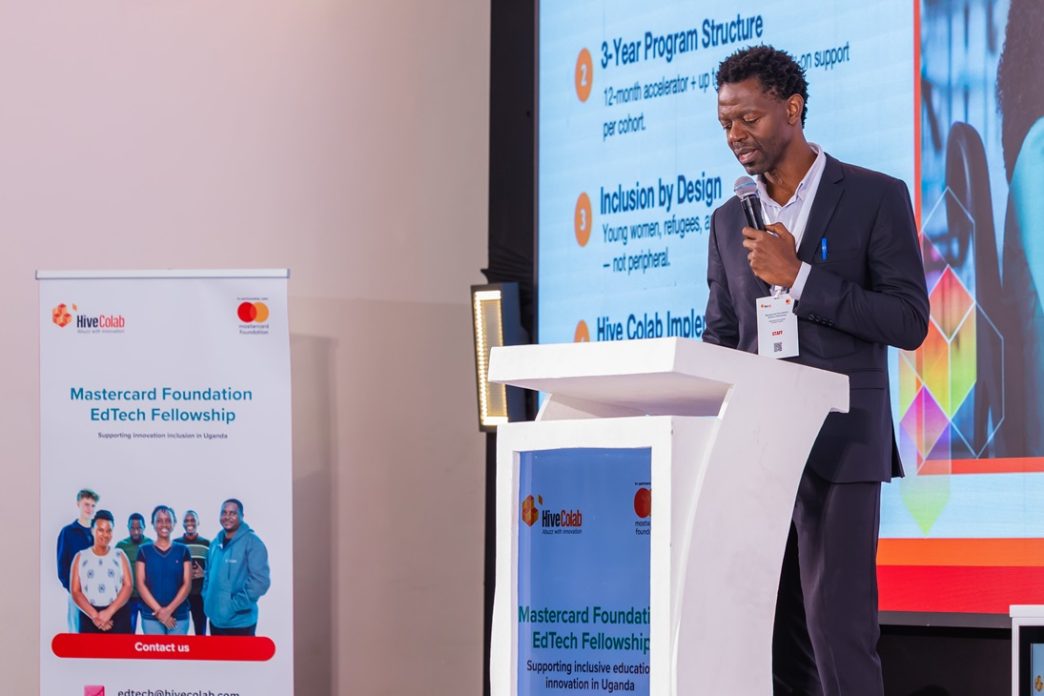
On Thursday, Peter Kyozira, Principal Education Officer for Admissions, Scholarships, and Student Affairs at the Ministry of Education and Sports, launched the Mastercard Foundation EdTech Fellowship on behalf of the State Minister for Higher Education. The programme, implemented by Hive Colab, aims to strengthen locally developed education technology solutions by supporting growth-stage EdTech ventures through structured acceleration, ecosystem collaboration, and continuous learning, to improve access, quality, and relevance of education across Uganda.
During the launch, which was held at Mestil Hotel & Residences in Kampala, Hive Colab presented insights from a baseline assessment of Uganda’s education technology landscape, highlighting both the rapid growth of innovation in the sector and the significant gaps in access, inclusion, teacher readiness, and rural reach that continue to limit scale and sustainability.
Presenting the findings, Teddy Ruge, Hive Colab Co-founder, said the study was commissioned to ensure the Mastercard Foundation EdTech Fellowship is built on evidence rather than assumptions, and that its findings will guide the design, prioritization, and measurement of the program over the next three (3) years.
The study forms the foundation of the Mastercard Foundation EdTech Fellowship in Uganda. The fellowship is designed to support 36 EdTech ventures over its lifetime and ultimately reach nearly 1 million learners across Uganda. It sits within Mastercard Foundation’s Young Africa Works strategy to enable 30 million young Africans to access dignified and fulfilling work by 2030. In Uganda, the program is focused on improving equitable access to quality education, youth skills development, and pathways to work for historically marginalized groups.
Teddy noted that the fellowship was intentionally designed with inclusion at its core, rather than as an afterthought.
Young women, refugees, and youth with disabilities are central to the model, because the key question is not simply whether EdTech solutions exist, but whether they reach the learners who need them most. To answer that, the study examined the current state of Uganda’s EdTech ecosystem, including school readiness, teacher readiness, learner access, devices, connectivity, local venture capacity, inclusion barriers, and policy alignment.
The study found that many teachers are still not comfortable using EdTech for lesson preparation, grading, or instruction. While school leaders are generally supportive, often involving teachers in ICT planning, encouraging discussions on its use, and prioritizing it to improve learner outcomes, classroom adoption remains limited, with most teachers using digital tools mainly for professional development and sourcing content rather than for direct student learning.
Learner engagement is similarly limited. Only a small proportion of students use digital tools to search for information during lessons or create content such as presentations and videos. Outside the classroom, even fewer use educational apps or complete homework on digital devices.
As for connectivity, internet access rates across learning institutions were reported to be below 30%, and only 35% of the children complete the full seven-year primary education cycle, structural gaps that the Fellowship’s selected ventures are directly working to address.
The baseline further warns that access is shaped by more than devices alone. For girls, household power dynamics can limit screen time and confidence with digital tools. For learners with disabilities, inaccessible school buildings, learning centers, and homes can make even the best-designed digital tools unusable. The study argues that inclusive EdTech requires inclusive design processes, and that solutions must be developed with, not just for, people with disabilities.
Cost is another major barrier, especially for rural families and refugees, because the total cost of ownership includes data, repairs, and subscriptions, not just the device itself.
Three major barriers stood out in the inclusion analysis: language, connectivity, and equity. The study notes that all survey solutions were English-only, even though many learners in underserved communities use local languages or dialects. It also found that 83% of solutions offer both online and offline functionality, showing that many vendors are already adapting to connectivity constraints. However, the refugee access gap remains wide, with 89% of solutions reportedly not yet reaching refugee populations effectively.
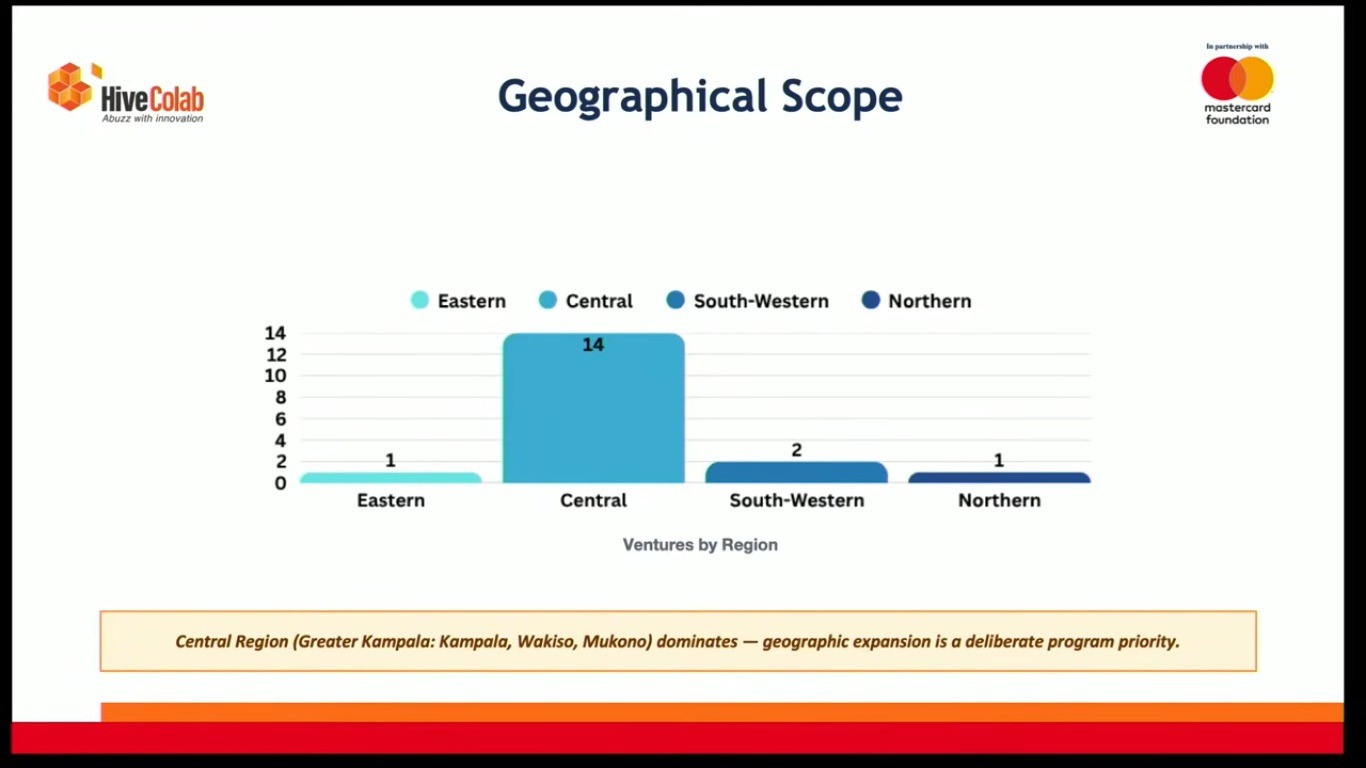
The report also highlights a stark geographic imbalance. Most EdTech activity is concentrated in the Central region (Kampala, Mukono, and Wakiso), while coverage beyond the capital is sparse. That urban concentration, the study suggests, risks leaving rural learners behind unless solutions are designed for the last mile.
On policy, the fellowship is being positioned to work across three government mandates: education, technology, and workforce development. Teddy said this alignment is essential if EdTech solutions are to support curriculum delivery, strengthen Uganda’s digital economy, and translate learning into work opportunities. He said the baseline study provides a credible, policy-aligned starting point for tracking impact over time.
The full baseline report is expected to be available by the end of May 2026.