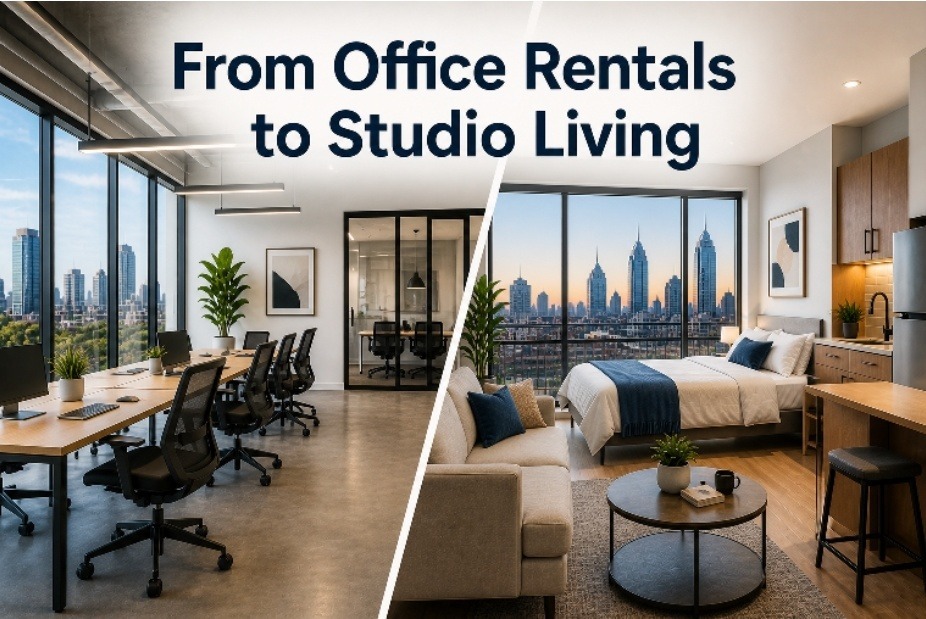
The way people think about space is changing, but not in obvious ways.
It is not just about smaller offices or compact apartments. It is about how space fits into daily routines, how easily it adapts, and how much friction it removes from work and life.
Across cities like Oklahoma City and Philadelphia, this shift is becoming more visible. Businesses and individuals are making more intentional choices, not based on size or appearance alone, but on how well a space actually works over time.
Why Office Space Is Becoming More Flexible
1. Businesses Are Prioritizing Function Over Size
For many businesses, the goal is no longer to secure the largest possible office. It is to find a space that supports how teams actually operate.
Work patterns have changed. Teams collaborate differently, hybrid work has become common, and space is no longer used in rigid ways.
In a growing market like Oklahoma City, where industries such as logistics, healthcare, and small business sectors continue to expand, companies exploring options like office space for rent in Oklahoma city are becoming more deliberate in their decisions. Many are also evaluating different types of commercial office space for rent based on how well those environments support productivity rather than just availability.
They are looking for environments that support collaboration without crowding, allow for movement and flexibility, and do not become inefficient as teams evolve.
A space that looks impressive but slows down workflow quickly becomes a burden.
2. Shorter Commitments, Smarter Decisions
Long-term commitments used to be the norm in commercial real estate. Today, that approach feels restrictive for many businesses.
Growth is unpredictable. Teams scale faster than expected or shift direction entirely.
This is why flexibility in leasing is becoming more valuable. Businesses want the ability to adjust without being locked into a setup that no longer fits.
Office rentals now serve a different purpose. They are not just physical locations. They are part of a broader operational strategy.
3. Location Still Matters, but for Different Reasons
The idea of a good location has changed.
It is no longer only about visibility or prestige. It is about accessibility and practicality.
Businesses are evaluating how easily employees can commute, how close they are to partners or suppliers, and whether the surrounding infrastructure supports operations.
In cities like Oklahoma City, where development is expanding outward, these decisions influence how efficiently a business can function day to day.
Why Studio Living Is Gaining Momentum
1. Simplicity Is Becoming a Priority
On the residential side, there is a noticeable shift toward simpler living.
People are becoming more selective about how much space they actually need versus how much they maintain.
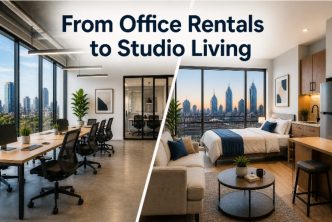
In a dense and evolving city like Philadelphia, where urban living continues to attract young professionals and remote workers, demand for studio apartments for rent in philadelphia pa is steadily increasing. Many renters are also drawn to options like a highrise studio apartment, which offers both efficient living and access to city views and amenities.
A well-designed studio can support daily routines without wasted space, offer easier maintenance, and create a more manageable lifestyle.
It is not about having less. It is about having what works.
2. Location and Lifestyle Are Closely Linked
For residents, location is deeply tied to daily experience.
Being close to work, public transport, and essential services reduces the need for long commutes and unnecessary travel.
In cities like Philadelphia, where neighborhoods vary significantly in character and accessibility, choosing the right location can shape everyday life more than the size of the apartment itself.
3. Well Designed Small Spaces Perform Better
Not all small spaces feel efficient. The difference comes down to design.
A poorly designed studio can feel restrictive. A well-designed one can feel intuitive and comfortable.
Storage, layout flow, and natural light all play a role in making a smaller space feel functional rather than limiting.
Over time, residents value how a space works more than how large it appears.
4. Lower Commitment, Greater Flexibility
Just like businesses, residents are also avoiding long-term rigidity.
Studio apartments offer flexibility for changing jobs, shifting lifestyles, and exploring different neighborhoods.
This flexibility makes them especially appealing in urban environments where needs can change quickly.
The Overlap Between Office and Living Spaces
While office rentals and studio living serve different purposes, the reasoning behind both choices is becoming similar.
Both businesses and residents are moving toward spaces that reduce unnecessary complexity, adapt easily to change, and support daily routines without friction.
This shift reflects a broader change in how people define value in real estate. It is no longer about how much space is available. It is about how well that space performs.
A broader perspective on this shift can be seen in From Leasing to Living: How Real Estate Is Evolving Across Commercial and Residential Markets, which explores how the boundaries between commercial and residential real estate are becoming increasingly interconnected.
Where Space Decisions Are Heading
The trend is not toward bigger or smaller spaces. It is toward smarter spaces.
In markets like Oklahoma City and Philadelphia, this is already influencing how properties are developed, leased, and managed.
Businesses are choosing offices that align with how they work today and tomorrow. Residents are choosing living spaces that simplify their routines rather than complicate them.
The common thread is clear.
Space is no longer just something people occupy. It is something that needs to actively support how they live and work.