Contractors play an indispensable role in modern industry, taking on specialist tasks like maintenance, repairs, construction and commissioning. Yet their position as outsiders to the host site makes them disproportionately vulnerable to workplace accidents. According to the Health and Safety Executive (HSE), 124 workers were killed in work-related accidents in Great Britain during 2024/25, and 680,000 people sustained non-fatal injuries at work. Construction alone accounted for 35 fatalities, with falls from height responsible for over a quarter of all worker deaths. Contractor-related incidents make up a meaningful share of these figures.
The financial burden is just as striking. HSE figures place the cost of workplace injuries and ill health at £22.9 billion annually, with around 40.1 million working days lost each year. For organisations engaging contractors across multiple sites, even one preventable accident can trigger devastating human, legal and reputational consequences. A robust Contractor Management System has emerged as one of the most effective tools businesses can deploy to bring this risk under control.
Why Contractors Face a Higher Risk of Accidents
Contractors face risks permanent staff don’t. They’re often unfamiliar with the site, its hazards, its equipment and emergency procedures — and many rotate between clients weekly, each with different rules and safety cultures. Language barriers, rushed inductions and tight deadlines compound the danger.
The fragmented nature of contractor work also blurs accountability. On a single project, the principal contractor, multiple subcontractors and the client organisation may all share legal responsibility for safety. When duties are split across several parties without coordination, gaps inevitably appear — and gaps are where accidents happen. CDM 2015 places explicit duties on clients and principal contractors to plan, manage and monitor contractor work — duties that cannot be discharged by simply leaving safety to the contractor.
Centralising Compliance from a Single Platform
A modern contractor management platform replaces spreadsheets, emails and paper files with a centralised digital system that oversees the entire contractor lifecycle — from pre-qualification through to post-job review. Every certificate, insurance document, training record and performance evaluation lives in one place, accessible to safety managers, procurement teams and site supervisors in real time.
This isn’t just about cutting paperwork. A centralised system shuts the gaps that let unqualified workers onto site — flagging expiring insurance and certificates automatically, and using AI to scan, extract and match credentials to the right worker. Compliance becomes a single, live view rather than a scramble through spreadsheets.
Consistent Inductions and Verified Training
Inconsistent inductions are one of the most common contributors to contractor injuries. Manually delivering inductions across multiple sites is expensive and slow, and the quality varies between trainers. A digital system standardises inductions by allowing contractors to complete training online before arriving on site. Completions are tracked automatically, and content can be assigned by site, role or contractor company.
Digital Training Passports take this a step further by linking each contractor’s verified qualifications to a personal QR code or mobile profile. Site managers can scan a worker’s pass on arrival and instantly confirm that they hold the right certifications for the task. This prevents the all-too-common scenario of contractors being assigned to jobs beyond their competence — a scenario that can lead to falls from height, machinery accidents and confined-space incidents.
Integrating Permit-to-Work for High-Risk Tasks
High-risk activities such as hot work, confined-space entry and working at height require permits that confirm the right controls are in place. A digital contractor system can integrate permit-to-work workflows so that no permit is issued unless the assigned worker’s PQQ status, insurance and training records are all current. This closes a major loophole that has historically allowed unqualified contractors to undertake the very tasks most likely to cause life-altering injuries.
Given that falls from height alone account for over 25% of UK workplace fatalities, strict competency gating around high-risk permits is one of the highest-impact accident-prevention measures any organisation can implement.
Real-Time Monitoring and Performance Feedback
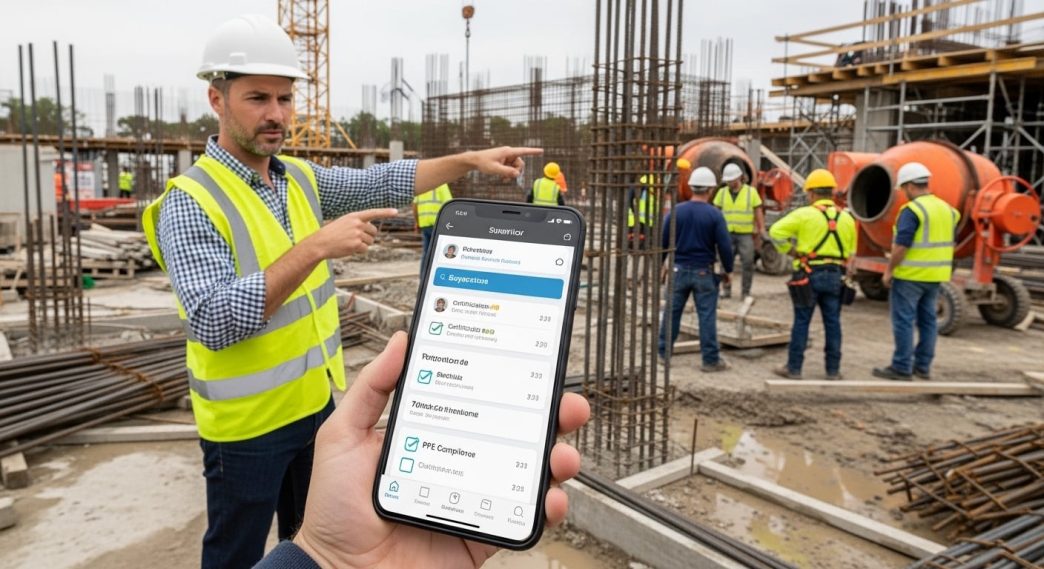
Even the best-vetted contractors can drift from safe practices once on site. Modern platforms include mobile-friendly tools that let supervisors record observations, near misses and “Rate-a-Job” performance scores from a smartphone or tablet. This converts everyday site knowledge into structured data that informs future hiring decisions.
When combined with online risk management software, these monitoring tools allow safety teams to identify patterns — repeat offenders, problem activities, or sites where compliance dips — and intervene before incidents occur. Continuous feedback loops also reinforce a safety culture: contractors quickly learn that performance is measured, scored and shared, and they adjust their behaviour accordingly.
Better Communication Across the Supply Chain
Workplace accidents frequently trace back to a simple breakdown in communication. A contractor working under one supervisor may not know that another team is operating overhead, or that a chemical hazard has been introduced into a shared area. A centralised system bridges these gaps with instant messaging, automated alerts and shared incident logs that ensure every party is working from the same information.
By coordinating activities across multiple subcontractors, the system supports the “One Team” safety approach that industry leaders increasingly advocate — where everyone owns safety and any worker feels empowered to stop unsafe work.
A Smarter, Safer Way Forward
Industry analysis suggests that effective contractor management can substantially reduce workplace accidents. Achieving that reduction requires more than software, however — it requires a commitment to treating contractors as part of an extended workforce rather than anonymous outsiders. A digital contractor management platform provides the infrastructure to make that commitment practical: automated PQQs, digital inductions, verified competencies, permit integration and real-time performance tracking, all in one place.
For UK businesses operating in construction, manufacturing, utilities and facilities management, the question is no longer whether to digitise contractor management, but how quickly to do it. Each preventable accident represents a tragedy for a worker, a family and a community — and an avoidable cost for the business. Investing in a structured, technology-driven contractor management process is one of the clearest ways to translate safety policy into measurable, on-the-ground accident prevention.