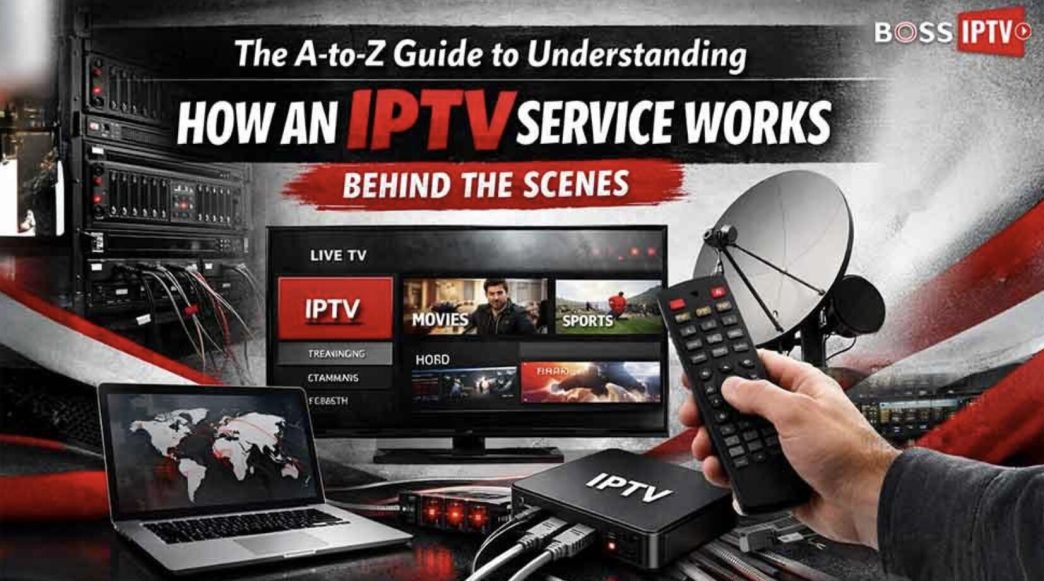
Most people think IPTV service is just streaming with a subscription. But theres a whole technical chain running every time you watch a live channel. Once you understand it you can easily tell the difference between a provider worth paying for and one thats going to let you down when it matters most
How Live TV Signals Get Captured and Sent Over the Internet
It all starts at a satellite dish or cable feed. That raw signal gets pulled into a hardware encoder which turns it into a digital format your internet connection can actually carry
Thats called encoding. Transcoding is different. Transcoding takes an already digital signal and converts it into multiple quality versions so your stream can adjust based on your internet speed. Think 1080p for fast connections and 480p as a fallback when speeds drop
Bad transcoding is honestly the main reason IPTV buffers so much. Some providers skip this infrastructure to save money and you end up paying for a service that breaks every time traffic goes up
What CDNs and Load Balancing Actually Do
A CDN stands for Content Delivery Network. It stores copies of streams on servers spread across different locations. So when you’re watching from the USA you’re not pulling the stream from a server halfway across the world. You’re connecting to the closest server node which could be right in your own country
That cuts down lag and keeps things stable. Without a CDN every single viewer connects to one server. When a big sports event or a popular live show is on that one server just cant handle it and everything goes down
Load balancing works alongside CDN. It splits traffic across multiple servers so no single one gets slammed. The best Indian IPTV subscription services use both of these. Providers that skip this setup will always struggle during peak hours no matter what they promise you
M3U Playlists and Xtream Codes API Explained
When you sign up for Indian IPTV subscription plans you get login credentials. Those credentials connect to something called an Xtream Codes API. Thats the system that checks your account verifies your device and tells the app which channels you have access to
After that your app loads an M3U playlist. Its basically a text file with a list of channel links. Apps read that file and display your channel list. Simple as that
The thing is if those links point to bad servers your channels go offline. Doesnt matter how good your app looks. This is why IPTV pricing in India or the USA shouldnt be the only thing you look at when picking a provider. A cheap Indian IPTV subscription running on weak servers will always underperform
Middleware and EPG and Why They Matter
Middleware is the platform that sits between the stream and the viewer. It handles accounts billing device limits and who gets access to what. A solid middleware setup lets providers manage thousands of users without things falling apart
EPG stands for Electronic Program Guide. Its the schedule that tells you whats on now and whats coming up next. That data gets pulled from outside sources and synced to match your time zone. For Indian viewers watching from the USA that means the schedule has to convert time zones correctly so you actually know when something is on
When EPG is broken or missing you’re watching blind. You have no idea if something already started or when the next thing airs. Good IPTV yearly subscription India focused services get this right. A lot of cheaper ones just dont bother
Real Providers vs Resellers
Most low cost IPTV services dont build anything themselves. They buy access from a wholesaler and just resell it under a different name. No encoding setup no CDN no middleware they own. Just a login panel they bought for cheap
When you’re looking at Indian IPTV subscription plans its worth asking some real questions. Who actually owns the servers. How many CDN locations do they run. Do they handle transcoding themselves. A provider that can answer those clearly like Boss IPTV does is working on a completely different level than someone just flipping a reseller panel
The tech doesnt lie. Providers who actually understand it are upfront about how it works
FAQs
Whats the difference between IPTV encoding and transcoding
Encoding turns a raw broadcast signal into digital. Transcoding takes that digital signal and makes multiple quality versions so your stream can adjust depending on your internet speed
Why does IPTV buffering happen
Usually its weak transcoding servers no CDN or no load balancing. When too many people connect at once and the infrastructure cant keep up streams freeze or drop out
What should I look for in Indian IPTV subscription plans
Look for CDN coverage stable uptime accurate EPG and a provider that can actually explain how their setup works. Those things matter way more than just the price
Is a cheap Indian IPTV subscription worth it compared to a yearly plan
A monthly plan is fine for testing a service out. But an IPTV yearly subscription India plan saves you a lot more money long term. If the provider is reliable locking in annually just makes more sense than paying month to month all year