Introduction
Choosing Bitcoin mining hardware can feel confusing, especially for beginners. New models are released regularly, specifications change quickly, and there are many factors that affect mining performance. A machine with a high hash rate may not always be the best choice if it consumes too much electricity. Likewise, a low-cost miner may not generate enough output to justify its operating costs.
This guide explains how to evaluate mining hardware using simple language. Whether you are planning a home setup in Texas, Florida, California, New York, or another location, understanding the basics can help you make a better long-term decision.
The goal is not to focus on a specific product. Instead, it is to understand what makes mining hardware effective, efficient, and suitable for different types of users.
What Is Bitcoin Mining Hardware?
Bitcoin mining hardware is specialized equipment designed to perform the calculations required to secure the Bitcoin network and process transactions.
In the early days, people could mine Bitcoin using ordinary computers. As the network grew, mining became more competitive. Today, specialized machines are used because they can perform these calculations much faster and more efficiently.
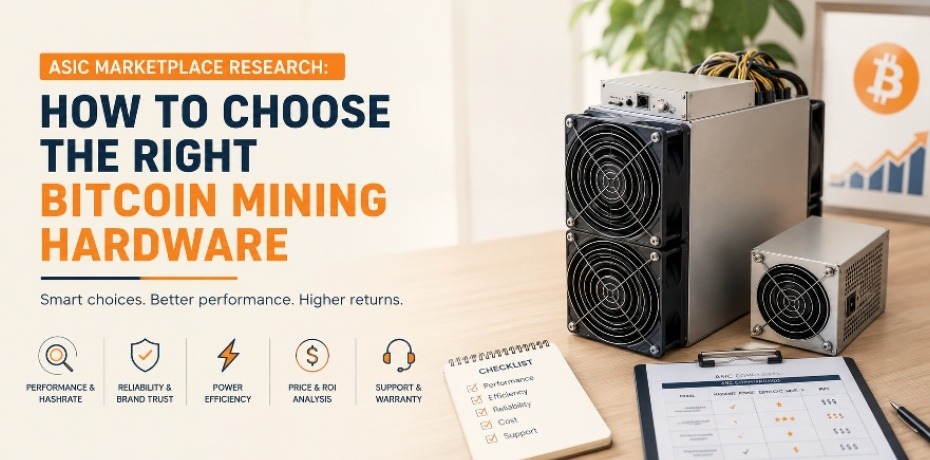
A Bitcoin Miner is specifically designed to perform SHA-256 calculations, the algorithm used by Bitcoin. These machines are built to operate continuously and deliver high performance while maintaining energy efficiency.
Why Choosing the Right Hardware Matters
The mining machine you select affects nearly every part of your operation.
It influences:
- Electricity consumption
- Mining profitability
- Cooling requirements
- Noise levels
- Maintenance costs
- Long-term return on investment
Many beginners focus only on hash rate. While hash rate is important, it is only one part of the equation. A complete evaluation includes power efficiency, reliability, operating environment, and future scalability.
Understanding Hash Rate
Hash rate measures how many calculations a miner can perform every second.
A higher hash rate generally means:
- More mining power
- Greater chance of earning rewards
- Better competitiveness on the network
Hash rate is usually measured in:
- GH/s (Gigahashes)
- TH/s (Terahashes)
- PH/s (Petahashes)
Modern mining machines are commonly measured in terahashes per second.
However, the highest hash rate is not always the smartest choice. Power consumption must also be considered.
Power Consumption and Efficiency
Electricity is one of the largest expenses in mining.
When comparing hardware, efficiency is often more important than raw performance.
A machine that produces strong output while using less electricity can remain profitable for a longer period.
Key factors include:
Power Draw
Power draw is measured in watts.
Higher-performance machines generally require more power. Before purchasing equipment, verify that your electrical system can support the load safely.
Energy Efficiency
Efficiency measures how much energy is required to produce each terahash.
More efficient machines:
- Generate less heat
- Reduce operating costs
- Improve long-term profitability
For many miners, efficiency is the single most important specification.
Home Mining vs Mining Farm Setups
The ideal hardware depends on where it will operate.
Home Mining
Home mining works best for users who want to learn, experiment, or run a small operation.
Advantages include:
- Greater control
- Easier maintenance
- Lower initial complexity
Challenges include:
- Noise
- Heat generation
- Residential electricity costs
Some miners prefer compact and quiet equipment for home use.
Mining Farms
Large-scale operations prioritize efficiency and scalability.
Mining farms often focus on:
- High-performance hardware
- Industrial cooling systems
- Lower electricity costs
- Professional monitoring
In these environments, noise is less important than operational efficiency.
Cooling and Environmental Factors
Mining machines generate significant heat.
Without proper cooling, performance can decrease and hardware lifespan may be reduced.
Important considerations include:
Ventilation
Fresh airflow helps remove heat from the mining area.
Temperature
Mining equipment performs best within manufacturer-recommended temperature ranges.
Dust Control
Dust buildup can restrict airflow and reduce cooling performance.
Humidity
Excess moisture can damage electronic components over time.
A clean and well-ventilated environment helps improve stability and reliability.
How Profitability Is Determined
Many people ask a simple question:
“Which miner is the most profitable?”
The answer depends on several factors.
Mining profitability is influenced by:
- Hardware efficiency
- Hash rate
- Electricity cost
- Bitcoin market conditions
- Network difficulty
- Operating uptime
Even a powerful machine may perform poorly if electricity costs are too high.
Before purchasing equipment, it is important to estimate operating expenses and expected performance.
Check the crypto mining and profit calculator at miningnow.com
Common Mistakes Buyers Make
Many new miners make the same mistakes.
Focusing Only on Price
The cheapest machine is not always the best value.
Ignoring Electricity Costs
Operating expenses often exceed initial purchase costs over time.
Overlooking Noise Levels
Some machines are significantly louder than household appliances.
Buying Without Research
Understanding specifications helps avoid expensive mistakes.
Neglecting Cooling Requirements
Heat management is essential for stable operation.
Questions to Ask Before Buying Mining Hardware
Before selecting equipment, ask yourself:
What Is My Budget?
Your budget determines which hardware categories are realistic options.
Where Will the Machine Operate?
Home environments and commercial facilities have different requirements.
How Much Electricity Costs in My Area?
Local utility rates play a major role in profitability.
Am I Mining as a Hobby or Business?
Goals affect the type of equipment that makes the most sense.
Do I Have Adequate Ventilation?
Proper airflow is necessary for long-term operation.
How to Compare Different Mining Models
When evaluating multiple mining machines, compare:
- Hash rate
- Power consumption
- Efficiency rating
- Noise level
- Cooling design
- Reliability history
- Manufacturer reputation
Looking at all these factors together provides a more accurate picture than focusing on a single specification.
The Importance of Reliable Suppliers
Hardware quality is only part of the equation.
Working with reputable suppliers helps reduce risks related to shipping, support, and product authenticity.
Many buyers spend time researching vendors before making a decision. Companies such as ASIC Marketplace are often referenced within the mining community because users want access to detailed specifications, educational resources, and information about different mining models.
Future Trends in Mining Hardware
Mining technology continues to evolve.
Manufacturers are constantly working to improve:
- Energy efficiency
- Cooling systems
- Noise reduction
- Performance density
As competition increases, efficient hardware becomes even more important.
Future generations of mining equipment are expected to focus heavily on reducing power consumption while maintaining strong performance.
Conclusion
Choosing mining hardware is not simply about finding the most powerful machine. The best decision depends on your goals, electricity costs, operating environment, and long-term expectations.
Successful miners evaluate efficiency, cooling requirements, reliability, and operating expenses before making a purchase. By understanding these factors, beginners and experienced miners alike can make more informed decisions and build a stronger foundation for their mining journey.
A crypto Miner may look similar to other mining devices, but the most effective hardware is the one that matches your specific needs rather than simply offering the highest specifications.
When approached carefully, mining hardware selection becomes much easier, helping you focus on performance, efficiency, and sustainability over the long term.