Why Professional Pool Service Is Essential for Every Pool Owner
A swimming pool is much more than a place to cool off during warm weather because it serves as a centerpiece for relaxation, recreation, family gatherings, and outdoor entertainment. While owning a pool offers countless benefits, it also comes with the responsibility of keeping the water clean, the equipment operating efficiently, and the entire system functioning safely throughout the year. Every day, a swimming pool is exposed to dust, leaves, pollen, insects, rainwater, body oils, sunscreen, and other contaminants that gradually affect water quality. Without regular care, these contaminants accumulate and create conditions that encourage algae growth, cloudy water, unpleasant odors, and unnecessary stress on expensive equipment. Professional pool service provides a complete maintenance solution that keeps every part of the pool operating properly while ensuring that swimmers always enjoy a healthy and inviting environment.
Routine service is about much more than improving appearance because every maintenance visit protects the long-term value of the pool. Pumps, filters, heaters, plumbing systems, chlorinators, and automated controls all depend on proper maintenance to continue operating efficiently. Small issues such as clogged filters, worn seals, minor leaks, or chemical imbalances often develop gradually and may remain unnoticed until they become expensive repairs. By following a consistent service schedule, pool owners reduce the likelihood of unexpected equipment failures while extending the lifespan of every mechanical component. Investing in professional care ultimately saves both time and money while providing greater confidence that the pool is always ready for use.
Maintaining Crystal-Clear Water Throughout the Season
One of the primary goals of professional pool service is maintaining water that remains clean, clear, and safe regardless of changing weather conditions or swimming activity. Clear water does not happen by accident because it requires careful attention to sanitation, filtration, circulation, and chemical balance every week. Even water that appears perfectly clean may contain bacteria, algae spores, or microscopic contaminants that affect swimmer health if proper maintenance is neglected. Professional technicians understand how these factors interact and use accurate testing methods to maintain healthy water conditions throughout the swimming season.
Water quality changes continuously because of sunlight, evaporation, rainfall, temperature fluctuations, and the number of people using the pool. Chlorine levels decrease over time, pH naturally shifts, and minerals gradually accumulate within the water. Routine testing allows these changes to be corrected before they begin affecting water clarity or equipment performance. Maintaining balanced chemistry not only creates a comfortable swimming experience but also protects pool finishes, plumbing systems, and expensive equipment from corrosion, staining, and mineral buildup that could shorten their lifespan.
Comprehensive Cleaning That Protects the Entire Pool
Cleaning a swimming pool involves much more than removing leaves from the surface because contaminants settle throughout every part of the pool over time. Dust, pollen, insects, grass clippings, algae spores, and organic material collect on walls, floors, tile lines, and steps where they gradually affect water quality and create ideal conditions for algae growth. Professional cleaning services follow a thorough process that removes visible debris while also eliminating hidden contaminants that many pool owners overlook during routine cleaning.
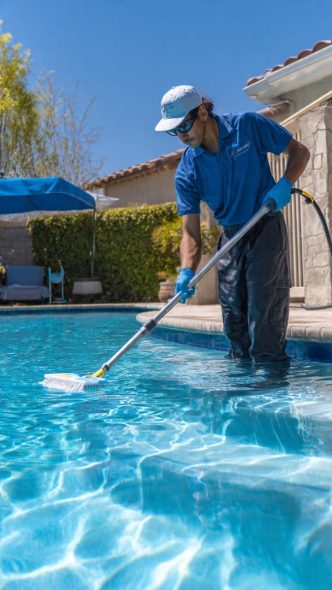
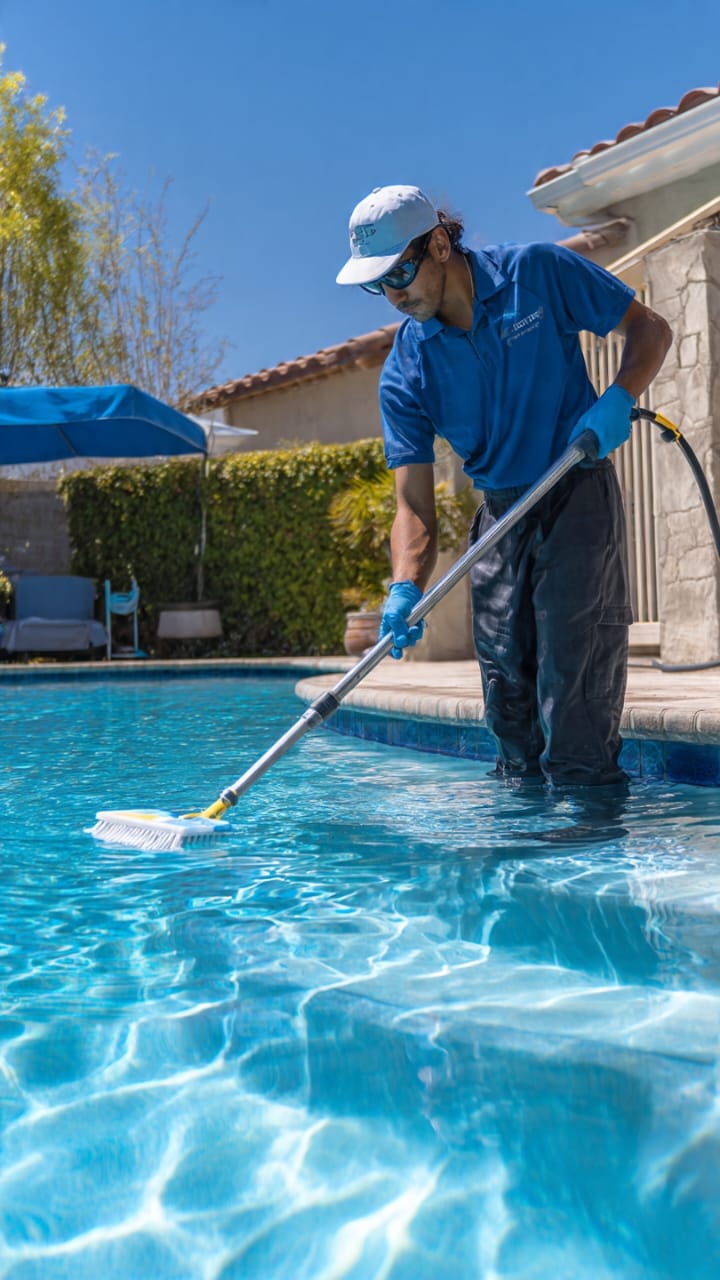
Technicians carefully skim the water surface, brush walls and steps, vacuum the pool floor, empty skimmer baskets, and clean tile lines during each service visit. These procedures improve both the appearance and cleanliness of the pool while reducing the workload placed on the filtration system. Removing debris before it begins decomposing helps maintain stable water chemistry and allows sanitizers to work more effectively. Consistent cleaning also prevents stains from developing on pool surfaces, preserving the beauty of the pool for many years.
The Importance of Proper Water Circulation
Water circulation is one of the most important factors affecting overall pool health because every part of the maintenance system depends on continuous movement of water. Pumps move water through filters, heaters, chlorinators, and return lines, allowing contaminants to be removed while distributing sanitizers evenly throughout the pool. Poor circulation creates stagnant areas where algae and bacteria can develop despite otherwise balanced water chemistry. Maintaining strong circulation ensures that every gallon of water receives proper filtration and treatment during normal operation.
Professional technicians inspect circulation systems regularly to verify that pumps, valves, plumbing lines, and return jets are functioning correctly. They monitor water flow, inspect pressure readings, and identify restrictions that could reduce system efficiency. Proper circulation not only improves water quality but also increases the effectiveness of every chemical added to the pool, making maintenance more efficient while reducing unnecessary operating expenses.
Routine Equipment Inspections Prevent Expensive Repairs
Every swimming pool relies on several mechanical systems working together to maintain healthy water conditions. Pumps, filters, heaters, automation controls, chlorinators, plumbing lines, electrical systems, and timers all experience gradual wear as they operate throughout the swimming season. Small mechanical issues often begin developing long before they become noticeable, making regular inspections an important part of preventive maintenance. Identifying these concerns early allows repairs to be completed quickly while avoiding the cost of replacing major equipment later.
Professional pool service includes inspecting motors, pump seals, plumbing fittings, electrical connections, valves, and pressure gauges during routine visits. Technicians also evaluate equipment performance to ensure that every component operates according to manufacturer recommendations. Preventive inspections reduce the likelihood of emergency breakdowns while improving reliability, extending equipment lifespan, and lowering long-term maintenance costs. By keeping every mechanical system in excellent condition, homeowners enjoy greater peace of mind throughout the swimming season.
Maintaining a Healthy Filtration System
The filtration system serves as the primary defense against microscopic contaminants that affect water quality. Every day, thousands of gallons of water circulate through the filter, carrying dirt, pollen, oils, bacteria, and other particles that cannot be removed through skimming or vacuuming alone. As these contaminants accumulate inside the filter, water flow gradually decreases, forcing pumps to work harder while reducing filtration efficiency. A neglected filter often leads to cloudy water, increased energy consumption, and unnecessary wear on expensive equipment.
Professional technicians inspect and service filtration systems regularly to maintain maximum performance. Sand filters are backwashed when necessary, cartridge filters are cleaned or replaced according to their condition, and diatomaceous earth filters receive specialized maintenance that restores proper filtration efficiency. Keeping filters clean improves circulation, enhances water clarity, reduces operating costs, and supports every other aspect of pool maintenance. A properly maintained filtration system forms the foundation of consistently healthy swimming water throughout the entire season.
Preventing Algae Growth Through Consistent Professional Care
Algae are one of the most common and frustrating problems faced by swimming pool owners, and they can develop much faster than many people realize. Warm temperatures, poor circulation, unbalanced water chemistry, and accumulated organic debris create the ideal conditions for algae spores to multiply rapidly. Once algae begin spreading, the water may become cloudy or discolored, pool surfaces become slippery, and the overall swimming environment quickly becomes unhealthy. Restoring a pool after a severe algae outbreak often requires extensive cleaning, chemical treatments, and additional filtration time, making prevention far more effective and affordable than correction.
A professional service schedule focuses on preventing algae before it has an opportunity to grow. During routine visits, technicians brush pool walls, clean steps, vacuum the floor, remove organic debris, and carefully monitor sanitizer levels to eliminate conditions that encourage algae development. Areas with weaker circulation, such as corners, behind ladders, and around steps, receive extra attention because algae commonly begin growing in these locations. Consistent preventive care keeps the water sparkling clear while reducing the need for excessive chemical treatments and helping pool owners avoid unnecessary maintenance expenses throughout the season.
Seasonal Pool Service Protects Your Investment
Every season brings unique challenges that affect water quality and equipment performance. During warmer months, increased swimming activity, intense sunlight, and higher temperatures cause sanitizers to dissipate more quickly while introducing additional contaminants into the water. Heavy rainstorms may dilute chemicals, and strong winds often carry leaves, dust, pollen, and other debris into the pool. Without seasonal adjustments, maintaining balanced water chemistry becomes much more difficult, and equipment may be forced to work harder to keep the water clean.
Professional seasonal service adapts maintenance procedures to match changing environmental conditions throughout the year. Technicians increase inspections when necessary, adjust chemical treatments according to weather patterns, and monitor equipment performance more closely during periods of heavy pool usage. During cooler months, routine service remains equally important because debris, changing temperatures, and reduced circulation can still affect water quality and mechanical systems. Proper seasonal care helps maintain excellent pool conditions year-round while preventing unnecessary wear on valuable equipment.
Protecting Pool Equipment with Preventive Maintenance
The mechanical equipment supporting a swimming pool represents a significant investment that deserves regular attention. Pumps, heaters, filters, chlorinators, plumbing systems, timers, and automation controls all work together continuously to maintain healthy water conditions. As these components operate day after day, they naturally experience wear that can eventually affect performance if small issues are ignored. Minor leaks, worn pump seals, clogged impellers, loose fittings, or partially blocked plumbing may appear insignificant at first, but they often lead to expensive repairs when left unresolved.
Routine equipment inspections performed during professional service visits allow technicians to identify these developing problems before they become major failures. Motors are evaluated for proper operation, plumbing connections are inspected for leaks, pressure gauges are monitored, and filtration systems are checked to ensure efficient water flow. Addressing small maintenance concerns early significantly extends equipment lifespan while reducing the likelihood of emergency breakdowns during the busiest months of the swimming season. Preventive maintenance protects both the pool owner’s investment and the long-term reliability of the entire system.
Improving Energy Efficiency Through Regular Pool Service
Many homeowners are surprised to learn that routine maintenance has a direct impact on the amount of energy their swimming pool consumes. Clean filters, unrestricted plumbing, properly functioning pumps, and balanced circulation systems require considerably less electricity than equipment struggling against dirt, debris, or restricted water flow. When filters become clogged or skimmer baskets remain full, pumps must work harder to maintain circulation, increasing utility costs while placing unnecessary strain on mechanical components.
Professional technicians help maximize efficiency by cleaning filtration systems, inspecting pump performance, verifying circulation schedules, and ensuring every component operates under optimal conditions. They may also recommend upgrades such as variable-speed pumps, programmable automation systems, or energy-efficient heaters when appropriate. These improvements lower operating costs while maintaining outstanding water quality, allowing homeowners to enjoy a beautiful swimming pool without excessive monthly energy expenses.
The Value of Hiring Experienced Pool Professionals
Although basic cleaning can be performed by many homeowners, professional service provides a level of expertise that extends far beyond routine maintenance. Experienced technicians understand the relationship between water chemistry, circulation, filtration, equipment performance, and seasonal environmental changes. Their training allows them to identify subtle warning signs that often go unnoticed until serious problems develop. This knowledge helps prevent expensive repairs while maintaining consistently healthy swimming conditions throughout the year.
Working with experienced professionals also saves homeowners valuable time and eliminates the uncertainty that often comes with balancing chemicals or diagnosing equipment problems. Choosing professional pool service allows every aspect of pool care to be handled by trained specialists who follow proven maintenance procedures during every visit. Instead of spending weekends troubleshooting cloudy water or malfunctioning equipment, homeowners can focus on enjoying their pool with confidence that it is being maintained to the highest standards.
Creating a Long-Term Maintenance Plan
A swimming pool performs best when maintenance is approached as an ongoing process rather than an occasional task. Establishing a consistent service schedule allows technicians to monitor water chemistry, clean filtration systems, inspect equipment, and remove debris before small issues become costly repairs. Regular visits also create detailed maintenance records that help identify patterns, predict equipment replacement needs, and improve overall system performance over time. Preventive care is always more effective than reacting to problems after they have already affected the pool.
Long-term maintenance planning also helps preserve the visual appeal and financial value of the property. Clean water, properly functioning equipment, well-maintained surfaces, and reliable operation create an inviting outdoor space that enhances everyday enjoyment while protecting the significant investment made in the swimming pool. Consistent professional care minimizes interruptions caused by unexpected repairs and ensures that the pool remains ready for relaxation, recreation, and entertaining guests throughout every season.
Conclusion
A swimming pool remains beautiful, safe, and efficient only when it receives regular attention from experienced professionals. Routine cleaning, balanced water chemistry, efficient circulation, preventive equipment inspections, and seasonal adjustments all work together to protect swimmer health while extending the lifespan of valuable mechanical systems. Ignoring these responsibilities often leads to cloudy water, algae growth, expensive equipment failures, and higher operating costs that could have been avoided through consistent maintenance.
Investing in professional pool service is one of the most effective ways to protect your swimming pool for years to come. With scheduled inspections, expert cleaning, preventive maintenance, and reliable equipment care, homeowners can enjoy crystal-clear water, dependable performance, lower long-term expenses, and greater peace of mind. A professionally maintained swimming pool not only provides a healthier and more enjoyable environment for family and friends but also preserves the value of the investment, ensuring countless seasons of comfort, recreation, and lasting enjoyment.