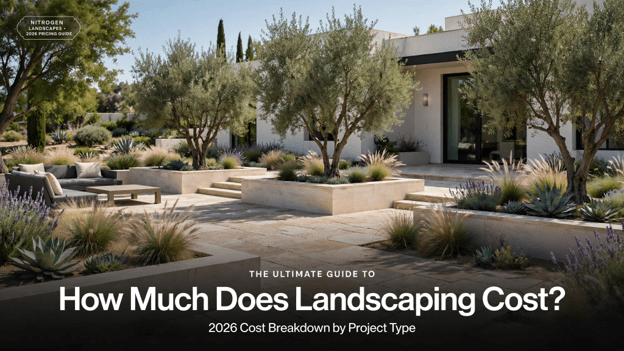
Landscaping costs cover an enormous range, from a $75 mowing visit to a $50,000 full property redesign, which is exactly what makes “how much does landscaping cost” such a hard question to answer with one number. The honest answer is that it depends heavily on what specific work is being done, where you live, and what materials you choose. This guide breaks down realistic cost ranges by project type for 2026, along with what actually drives the price up or down, so you have a realistic sense of your own project before requesting quotes.
Costs have also trended upward across the home services industry in recent years due to labor and material costs, so figures from a few years ago may run noticeably lower than what providers quote today. Regional cost of living plays a major role too. The same project can cost meaningfully more in a major metro area than in a smaller market, sometimes by a wide margin, so treat the ranges below as a starting point rather than a quote.
What Actually Determines the Price
Before getting into specific numbers, it helps to understand why the range on any given service is so wide. A few factors do most of the work:
- Property size and site conditions. A flat, easily accessible quarter-acre lot costs less to work on than a sloped, tree-covered property of the same size.
- Material and plant choices. Natural stone hardscaping costs significantly more than poured concrete. Mature trees cost more than young saplings. Premium irrigation controllers cost more than basic timers.
- Scope and complexity. A simple planting refresh is a different project than a full redesign involving grading, drainage, and hardscaping together.
- Labor costs, material availability, and local demand all shift pricing meaningfully from one market to another.
None of these factors are optional to account for, which is why a general cost guide can only get you so far. It’s a starting point for budgeting, not a substitute for an actual site quote.
2026 Cost Ranges by Project Type
Based on typical residential pricing tracked by home services platforms like HomeAdvisor, here’s roughly what different landscaping services run:
| Service | Typical Cost Range | What Affects the Price |
| Basic lawn care and maintenance | $50 to $150 per visit, or $100 to $300 per month | Lot size, service frequency, region |
| Landscape design (plan only) | $500 to $5,000+ | Property size, design complexity, whether renderings are included |
| Full landscape installation | $10 to $25+ per square foot | Plant and material selection, grading needs, site complexity |
| Hardscaping (patios, walkways, walls) | $15 to $40+ per square foot | Material: pavers versus natural stone versus poured concrete |
| Irrigation system installation | $2,500 to $6,000+ for a standard system | Lot size, number of zones, drip versus sprinkler setup |
| Tree removal | $200 to $2,000+ per tree | Tree size, accessibility, complexity of the job |
| Tree trimming and pruning | $200 to $800 per tree | Tree size and condition |
| Stormwater and drainage solutions | A few hundred dollars to $15,000+ | Scope: simple regrading versus a full drainage system |
These are national averages, and it’s worth repeating that region and material choice can push any of these ranges up or down significantly.
As Luis Navarro, owner of Nitrogen Landscapes, explains, the range on any given estimate usually comes down to decisions most homeowners haven’t made yet when they first call:
“The first question I usually ask isn’t about the yard; it’s about the budget and the priority. Most people call wanting ‘a full landscape redesign’ without realizing that phrase could mean a $3,000 project or a $30,000 one depending on material choices and how much of the property we’re touching. I’d rather walk a property, understand what actually matters to someone- drainage problems, tree health, water bills, and then build a plan in phases if the full vision doesn’t fit the budget right now. A phased plan done right ends up cheaper than doing everything at once and getting parts of it wrong.”
Cost Isn’t Just About Installation Day
Upfront cost is only part of the picture. Water-efficient irrigation design, the kind covered under guidelines from the EPA’s WaterSense program, and native or drought-tolerant planting can meaningfully reduce long-term water bills and maintenance costs, sometimes enough to offset a higher installation cost within a few years. A slightly more expensive drip irrigation system that reduces water waste, or a planting plan built around native species that need less fertilizer and mowing, is a cost decision that plays out over the life of the landscape, not just on installation day.
Getting an Accurate Quote
A few things make it easier to get an accurate quote instead of a rough guess. Knowing your rough budget range before the first call helps a contractor tailor a proposal instead of guessing what you can afford. Having a general sense of priority, whether this is about curb appeal, a drainage problem, or reducing weekly maintenance time, helps them focus the proposal on what actually matters to you. For larger projects, get multiple quotes, since pricing on complex hardscape or stormwater work can vary significantly between providers based on their approach and material sourcing. It’s also worth checking whether a provider is a member of an industry group like the National Association of Landscape Professionals, which can be a useful signal of legitimacy and ongoing training, particularly for a project large enough that mistakes get expensive to fix.
There’s no single right number for “how much does landscaping cost,” but there is a right process: understand roughly where your project falls in the ranges above, get clear on your actual priorities, and get a few real quotes before committing to a full plan. A reputable local provider can usually walk a property and give you a realistic range within the first visit, which is a much better starting point than trying to estimate blind.