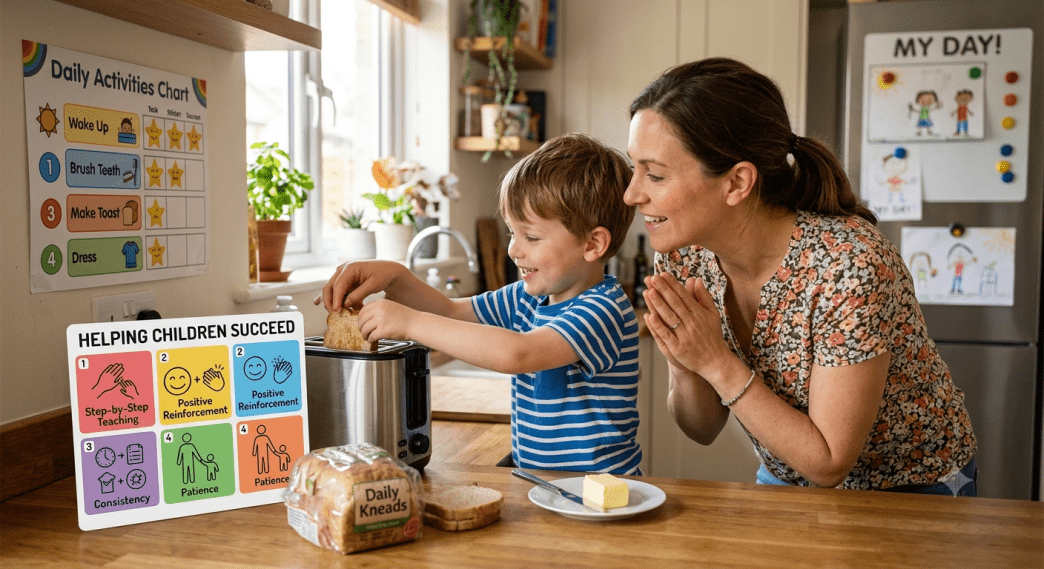
Daily activities are an important part of childhood development because they provide repeated opportunities to practice useful skills in natural situations. Getting dressed, brushing teeth, eating meals, organizing belongings, playing, completing simple household tasks, and preparing for bedtime may appear ordinary, but each activity can involve communication, attention, sequencing, decision-making, self-care, and independence. When parents and caregivers provide appropriate guidance, children can gradually become more confident in completing these activities. The goal is not to make every routine feel like a formal lesson but to use familiar moments as opportunities for meaningful learning. ABA therapy for everyday routines can help families understand how structured teaching strategies may be incorporated into daily activities while keeping the child’s individual needs and goals in focus. A successful approach should be practical, respectful, and flexible enough to fit naturally into family life. Children develop at different rates, so expectations should be based on their current abilities rather than comparisons with others. With repetition, encouragement, and appropriate support, small steps can eventually develop into useful skills that children can apply across many areas of their lives.
Understanding the Importance of Daily Activities
Everyday activities are valuable learning opportunities because they happen repeatedly and usually have a clear purpose. A child may have several opportunities each day to practice washing hands, putting toys away, communicating a need, following instructions, or preparing belongings. Repetition allows children to become increasingly familiar with the sequence and expectations involved in an activity. Parents can identify specific parts of a routine that a child can already perform and then encourage participation in areas that still require support. For example, a child may independently choose an item but need assistance with completing the next step. Recognizing these differences helps caregivers provide targeted support instead of doing the entire activity for the child. Natural routines can also make learning more meaningful because children can immediately understand how a skill is useful. A child who learns to request help while getting dressed can eventually use the same communication strategy during other challenging activities. Similarly, learning to put away toys can provide a foundation for organizing school materials or personal belongings. Everyday activities therefore offer repeated opportunities to build practical abilities while remaining connected to the child’s real experiences.
Creating Predictable and Supportive Routines
Predictability can help children understand what is expected and prepare for upcoming activities. Families can establish familiar sequences for important parts of the day, such as morning preparation, mealtimes, play, homework, household responsibilities, and bedtime. Visual schedules, pictures, written lists, or simple verbal reminders can be used according to the child’s communication and learning needs. A predictable routine does not mean that every day has to follow an identical schedule. Instead, it provides a familiar structure that helps children understand what generally happens next. Parents can gradually introduce reasonable changes so children also learn that routines may sometimes be different. Providing advance notice before a change can make transitions easier, particularly when a child is moving away from a preferred activity. Caregivers can explain what is ending and what will happen next using language the child can understand. Once a child becomes familiar with a routine, parents can gradually reduce reminders and encourage more independent participation. ABA therapy for everyday routines may provide caregivers with strategies for teaching sequences, using prompts appropriately, and encouraging children to complete routine-based tasks with increasing independence. The specific approach should always be individualized to the child and adjusted according to progress.
Breaking Complex Activities Into Smaller Steps
Many daily activities contain several individual steps that children may need to learn separately. Brushing teeth, getting dressed, preparing a school bag, cleaning up toys, washing hands, and getting ready for bed can all involve multiple actions performed in a particular sequence. When a child finds a complete routine difficult, parents can divide it into smaller and more manageable components. Teaching one step at a time can make the activity easier to understand and provide more opportunities for successful practice. For example, a child learning to get dressed may first practice selecting clothing and then work toward completing additional parts of the process. Visual instructions or demonstrations can make the sequence clearer when verbal directions alone are not sufficient. Parents can also provide prompts when necessary and gradually reduce them as the child becomes more capable. It is important to give children enough time to attempt each step before immediately providing assistance. Adults often complete activities more quickly, but allowing children to practice gives them valuable opportunities to develop independence. Once individual steps become familiar, they can be combined into a complete routine. This gradual process can help children feel successful rather than overwhelmed by a task that initially seems too complicated.
Encouraging Communication Throughout the Day
Communication can be supported naturally during almost every daily activity. Children need opportunities to request help, make choices, express preferences, ask questions, respond to others, and communicate when something is uncomfortable. Depending on the individual child, communication may involve speech, gestures, signs, pictures, communication devices, or other appropriate methods. Parents can create natural opportunities for communication by offering choices and waiting for the child to respond. For example, a child may practice requesting a preferred item during breakfast or asking for assistance when completing a dressing task. Caregivers can model useful communication and respond positively when the child makes an attempt. Children should have enough time to process information and communicate rather than being rushed into an immediate response. Functional communication can be particularly helpful when children become frustrated because they do not yet have an effective way to express their needs. Teaching a practical alternative, such as asking for help or requesting a break, can give the child a more useful way to handle challenging situations. Communication practice should occur across different activities so children understand that their skills can be used in many situations. ABA therapy for everyday routines can support caregivers in identifying natural opportunities to teach functional communication while children participate in familiar activities.
Building Independence Gradually
Independence develops through repeated opportunities to participate, make choices, and complete appropriate tasks. Parents can identify activities that match the child’s current abilities and encourage the child to take responsibility for manageable parts of those activities. A child may begin by putting toys into a container, selecting clothing, carrying personal belongings, or placing dishes in an appropriate location. As these tasks become easier, caregivers can introduce additional steps or responsibilities. Providing choices can also encourage independence because children learn to make decisions within reasonable boundaries. For example, a parent may allow a child to choose between two suitable clothing options or select which book to read before bedtime. Children should not be expected to complete tasks that are unsafe or beyond their current abilities. Asking for help should also be recognized as an important independent skill. Parents can gradually reduce prompts and allow the child more time to attempt tasks independently. Progress may be slow, and some children may require repeated practice before a new skill becomes consistent. The objective is not perfection but increased participation and confidence. When children experience success with small responsibilities, they may become more willing to attempt additional activities. Over time, these small achievements can contribute to greater independence in everyday life.
Using Positive Reinforcement Effectively
Positive reinforcement can encourage children to repeat behaviors and skills that are useful in daily life. When a child completes a step independently, communicates appropriately, follows a routine, waits for a turn, or attempts a new task, caregivers can respond with meaningful encouragement. Reinforcement may involve specific praise, positive attention, access to a preferred activity, or another response that is motivating for the individual child. What motivates one child may not be effective for another, so parents should observe the child’s preferences and interests. Specific praise can be especially helpful because it tells the child exactly what they did successfully. Instead of simply saying “good job,” a parent can identify the behavior, such as explaining that the child did well by putting away their belongings or asking for assistance. Natural reinforcement can also occur when an appropriate behavior produces a useful outcome. For example, when a child appropriately requests help, receiving assistance can reinforce the communication skill. As children become more independent, families can gradually emphasize natural consequences and everyday positive experiences. Reinforcement should remain respectful and should never be used to discourage legitimate communication about discomfort or needs. Its purpose is to encourage meaningful participation and strengthen skills that help children function more successfully in everyday situations.
Supporting Morning Activities
Morning routines can provide numerous opportunities to practice organization, self-care, communication, and independence. Depending on their abilities, children can participate in getting dressed, brushing their teeth, preparing belongings, eating breakfast, and organizing items needed for the day. Parents can create a consistent sequence so children understand what usually happens after waking up. Visual schedules can help children remember the order of activities without relying entirely on adult instructions. Caregivers can also divide challenging tasks into smaller steps and allow children to complete familiar parts independently. If a child becomes frustrated while getting dressed, the parent can identify which specific step is causing difficulty rather than immediately completing the whole activity. A child may need help with a fastener but be capable of selecting clothing and putting on other items independently. Encouraging these existing abilities allows the child to practice rather than becoming dependent on adult assistance. Parents can also provide advance reminders when it is time to move from one morning activity to another. Positive feedback can encourage children when they complete a step successfully. With consistent practice, morning routines can become more predictable and increasingly independent while still allowing flexibility when unexpected changes occur.
Making Mealtimes Meaningful Learning Opportunities
Mealtimes can support communication, self-care, social participation, and independence. Children can practice requesting food or drinks, making choices, using appropriate utensils, participating in simple preparation tasks, and following familiar mealtime routines. Parents can encourage children to participate in manageable responsibilities, such as bringing a napkin to the table or placing an item in its appropriate location after eating. Communication can be encouraged naturally by giving children opportunities to request preferred items or indicate that they are finished. Caregivers should remain sensitive to individual eating needs and avoid creating unnecessary pressure around food. When a child experiences significant difficulties related to eating, appropriate professional guidance may be beneficial. Mealtimes can also provide opportunities to practice social behaviors such as waiting, taking turns, responding to family members, and participating in simple conversations when appropriate. Parents can model these behaviors without expecting children to perform them perfectly. A consistent mealtime structure can help children understand what happens before, during, and after eating. As children become more comfortable, caregivers can gradually increase their participation in age-appropriate responsibilities. The focus should remain on creating positive and functional experiences rather than turning meals into stressful teaching sessions.
Developing Self-Care Skills
Self-care activities are essential because they help children become more independent in managing their personal needs. Washing hands, brushing teeth, bathing, dressing, using the bathroom, combing hair, and managing personal belongings may all require systematic practice. Parents can demonstrate each activity and encourage the child to complete the portions that match their current abilities. A visual sequence may help children remember the order of steps, especially when the routine involves several actions. Caregivers can provide appropriate prompts when needed and gradually reduce those prompts as the child becomes more capable. If a child finds a particular self-care activity uncomfortable, parents can consider whether sensory preferences, unclear expectations, unfamiliarity, or another factor may be contributing to the difficulty. Adjusting the routine may make participation easier. Children should also learn appropriate ways to communicate when something hurts, feels uncomfortable, or requires assistance. Repeated practice at predictable times can help make self-care activities more familiar. Parents can provide encouragement when children attempt new steps, even when the result is not perfect. Over time, increased participation can support greater confidence and independence. ABA therapy for everyday routines may help families structure practice around functional self-care goals while allowing children to progress at an individualized pace.
Helping Children Manage Transitions
Transitions involve moving from one activity to another, and some children may need additional preparation when a preferred activity is ending. Parents can provide advance warnings so children have time to understand that a change is approaching. A timer, visual schedule, picture, or simple verbal reminder may help communicate what will happen next. Caregivers can describe the upcoming activity in clear and understandable language. Offering a small choice within the next activity can sometimes increase participation while maintaining appropriate boundaries. For example, a child might choose which materials to use or which part of a routine to begin. Parents can recognize successful transitions with positive feedback. When transitions remain difficult, caregivers can examine whether the next activity is particularly challenging or whether factors such as tiredness, hunger, or communication difficulties are contributing. Children can also be taught to communicate when they need help or a short break. Flexibility is a skill that develops gradually, so families should not expect children to manage every unexpected change immediately. Practicing small and manageable transitions during calm moments can provide useful preparation for more difficult situations. Consistent support can gradually help children understand that activities change while giving them appropriate tools for handling those changes.
Teaching Household Responsibilities
Age-appropriate household responsibilities can help children develop organization, cooperation, independence, and a sense of participation within the family. Depending on their abilities, children may be able to put away toys, organize belongings, place clothing in a designated location, help set the table, or participate in simple cleaning activities. Parents can begin with responsibilities that are achievable and gradually increase the level of difficulty. A checklist or visual sequence can help children remember what they need to do. Caregivers can demonstrate the activity first and then encourage the child to attempt it. If assistance is needed, parents can provide support without completing the entire activity unnecessarily. The purpose of a household responsibility is not to achieve adult-level performance but to provide opportunities for learning and participation. Children may take longer or make mistakes while learning, and these experiences are part of development. Parents can focus on effort and progress rather than perfection. As the child becomes more familiar with a responsibility, prompts can be reduced. Household activities can also teach children that they have an important role within the family. These experiences can build confidence while providing practical skills that may become increasingly useful as children grow older.
Supporting Social Participation
Family routines can provide natural opportunities to develop social skills. Playing games, reading together, cooking, completing household activities, and sharing meals can encourage turn-taking, responding, listening, requesting, and cooperation. Parents can select activities that match the child’s interests because familiar interests may increase motivation to participate. Simple games can teach waiting and turn-taking, while shared household activities can encourage cooperation and communication. Caregivers can model social behaviors and provide encouragement when children participate appropriately. Social development should remain respectful of the child’s individual communication style and preferences. Children should also have appropriate ways to communicate that they need space, want to stop an activity, or require assistance. If larger social situations are difficult, families can begin with interactions involving familiar people and gradually expand opportunities. Role-playing can help children practice situations before experiencing them naturally. Parents can demonstrate how to greet someone, request a turn, ask for assistance, or respond to a simple question. Repeated positive experiences can make social participation more understandable and comfortable. The goal should be meaningful interaction and communication rather than simply requiring a child to behave in a particular way. Supporting social skills within familiar routines can help children develop confidence while learning how to participate in relationships and shared activities.
Encouraging Emotional Regulation
Children experience many emotions during everyday activities, and learning to manage those emotions is an important developmental skill. Parents can introduce coping strategies during calm moments when children are better prepared to learn. Depending on the child’s needs, strategies may include asking for help, requesting a break, using a quiet space, communicating discomfort, or engaging in an appropriate calming activity. Visual emotion support can help some children recognize feelings and connect them with possible responses. Parents can model calm problem-solving during ordinary situations by demonstrating how to pause, communicate, and seek assistance. When a child successfully uses an appropriate coping strategy, caregivers can recognize the effort. Emotional regulation does not mean expecting children to remain calm at all times. Frustration, disappointment, excitement, and anger are normal human experiences. Children need opportunities to learn what they can do when strong emotions occur. Parents can observe whether challenging moments are more common during transitions, difficult tasks, fatigue, hunger, sensory discomfort, or communication problems. Identifying patterns can help families make preventive adjustments. After the child is calm, caregivers can consider what happened and which alternative skill could be practiced for future situations. With repeated practice and appropriate support, children can gradually develop more effective ways to communicate and manage difficult emotions.
Practicing Skills Across Different Situations
A child may learn a skill during one familiar activity but need additional practice before using it in other situations. Families can gradually introduce opportunities to practice the same skill with different people, materials, and routines. For example, a child who learns to request assistance while dressing can later practice asking for help during homework, play, or household activities. A child who learns to clean up one group of toys can eventually practice organizing different belongings. Changes should be introduced gradually so the child has enough opportunities to experience success. Visual supports and prompts may be useful when a familiar skill is introduced in a new situation. As the child becomes more comfortable, caregivers can gradually reduce these supports. Families should avoid creating unnecessary stress simply to test whether a child can perform a skill. Ordinary variations in daily life can provide meaningful opportunities for practice. Parents can acknowledge successful attempts even when performance is not perfect. Generalizing skills can take time because children may initially associate a particular behavior with one specific person, place, or activity. Consistent practice can help children recognize that useful skills can be applied across different situations. This can make learning more functional and increase the child’s ability to use skills independently.
Using Appropriate Prompts and Fading Support
Prompts can help children successfully complete tasks that they are still learning. A prompt may involve a verbal reminder, gesture, demonstration, visual cue, or another appropriate form of assistance. Parents should first consider what the child can already do independently. If the child can complete part of a routine without help, caregivers can allow them to attempt that portion rather than immediately providing assistance. When a prompt is necessary, it should provide enough support to help the child succeed without unnecessarily taking control of the activity. As the child becomes more capable, caregivers can gradually reduce prompts. A lengthy verbal instruction might eventually become a brief reminder, gesture, or visual cue. Parents should also allow sufficient processing time before repeating instructions or increasing assistance. Some children need additional time to understand what is being asked and organize their response. Reducing support too quickly can lead to frustration, while maintaining unnecessary assistance for too long may limit independent practice. The appropriate level of prompting should therefore change as the child develops. Families can observe performance and adjust support according to the child’s current abilities. Individualized professional guidance may be useful when caregivers are unsure how to select or fade prompts effectively.
Collaborating With Qualified Professionals
Parents and caregivers can benefit from professional guidance when children have specific developmental, communication, behavioral, or learning needs. Qualified professionals can help identify meaningful goals, analyze patterns, develop individualized teaching strategies, and monitor progress. Parents contribute equally valuable information because they observe the child throughout many everyday situations. They can explain which activities are easy, which situations are challenging, what motivates the child, and how the child communicates needs. This information can help professionals make recommendations that are practical for family life. ABA therapy for everyday routines can provide a framework for connecting structured skill development with ordinary activities when it is individualized and focused on meaningful outcomes. Families should feel comfortable discussing whether a strategy is realistic and asking how it can be adapted to their circumstances. If a recommendation is difficult to maintain, caregivers can communicate this rather than feeling that they have failed. Professionals can sometimes suggest simpler alternatives or adjustments that fit better into the family’s routine. Effective collaboration should respect both professional knowledge and the family’s understanding of the child. The child’s comfort, preferences, communication, independence, safety, and quality of life should remain important considerations when selecting goals and strategies.
Monitoring Progress Over Time
Observing progress can help families determine whether their current approach is supporting meaningful development. Progress may appear as completing more steps independently, needing fewer prompts, communicating needs more clearly, handling transitions more successfully, or participating more actively in household activities. Parents do not necessarily need complex tracking systems. Simple observations or notes can help identify patterns over several weeks or months. Children may not perform skills consistently every day, and temporary changes can occur because of tiredness, stress, illness, changes in routine, or other factors. Looking at overall patterns is often more useful than focusing on one difficult day. If progress seems limited, parents can consider whether the goal is too difficult, the instructions are unclear, the child needs more practice, or the teaching approach should be adjusted. Goals can also change as children develop. Once a child becomes independent with a particular routine, caregivers can introduce a more advanced responsibility or encourage the same skill in another situation. Small improvements should be recognized because gradual progress can lead to significant long-term changes. Comparing a child with their own previous performance can provide a more meaningful picture than comparing them with peers. Regular review allows families and professionals to adjust strategies according to changing abilities and needs.
Making Learning Practical for the Whole Family
Family routines should remain realistic and enjoyable rather than becoming a source of constant pressure. Parents may have work, household responsibilities, other children, and many competing demands. A strategy that requires excessive time or effort may be difficult to maintain consistently. Families can begin with one or two meaningful routines and gradually expand their approach when they feel comfortable. Children also need opportunities for free play, relaxation, connection, and enjoyment that are not focused on skill development. Parents should not feel that every family interaction needs to become a teaching opportunity. Instead, they can select natural moments where support fits comfortably into the activity. Caregivers can share responsibilities so one person does not feel responsible for every aspect of the child’s development. Family members can discuss successful strategies and challenges without blaming themselves or one another. Progress can sometimes be unpredictable, and setbacks do not mean that previous learning has been lost. A supportive environment recognizes effort and allows children to develop at their own pace. When expectations are realistic, parents may find it easier to remain patient and consistent. A balanced family approach can support development while protecting positive relationships and creating enjoyable everyday experiences.
Final Thoughts
Daily activities can provide meaningful opportunities for children to develop communication, self-care, independence, organization, emotional regulation, social participation, and problem-solving abilities. Because these activities occur repeatedly, children can practice important skills in situations that have real value and purpose. Parents can make routines more supportive by establishing predictable sequences, breaking challenging activities into smaller steps, providing appropriate prompts, encouraging communication, and using positive reinforcement. ABA therapy for everyday routines can help families connect structured teaching principles with practical daily activities when the approach is individualized and centered on meaningful goals. Professional guidance can provide additional support, while parents offer essential knowledge about their child’s strengths, preferences, challenges, and everyday experiences. Progress should be viewed as a gradual process rather than an expectation of immediate perfection. Small improvements, such as completing one additional step independently or using an appropriate communication strategy, can represent important developmental achievements. Families can continue building on these successes by providing opportunities to practice skills across different activities and situations. Most importantly, children should experience support within an environment that respects their individuality and encourages their participation without unnecessary pressure. With patience, consistency, flexibility, and appropriate guidance, ordinary routines can become valuable foundations for lifelong learning and greater independence.