In today’s fast-paced electronics industry, bringing products to market quickly is essential for staying competitive. Whether manufacturing consumer electronics, automotive systems, medical devices, industrial equipment, or IoT products, companies need reliable production partners that can shorten lead times without compromising quality.
Poland has become one of Europe’s leading destinations for PCB assembly and Surface Mount Technology (SMT) manufacturing. Its advanced production facilities, skilled engineering workforce, and strategic location enable businesses to streamline manufacturing, improve supply chain efficiency, and reduce delivery times.
This article explains how PCB assembly in Poland helps electronics companies accelerate product launches while maintaining high manufacturing standards.
What Is SMT Manufacturing?
Surface Mount Technology (SMT) is the standard method used to assemble modern printed circuit boards (PCBs). Instead of inserting components through drilled holes, SMT places miniature electronic components directly onto the PCB surface before they are soldered using automated processes.
This technology supports compact designs, higher component density, and faster production, making it the preferred choice for modern electronics manufacturing. Automated SMT production lines improve accuracy, reduce manual labor, and ensure consistent quality for both prototype and high-volume production.
For businesses looking for reliable SMT assembly Poland services, experienced manufacturers offer the expertise, advanced technology, and production flexibility needed to support projects from initial prototypes to full-scale commercial manufacturing.
Why Time-to-Market Matters
In electronics manufacturing, delays can significantly affect business performance. Product lifecycles are becoming shorter, customer expectations continue to rise, and competitors constantly introduce new technologies.
Launching a product even a few weeks earlier can provide important advantages, including faster revenue generation, stronger market positioning, and improved customer adoption. On the other hand, manufacturing delays can increase development costs, postpone product launches, and reduce competitiveness.
Time-to-market depends on several factors, including component availability, production capacity, engineering collaboration, quality assurance, and logistics. Optimizing each stage of the manufacturing process is essential for reducing lead times.
How PCB Assembly in Poland Reduces Lead Times
Strategic European Location
Poland’s central location offers significant logistical advantages for companies serving European markets. Manufacturing closer to customers reduces transportation times, improves delivery reliability, and minimizes disruptions associated with long international supply chains.
Shorter shipping distances also simplify inventory management and help businesses respond more quickly to changing customer demand.
Advanced SMT Manufacturing
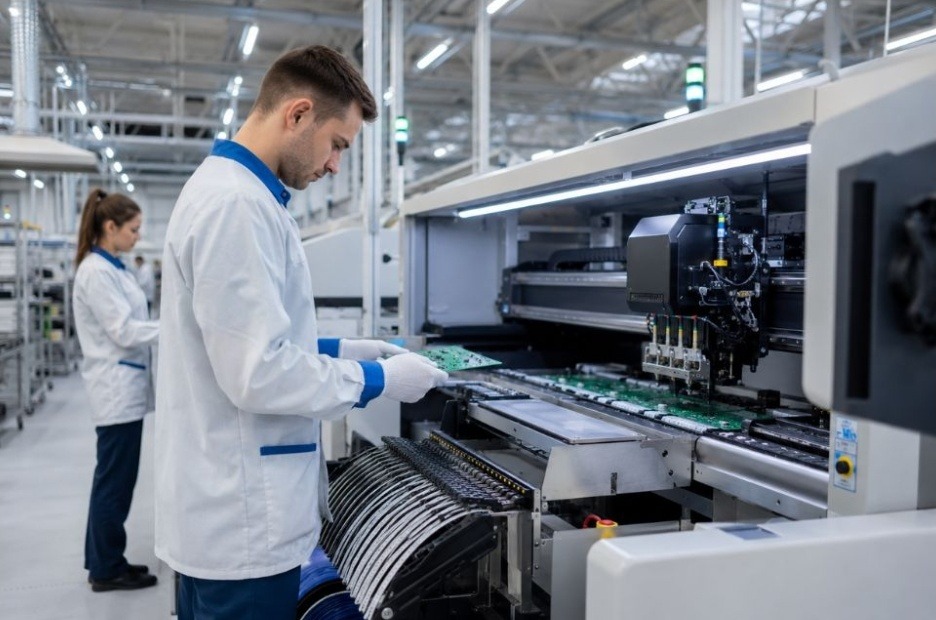
Many Polish electronics manufacturers operate modern SMT production lines equipped with high-speed pick-and-place machines, automated soldering systems, and advanced inspection technologies.
Automation allows manufacturers to assemble thousands of components with exceptional precision while maintaining consistent quality. Faster production and fewer assembly errors reduce costly rework and help projects stay on schedule.
Faster Prototype Development
Rapid prototyping plays a crucial role in shortening product development cycles. Experienced PCB assembly providers often review design files before production begins, offering Design for Manufacturing (DFM) recommendations that improve manufacturability and reduce potential issues.
Identifying design improvements early minimizes engineering revisions during mass production, saving both time and cost.
Efficient Component Procurement
Electronic component availability remains one of the biggest challenges in manufacturing. Established Polish SMT providers typically have strong supplier networks and efficient procurement processes that help secure components faster and reduce supply chain delays.
Reliable sourcing improves production planning and ensures more predictable manufacturing schedules.
Better Engineering Collaboration
Working with a manufacturing partner in a similar time zone makes communication faster and more efficient. Engineering teams can quickly discuss technical questions, approve design changes, and resolve production issues without the delays often associated with overseas manufacturing.
This close collaboration reduces project bottlenecks and supports faster product development.
Advanced Technologies That Improve Production Efficiency
Modern PCB assembly Poland relies on advanced manufacturing technologies that improve speed, accuracy, and product quality.
High-speed pick-and-place machines accurately position thousands of components every hour, while Automated Optical Inspection (AOI) systems detect missing, misaligned, or incorrectly soldered components during production. Many facilities also use Solder Paste Inspection (SPI), X-ray inspection for complex assemblies, and functional testing to identify potential defects before products leave the production line.
By integrating inspection throughout the manufacturing process, companies reduce rework, improve first-pass yield, and accelerate production.
Quality Standards That Support Faster Product Launches
Fast production only creates value when quality remains consistent. Manufacturing defects can lead to costly delays, warranty claims, and product recalls.
Many PCB assembly companies in Poland operate under internationally recognized quality standards such as ISO 9001. Manufacturers serving specialized industries may also hold certifications including ISO 13485 for medical devices and IATF 16949 for automotive electronics. Compliance with IPC workmanship standards, documented quality procedures, and full production traceability further ensures reliable manufacturing.
Rather than treating quality as a final inspection step, leading manufacturers integrate quality control throughout the production process, allowing products to move efficiently from assembly to shipment.
Industries That Benefit from PCB Assembly in Poland
Polish SMT manufacturing supports a wide range of industries that require high reliability and fast production.
These include:
- Consumer electronics
- Automotive electronics
- Medical devices
- Industrial automation
- Internet of Things (IoT)
- Telecommunications equipment
- Renewable energy systems
- Smart home technologies
Whether producing prototypes or large production volumes, manufacturers provide the flexibility needed to support products throughout their entire lifecycle.
Poland vs. Overseas Manufacturing
While overseas production may still suit certain large-scale manufacturing projects, many European companies are increasingly choosing Poland because of its shorter lead times and greater supply chain flexibility.
Manufacturing closer to end markets reduces shipping times, simplifies logistics, enables faster engineering communication, and makes design revisions easier to implement. These advantages help businesses respond more quickly to customer demand while improving overall production efficiency.
Choosing the Right PCB Assembly Partner
Selecting the right manufacturing partner involves more than comparing production costs. A reliable SMT provider should offer comprehensive support throughout the manufacturing process.
When evaluating PCB assembly companies in Poland, consider the following:
- Experience with similar electronic products
- Modern SMT production equipment
- Design for Manufacturing (DFM) support
- Reliable component sourcing
- Comprehensive testing and inspection
- International quality certifications
- Scalable production capacity
- Clear communication and dependable delivery
Choosing an experienced manufacturing partner helps reduce production risks while supporting long-term business growth.
Conclusion
Reducing time-to-market requires more than fast assembly equipment. Success depends on efficient engineering collaboration, reliable component sourcing, advanced automation, rigorous quality control, and dependable logistics working together throughout the manufacturing process.
Poland has established itself as one of Europe’s leading PCB assembly destinations by combining modern SMT capabilities with skilled engineers and an advantageous geographic location. For companies looking to launch products faster while maintaining high manufacturing standards, partnering with an experienced Polish electronics manufacturer can improve production efficiency, strengthen supply chain resilience, and accelerate product commercialization.
Frequently Asked Questions
1. What is SMT manufacturing?
SMT (Surface Mount Technology) is a PCB assembly process where electronic components are mounted directly onto the surface of printed circuit boards using automated production equipment.
2. Why is Poland a popular location for PCB assembly?
Poland offers advanced manufacturing facilities, skilled engineers, efficient logistics, and easy access to European markets, helping companies reduce production lead times.
3. How does PCB assembly in Poland reduce time-to-market?
Shorter transportation routes, automated manufacturing, faster engineering communication, efficient component sourcing, and strong quality control all contribute to faster product launches.
4. Which industries benefit from Polish SMT manufacturing?
Industries including consumer electronics, automotive, medical devices, industrial automation, telecommunications, renewable energy, and IoT commonly rely on Polish SMT manufacturing.
5. What should companies look for in an SMT manufacturing partner?
Businesses should evaluate manufacturing experience, production technology, quality certifications, testing capabilities, sourcing expertise, scalability, and communication when selecting a PCB assembly provider.