Artificial intelligence is entering a new era. The conversation is no longer limited to chatbots, predictive analytics, or automation tools that simply respond to user prompts. Modern AI systems are evolving into intelligent agents capable of reasoning, planning, adapting, and making autonomous decisions. This shift is driving demand for more advanced computing infrastructure that can support increasingly sophisticated workloads.
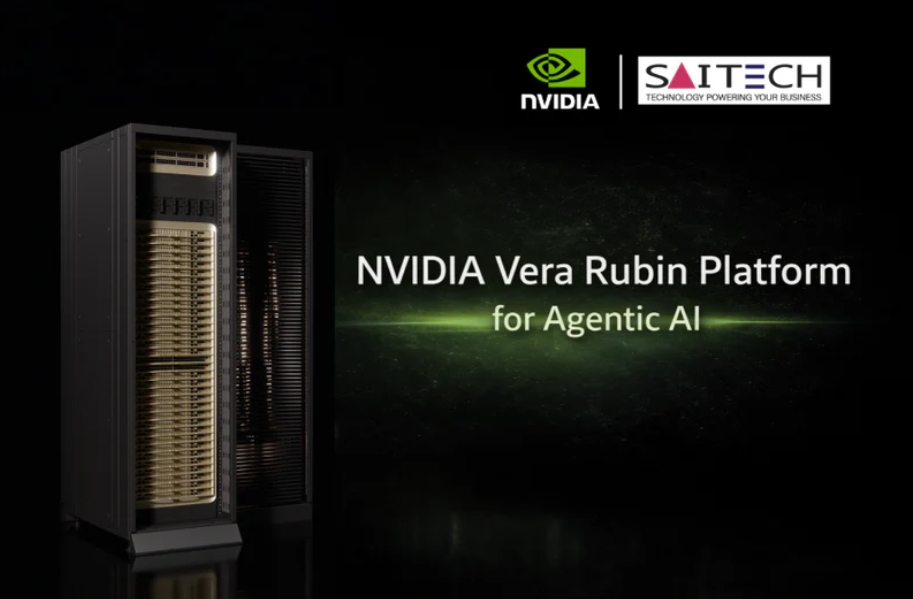
At the center of this transformation is NVIDIA Vera Rubin, a next-generation AI platform designed to power the future of agentic AI systems. As organizations across industries invest in autonomous AI technologies, the need for scalable, efficient, and high-performance computing architectures has become more urgent than ever.
From enterprise automation to robotics and scientific research, AI is rapidly becoming more proactive and capable of operating independently. Traditional hardware platforms are struggling to keep pace with these advancements. That is why platforms like NVIDIA Vera Rubin are gaining attention as the foundation for the next wave of AI innovation.
The Evolution of Artificial Intelligence
Artificial intelligence has progressed significantly over the past decade. Early AI systems were mostly rule-based and reactive. They relied on predefined logic and could only respond to specific inputs. While these systems improved operational efficiency, they lacked adaptability and contextual understanding.
The rise of machine learning and deep learning changed the landscape. AI models became capable of identifying patterns, processing natural language, and generating content. Large language models accelerated this shift by enabling more human-like interactions and advanced problem-solving capabilities.
However, even the most advanced generative AI systems still operate within certain limitations. Most current AI models remain reactive. They respond to prompts, analyze data, and generate outputs, but they do not independently pursue goals or continuously make decisions in dynamic environments.
This limitation has created momentum toward a new category of artificial intelligence known as agentic AI.
What Is Agentic AI?
Agentic AI refers to autonomous AI systems that can reason, plan, make decisions, and execute actions with minimal human intervention. Unlike traditional AI applications that wait for instructions, agentic systems are designed to proactively achieve objectives.
These systems combine several capabilities, including:
- Long-term reasoning
- Memory retention
- Multi-step planning
- Autonomous task execution
- Real-time adaptation
- Continuous learning
Agentic AI systems can evaluate changing conditions, prioritize tasks, and make independent decisions based on goals and environmental feedback. This makes them especially valuable for complex and dynamic environments.
For example, an agentic AI assistant in an enterprise setting could autonomously schedule meetings, analyze market trends, prepare reports, coordinate with software tools, and optimize workflows without requiring repeated prompts from users.
Similarly, robotics platforms powered by agentic AI could independently navigate physical spaces, identify obstacles, make operational decisions, and collaborate with other machines in real time.
The move toward autonomous intelligence represents one of the most important shifts in the AI industry. However, it also introduces major computational challenges.
Why Current AI Infrastructure Is Reaching Its Limits
As AI systems become more autonomous and capable, the computational requirements increase dramatically. Traditional infrastructure was designed primarily for training and inference tasks associated with earlier machine learning models. Agentic AI systems demand far more.
Several factors are contributing to the growing pressure on AI infrastructure.
Increasing Model Complexity
Modern AI models contain billions or even trillions of parameters. Agentic systems may involve multiple interconnected models working together simultaneously. These workloads require enormous computational power and memory bandwidth.
Real-Time Decision Making
Agentic AI systems must process information and make decisions in real time. Delays in computation can impact performance, accuracy, and reliability. High-speed processing and low latency are critical requirements.
Continuous Learning and Adaptation
Unlike static AI models, autonomous systems often require continuous updates and learning processes. This creates persistent compute demands that extend beyond initial training cycles.
Multi-Agent Collaboration
Future AI ecosystems may involve multiple intelligent agents collaborating on shared tasks. Supporting this level of coordination requires scalable infrastructure capable of handling complex parallel processing.
Energy and Efficiency Challenges
The growth of AI workloads has also increased concerns around power consumption and sustainability. Data centers supporting advanced AI systems require highly efficient architectures to balance performance with operational costs.
These challenges are driving demand for next-generation computing platforms specifically designed for advanced AI applications.
NVIDIA Vera Rubin and the Next Generation of AI Computing
NVIDIA Vera Rubin represents a major step forward in AI infrastructure development. Positioned as a next-generation platform in the evolution of AI computing, NVIDIA Vera Rubin is expected to support the increasingly demanding requirements of agentic AI systems.
The platform reflects NVIDIA’s broader strategy of building architectures optimized for large-scale AI workloads, autonomous systems, and future computing environments.
Named after the pioneering astronomer Vera Rubin, the platform symbolizes a new phase in AI acceleration and computational discovery.
The Strategic Importance of NVIDIA Vera Rubin
The emergence of NVIDIA Vera Rubin highlights a broader industry trend. AI is no longer limited to cloud-based chat interfaces or narrow predictive tools. The future of AI involves systems that think, act, collaborate, and solve problems autonomously.
Supporting these systems requires infrastructure built for:
- Massive parallel processing
- Advanced memory architectures
- High-speed interconnects
- AI-native scalability
- Efficient energy consumption
- Multi-modal AI workloads
NVIDIA Vera Rubin is positioned to address these demands by providing the computational backbone needed for increasingly intelligent and autonomous AI systems.
For readers interested in a deeper technical overview of the platform and its role in future AI infrastructure, this detailed analysis from Saitech offers additional insights into NVIDIA Vera Rubin and its implications for agentic AI development.
Key Capabilities Expected From NVIDIA Vera Rubin
Although AI infrastructure continues to evolve rapidly, several core priorities define the significance of NVIDIA Vera Rubin.
Enhanced AI Performance
Future AI systems will require exponentially greater compute capacity. NVIDIA Vera Rubin is expected to deliver substantial performance improvements that support advanced reasoning models, autonomous agents, and large-scale simulations.
This increased performance is essential for enterprise AI applications, robotics, scientific research, and next-generation automation systems.
Scalability for Complex Workloads
Agentic AI environments often involve interconnected systems operating simultaneously across distributed networks. NVIDIA Vera Rubin is designed with scalability in mind, allowing organizations to expand AI capabilities without compromising performance.
Scalable infrastructure is especially important for cloud providers, research institutions, and enterprises deploying AI across multiple operational layers.
Optimized Memory and Data Processing
AI workloads increasingly depend on rapid data movement and efficient memory utilization. Bottlenecks in memory bandwidth can significantly reduce system performance.
NVIDIA Vera Rubin is expected to improve memory architectures and interconnect technologies to support real-time AI decision-making and large-scale model execution.
Energy Efficiency
As AI data centers continue to expand globally, power efficiency has become a major concern. AI infrastructure providers must balance computational growth with sustainability goals.
Platforms like NVIDIA Vera Rubin are expected to prioritize energy-efficient processing to reduce operational costs while supporting intensive workloads.
Support for Multi-Modal AI
Future AI systems will process multiple forms of data simultaneously, including text, video, audio, sensor data, and real-world environmental inputs.
NVIDIA Vera Rubin is positioned to support these multi-modal workloads, enabling richer and more capable AI applications.
How NVIDIA Vera Rubin Supports Agentic AI
Agentic AI systems require more than raw computing power. They need infrastructure capable of supporting reasoning, memory, planning, and real-time adaptation.
NVIDIA Vera Rubin aligns with these requirements in several important ways.
Autonomous Decision-Making
Agentic systems continuously evaluate information and make decisions independently. This requires low-latency processing and fast access to large datasets.
NVIDIA Vera Rubin is expected to enable faster inference and real-time decision-making capabilities for autonomous systems.
Persistent Memory and Context
Long-term memory is critical for advanced AI agents. Systems must retain contextual information across extended interactions and workflows.
Advanced memory architectures within NVIDIA Vera Rubin could help support persistent contextual understanding for sophisticated AI applications.
Distributed AI Coordination
Future AI ecosystems may involve networks of intelligent agents collaborating in real time. Supporting these environments requires highly scalable infrastructure and high-speed communication between systems.
NVIDIA Vera Rubin is designed to accommodate distributed AI operations across large-scale computing environments.
Robotics and Physical AI
Autonomous robots require rapid processing of environmental data combined with immediate decision-making capabilities.
The computational efficiency of NVIDIA Vera Rubin could support robotics applications ranging from manufacturing and logistics to healthcare and autonomous transportation.
Enterprise Applications of Agentic AI
The rise of agentic AI will likely reshape multiple industries. Organizations are already exploring how autonomous AI systems can improve operational efficiency, reduce costs, and enable new business models.
Enterprise Automation
Agentic AI systems can automate complex business workflows involving analysis, planning, communication, and execution.
Examples include:
- Autonomous customer support systems
- AI-driven project management
- Intelligent financial analysis
- Automated cybersecurity monitoring
- Supply chain optimization
These systems require infrastructure capable of handling continuous data processing and decision-making at scale.
Healthcare and Scientific Research
AI agents may assist researchers by analyzing datasets, identifying patterns, proposing hypotheses, and managing experiments.
Healthcare applications could include:
- Personalized treatment recommendations
- Autonomous diagnostic systems
- Real-time patient monitoring
- Drug discovery acceleration
The computational demands of these applications align with the capabilities expected from NVIDIA Vera Rubin.
Robotics and Industrial Automation
Industrial automation is moving beyond repetitive machine operations toward intelligent robotic systems capable of adaptive decision-making.
Agentic robotics applications may include:
- Autonomous warehouse systems
- Smart manufacturing environments
- Precision agriculture
- Construction robotics
- Disaster response systems
These use cases depend heavily on high-performance AI infrastructure.
Financial Services
Financial institutions are exploring AI agents for risk analysis, fraud detection, portfolio optimization, and market forecasting.
Autonomous financial systems require low-latency processing, advanced reasoning, and secure data management.
Infrastructure platforms like NVIDIA Vera Rubin could become essential components of future financial AI ecosystems.
The Competitive AI Infrastructure Race
The AI industry is currently experiencing intense competition around infrastructure development. Technology companies are racing to build platforms capable of supporting the next generation of AI systems.
This competition extends beyond hardware performance alone. Organizations are also focused on:
- Software ecosystem integration
- AI development frameworks
- Data center scalability
- Energy optimization
- Cloud deployment strategies
- AI networking technologies
NVIDIA has emerged as a major player in AI infrastructure due to its focus on accelerated computing and AI-specific architectures. NVIDIA Vera Rubin represents a continuation of this strategy as the industry moves toward autonomous AI ecosystems.
Long-Term Implications of NVIDIA Vera Rubin
The introduction of NVIDIA Vera Rubin signals broader changes in how AI systems will be developed and deployed in the coming years.
Shift Toward AI-Native Infrastructure
Traditional computing architectures may become increasingly insufficient for advanced AI applications. AI-native infrastructure will likely become the standard for enterprise computing environments.
Expansion of Autonomous Systems
As hardware capabilities improve, autonomous AI systems will become more practical across industries. This could accelerate adoption of intelligent agents in business operations, robotics, and consumer technologies.
Increased Demand for AI Data Centers
The growth of AI workloads will continue driving expansion of AI-focused data centers optimized for high-performance computing and accelerated processing.
New Software and Development Models
Agentic AI systems may require entirely new approaches to software engineering, orchestration, and system management.
Infrastructure platforms like NVIDIA Vera Rubin could play a foundational role in enabling these future ecosystems.
Challenges and Considerations
Despite the excitement surrounding agentic AI and next-generation infrastructure, several challenges remain.
Ethical and Governance Concerns
Autonomous AI systems raise important questions around accountability, transparency, and decision-making authority.
Organizations deploying agentic AI must establish clear governance frameworks and oversight mechanisms.
Infrastructure Costs
Advanced AI infrastructure requires substantial investment. Building and maintaining high-performance AI environments can be expensive for enterprises and research institutions.
Security Risks
As AI systems become more autonomous, cybersecurity considerations become increasingly important. Protecting AI infrastructure from attacks and ensuring system reliability will remain critical priorities.
Workforce Transformation
The rise of autonomous AI may reshape job roles and workforce structures across industries. Businesses must prepare for evolving operational models and skill requirements.
The Future of AI Is Autonomous
The AI industry is moving rapidly toward systems capable of independent reasoning, planning, and execution. Agentic AI represents a fundamental shift from reactive computing to proactive intelligence.
This transition requires infrastructure that can support unprecedented levels of computational complexity, scalability, and efficiency. NVIDIA Vera Rubin stands out as a significant development in this evolving landscape, offering a glimpse into the future of AI-native computing architectures.
As organizations continue investing in intelligent automation, robotics, enterprise AI, and autonomous systems, platforms like NVIDIA Vera Rubin will likely become central to the next generation of technological innovation.
The future of AI will not simply involve smarter models. It will involve intelligent agents capable of operating autonomously across digital and physical environments. Supporting this future will require advanced infrastructure built specifically for the demands of next-generation AI systems.
NVIDIA Vera Rubin represents more than just another hardware platform. It symbolizes the growing convergence of autonomous intelligence, scalable computing, and the future of AI infrastructure. Businesses, developers, and technology leaders who understand this shift today will be better positioned to navigate the rapidly evolving AI landscape tomorrow. For more insights into emerging AI infrastructure and agentic computing trends, contact us.