Why Equipment Choice Shapes Bread Quality
Commercial bread bakery equipment is the backbone of consistent bread production. The right setup helps bakeries control mixing, fermentation, shaping, baking, cooling, and packaging without relying on guesswork. Whether a bakery produces artisan sourdough, sandwich loaves, rolls, or specialty breads, the equipment used directly affects texture, flavor, efficiency, and product consistency.
Modern bakeries operate in an increasingly competitive environment where customer expectations are higher than ever. Buyers expect bread to look identical every day, with the same crust, crumb, and freshness. Reliable commercial bread bakery equipment helps bakeries meet those expectations while reducing labor pressure and production errors.
What Counts as Commercial Bread Bakery Equipment?
Commercial bread bakery equipment includes every machine involved in the bread production process. This can range from mixers and dough dividers to proofers, ovens, cooling systems, slicers, and packaging machines. Some bakeries rely on small-scale semi-automatic systems, while larger operations use fully automated production lines capable of producing thousands of loaves per day.
Spiral mixers are one of the most important pieces of commercial bread bakery equipment because they help develop gluten efficiently while keeping dough temperature under control. Dough dividers and rounders improve consistency by ensuring every loaf begins with the same dough weight and shape. Proofers create controlled fermentation environments that improve texture and volume.
As bakeries scale production, automated commercial bread bakery equipment becomes increasingly valuable. Automation reduces manual handling, improves speed, and allows bakeries to maintain quality during larger production runs.
The Importance of Dough Handling
One of the most overlooked aspects of commercial bread bakery equipment is how gently it handles dough. Bread dough is highly sensitive to overmixing, rough dividing, and excessive compression. Poor handling can damage gluten structure and affect the final loaf quality.
Modern dough handling systems are designed to preserve dough integrity while maintaining production speed. Equipment such as intermediate proofers and dough molders helps bakeries create consistent loaf structure while reducing stress on the dough itself.
Commercial bread bakery equipment should support the bakery’s recipes instead of forcing changes to them. A bakery focused on artisan-style bread may prioritize slower, gentler systems, while a high-volume wholesale operation may focus on throughput and automation.
Why Ovens Are the Heart of the Bakery
Among all commercial bread bakery equipment, the oven has the greatest influence on finished product quality. Different ovens create different baking environments, and choosing the right one can dramatically affect crust color, texture, moisture retention, and oven spring.
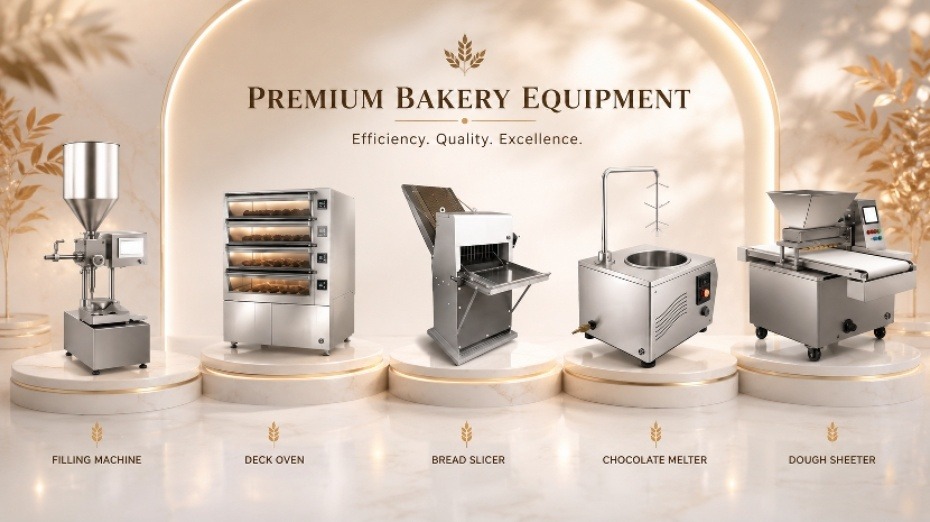
Deck ovens are often preferred for artisan breads because they provide strong bottom heat and excellent crust development. Rack ovens are commonly used in larger bakeries because they can handle multiple trays simultaneously with even airflow. Tunnel ovens are typically reserved for industrial-scale bread production where continuous baking is required.
Steam systems are another critical feature in commercial bread bakery equipment. Steam injection during the early baking phase helps create glossy crusts and proper loaf expansion. Without adequate steam, bread may develop dull crusts and limited volume.
Energy efficiency also matters when selecting bakery ovens. Rising utility costs have pushed many bakeries to invest in equipment designed to reduce heat loss and improve temperature control.
Sanitation and Food Safety Considerations
Commercial bread bakery equipment must be easy to clean and designed with food safety in mind. Flour dust, dough buildup, oil residue, and moisture can accumulate quickly in bakery environments. If equipment is difficult to sanitize, contamination risks increase.
Stainless steel remains the preferred material for most commercial bread bakery equipment because it resists corrosion and simplifies cleaning procedures. Equipment with removable components and accessible surfaces makes maintenance faster and more effective.
Food safety regulations continue to evolve, and bakeries are under pressure to maintain cleaner production environments. Investing in well-designed commercial bread bakery equipment helps reduce downtime, improve inspections, and support long-term operational reliability.
Scaling Production Without Losing Quality
Many bakery owners struggle to increase output while maintaining product consistency. Commercial bread bakery equipment plays a major role in solving this challenge. Automation allows bakeries to increase production volume without sacrificing accuracy or quality control.
For growing bakeries, scalability should always be part of the purchasing decision. Equipment that works for a small retail bakery may become a limitation once wholesale orders increase. Planning ahead helps avoid expensive equipment replacements later.
A bakery that invests strategically in commercial bread bakery equipment can gradually expand operations by adding conveyors, automated proofing systems, cooling tunnels, and packaging machines over time. This approach creates smoother production flow while minimizing labor bottlenecks.
Choosing the Right Equipment for Your Bakery
Not every bakery requires the same commercial bread bakery equipment. The ideal setup depends on production goals, available space, staffing levels, and bread style. A bakery producing handcrafted sourdough may prioritize deck ovens and artisan dough handling systems, while a sandwich bread facility may focus on high-capacity mixers and automated slicing lines.
Before investing, bakery owners should evaluate production volume, dough hydration, fermentation requirements, cleaning needs, and future expansion plans. Choosing commercial bread bakery equipment based solely on price can create long-term operational problems if the equipment fails to support production needs.
Reliability and service support also matter. Equipment downtime can disrupt production schedules and impact customer relationships. Working with dependable manufacturers and suppliers helps bakeries reduce operational risk.
Technology Is Changing Commercial Baking
Technology continues to reshape the bakery industry, and commercial bread bakery equipment is becoming smarter and more efficient. Digital controls, programmable baking systems, and automated monitoring tools now help bakeries maintain tighter production consistency.
Some advanced bakery systems track temperature, humidity, bake times, and energy use in real time. These technologies improve production accuracy while reducing waste. Predictive maintenance systems can also help bakeries identify equipment issues before major breakdowns occur.
As labor shortages continue affecting the food industry, automated commercial bread bakery equipment will likely become even more important for maintaining productivity and profitability.
Final Thoughts
Commercial bread bakery equipment is far more than a collection of machines. It is the foundation of efficient production, product consistency, food safety, and long-term bakery growth. From mixers and proofers to ovens and slicers, every piece of equipment contributes to the quality of the final loaf.
The right commercial bread bakery equipment allows bakeries to improve workflow, reduce waste, increase production capacity, and maintain the standards customers expect. Whether launching a new bakery or expanding an established operation, thoughtful equipment selection can make the difference between constant production struggles and sustainable long-term success.