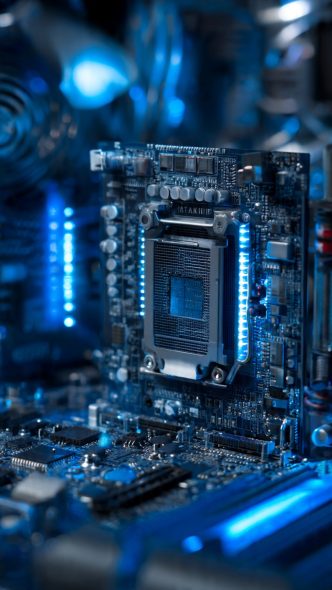

The battle between game developers and cheat makers has always been a technological arms race. Each new defensive measure inspires a new offensive technique, and each offensive technique forces defenders to dig deeper. For a long time, the frontier was user mode: anti‑cheat software scanned memory, watched for injected DLLs, and monitored system calls. Then the fight moved to kernel mode, with Ring 0 drivers giving anti‑cheat systems unprecedented visibility into the heart of the operating system. Now, the battle has descended even further — into the BIOS and UEFI firmware that sits beneath the operating system itself. This shift is not a death knell for third‑party tools; it is simply the next evolution in an ongoing game of technological hide‑and‑seek. Cheats are adapting, as they always do, and players who understand the new landscape are finding ways to stay ahead.
The Shift Below the Operating System
Why would an anti‑cheat need to touch the BIOS? The answer lies in the growing sophistication of cheat software. Modern private cheats often load their own kernel drivers, signed with legitimate or stolen certificates, to hide their presence from user‑mode monitoring. Some even use hypervisors or virtualisation to create a separate, invisible environment where the cheat can operate without interference. When anti‑cheat runs at the same level, it can detect many of these tricks — but it cannot always see below itself. A cheat that loads before the operating system, or one that hooks into the firmware itself, can remain invisible to anything running in Windows or Linux.
BIOS‑level anti‑cheat aims to close this gap. By embedding monitoring capabilities into the UEFI firmware, developers can observe the boot process, verify the integrity of critical system components, and detect unauthorised modifications before the operating system even starts. Secure Boot, already present on most modern motherboards, is a first step: it ensures that only signed, trusted code can run during startup. Some anti‑cheat systems go further, using the BIOS to store integrity hashes or to enforce kernel‑level protections that survive reboots. It’s a powerful concept — but like every concept in this long war, it is not invincible.
Mistfall Hunter Under the Microscope
To understand why developers are willing to go to such lengths, it helps to look at the tools that are driving them there. Mistfall Hunter, a title that rewards precision aiming and quick decision‑making, has become a favourite among players who use advanced assistance. A mistfall hunter aimbot today is not the crude auto‑lock of a decade ago. It is a carefully engineered piece of software that can mimic human reaction times, introduce randomised miss patterns, and adjust its behaviour based on the distance to the target and the weapon being used. To an observer — and often to the anti‑cheat — a well‑configured aimbot in Mistfall Hunter looks indistinguishable from a highly skilled human player.
This sophistication is precisely why anti‑cheat developers are moving deeper into the system. If a cheat runs entirely in user mode, it is easier to detect. If it moves to kernel mode, detection becomes harder but still possible. If it hides in the firmware, however, the game itself may never see it. The move to BIOS‑level monitoring is an attempt to cut off these deeper hiding places, to ensure that no matter how clever the cheat, there is always a layer of the system that remains visible to the defender. It is a bold strategy, and it has already changed the way private cheat developers approach their work.
Why Wallhacks Are Harder to Kill
While aimbots attract the most attention, it is often the mistfall hunter wallhack that proves the most persistent thorn in the side of anti‑cheat systems. A wallhack, or ESP, does not necessarily manipulate game memory in a way that is easy to detect. Instead, it may read the positions of other players and render that information as an overlay on the screen. Because the information is already present in the game’s memory — the game must know where every player is in order to render them when they become visible — a wallhack merely exposes data that the game already has.
This makes wallhacks fundamentally different from aimbots. An aimbot must influence the player’s input, creating an action that can be measured and analysed. A wallhack is passive; it changes what the player sees without altering what the player does. Anti‑cheat systems can try to detect the overlay itself, or look for suspicious viewing patterns that suggest the player is tracking enemies through walls. But these are indirect measures, and a careful player can avoid them by limiting their wallhack use to brief glances or by using a second monitor to display the information away from the main gameplay screen. The result is a tool that remains extremely difficult to eliminate completely, even with the most aggressive anti‑cheat measures.
How Cheat Makers Respond
Private cheat developers are nothing if not resourceful. When anti‑cheat systems began moving into kernel mode, cheat makers responded with signed drivers and virtualisation. Now that BIOS‑level monitoring is on the table, the response has been equally creative. Some developers have moved their logic onto external devices, using DMA (Direct Memory Access) cards that read game memory from a separate machine entirely. Because the cheat never runs on the same computer as the game, BIOS‑level anti‑cheat cannot see it. Others are experimenting with hardware‑level modifications that sit between the keyboard, mouse, and motherboard, intercepting inputs and injecting subtle corrections without ever touching the operating system.
The private cheat market has also become more selective. With BIOS‑level anti‑cheat raising the cost of entry, the casual cheat user is largely being pushed out. What remains is a community of serious players who are willing to invest in dedicated hardware, private software, and the time required to learn how to use these tools without drawing attention. The result is a smaller but more resilient group of users, and a correspondingly more difficult problem for developers to solve. It is a war of attrition, and both sides are digging in for the long haul.
Risks Worth Remembering
As with any advanced tool, the risks of BIOS‑level anti‑cheat and the cheats that evade it are not zero. A cheat that loads before the operating system can cause system instability, and if it is detected, the consequences can be severe. Hardware bans, which permanently blacklist a machine’s components, are becoming more common as developers strike back against repeat offenders. A player who is careless enough to trigger a hardware ban may find that their entire setup is useless for playing that game, even if they change accounts. This is not a moral judgement; it is simply the technical reality of playing in an environment where the defences are becoming just as sophisticated as the attacks.
Careful players understand this and adjust their behaviour accordingly. They avoid making obvious plays, they never discuss their tools in public, and they keep their systems clean of anything that might raise a red flag. The smartest users treat their cheats as a secret that must be protected at all costs, because in the world of BIOS‑level anti‑cheat, a single mistake can be far more costly than it ever was before.
Conclusion
The move to BIOS‑level anti‑cheat marks a new chapter in the long war between game developers and cheat makers. It has raised the stakes, pushed out casual users, and forced private cheat developers to innovate in ways that were once unimaginable. But it has not ended the fight. Cheats like the Mistfall Hunter aimbot and wallhack continue to evolve, finding new hiding places and new methods of staying undetected. The battle has simply moved to a deeper layer of the machine, and both sides are still learning what that means. For players who understand the landscape, the game goes on — just a little more carefully than before.