Every trade show veteran has the same story: the booth confirmation that arrived three weeks late, the shipment that vanished somewhere in transit, the new product launch that suddenly needed signage the old booth didn’t have. Rush orders aren’t a planning failure. They’re a fact of event marketing. The companies that handle them well aren’t lucky; they know which products can actually be produced fast, which suppliers can deliver, and where corners can be cut without anyone noticing.
Here’s the field guide.
Know What Can Actually Be Rushed
Not all display products move at the same speed. Understanding production reality keeps you from chasing impossible timelines:
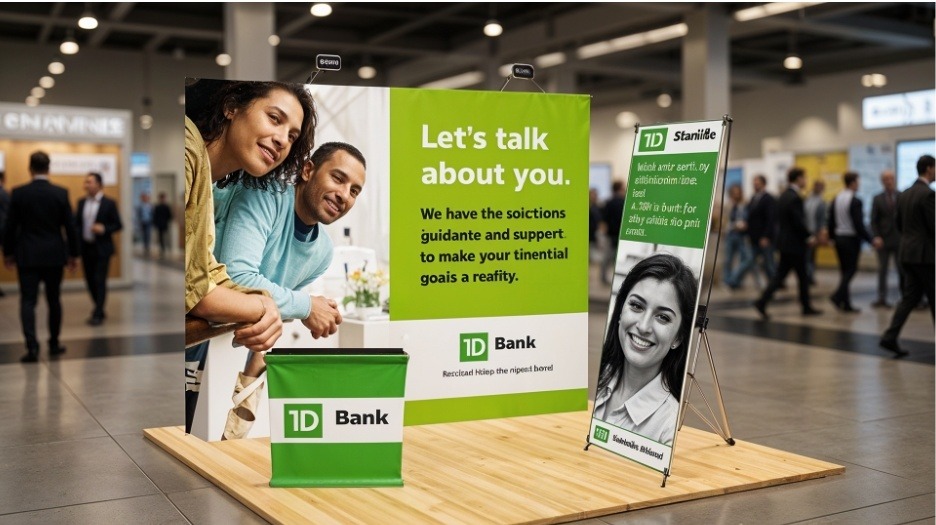
Fast (2-5 business days): Vinyl banners, retractable banner stands, tablecloths, flags, and foam board signage. These are digitally printed on standing inventory and ship quickly.
Moderate (5-10 business days): Dye-sublimated fabric backdrops, printed canopy tents, and branded counters. The printing is fast; the sewing, finishing, and quality checks take time.
Slow (2-4+ weeks): Custom-fabricated booths, modular wall systems, lightboxes, and anything involving custom hardware. If your show is two weeks out, don’t start here; rent or adapt instead.
A smart rush strategy mixes tiers: order the fast items to guarantee you have something professional, and rush the moderate items knowing they might arrive with a day to spare.
The Three Rules of Rush Orders
- Artwork readiness beats supplier speed
The number one cause of blown deadlines is file revision cycles, not production. Submit vector logos, CMYK files built at full print size, and approve digital proofs within hours, not days. Keep a brand asset folder, logos, fonts, Pantone codes, ready year-round.
- Confirm production time and shipping time separately
“5-day turnaround” usually means production only. A supplier across the country adds 3-5 transit days unless you pay for expedited freight. For US exhibitors, a domestic producer with rush capability beats an overseas bargain every time the clock is running.
- Get the deadline in writing with a guaranteed ship date
Reputable rush suppliers will commit. If a vendor won’t put a date in an email, they’re telling you something.
Build Around a Structure That Won’t Fail
Graphics get attention; structure earns trust. If your rush order includes an outdoor component and many trade shows now include outdoor demo areas, parking-lot activations, or post-show field events, anchor your setup with a custom canopy rather than gambling on a bargain frame. Commercial-grade tents with reinforced aluminum legs and certified flame-retardant canopies do double duty: they pass venue fire-code requirements indoors and survive real weather outdoors. When you’re ordering under pressure, buying a structure rated beyond your needs is cheap insurance; a failed frame on day one of a three-day show has no fix.
For teams that need maximum visual impact with minimal setup labor, Inflatable Tents have become the rush-order dark horse. They deploy in minutes with an electric pump, require no frame assembly at all, and their sculptural domes and arches photograph dramatically better than standard pop-ups, a real advantage when your event content team needs social-ready visuals. They also pack into a single bag, making easy transport genuinely easy: one person, one car trunk, done.
A 10-Business-Day Battle Plan
Working backwards from a show that’s two weeks out:
- Days 1-2: Lock the booth layout and product list. Submit all artwork. Pay rush fees without negotiating, the fee is cheaper than the missed show.
- Day 2-3: Approve proofs same-day. Assign one person decision authority so approvals don’t stall in committee.
- Days 3-8: Production. Confirm tracking numbers the moment items ship. Order fast-tier backup signage now if anything looks shaky.
- Day 9: Receive and test-assemble everything. Every flag pole, every connector, every zipper. Problems found at the office are solvable; problems found on the show floor are not.
- Day 10: Pack with a checklist, including gaffer tape, zip ties, a multi-tool, and spare grommets, the rush-order survival kit.
What to Skip When Time Is Short
Cut complexity, not quality. Skip the custom-shaped counter; use a branded table throw. Skip the video wall; use a bold fabric backdrop with one clear message. Skip multiple small signs; one large, readable graphic outperforms five cluttered ones anyway. Rush conditions actually enforce good design discipline, the booths that convert are rarely the busiest ones.
After the Show
Below the move that ends the rush-order cycle: when the event wraps, audit what worked, then order your evergreen pieces, undated, logo-forward displays on standard turnaround at standard prices. Keep them staged and ready. The next “we got a booth, it’s in 12 days” email becomes a logistics task instead of a crisis.
Rush orders test your suppliers exactly once. Choose ones that pass, and keep them.