Quality control has moved out of the ‘end of the line’ zone in today’s manufacturing world. It’s woven into the process. Precision of such high order is now essential in industries today such as automotive, medical, electronics, consumer goods, and many others where even the tiniest of defects can impact performance, safety and reliability of a product.
Plastic injection molding has developed a great deal to accommodate these expectations. It was a long time ago when it was much more dependent on the operator skills; now digital systems, automation and real-time monitoring control it. Companies such as Ecomolding are leveraging these technologies to make their products more stable, less defect and to ensure higher quality for each molded part, that meets specific quality criteria.
Why Technology has become a necessity in Plastic Manufacturing
While injection molding may appear to be a straightforward process, it must be carefully controlled with regard to temperature, pressure, cooling time and material flow. Shrinkage, warping or surface inconsistency are all defects that could be caused by a change in any of these factors, regardless of how small.
This was largely done on the basis of human experience in the past. High level of skill was needed, but manual adjustments would not ensure consistency in large production quantities. This did not apply in the past, but with today’s technology, repeatability is higher and only possible with advanced technology.
Smart production systems and connected factories
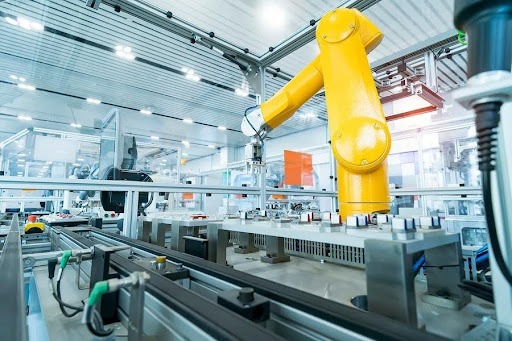
The modem injection molding factories are no longer the independent molding machines but are more of a digitalized system. Each machine is linked with a shared control system to track and monitor its performance, production conditions etc. on a real time basis.
The relationship enables manufacturers to ensure consistent processes over extended production runs. In case of any deviation the system can respond immediately without waiting for the occurrence of defective parts.
The above systems can also store production data over time, thus giving an insight into the machine’s behavior, and additional optimizations can be performed for future production runs.
Digital Engineering and Design Integration
Quality begins BEFORE production begins. Simulations are now used by engineers to understand the behavior of plastic within a mold prior to the creation of any physical tooling.
These tools are capable of forecasting material flow, cooling patterns, shrinkage and stress points. This can help to identify design problems early in development which helps to reduce the ‘trial and error’ time required during production.
This, in turn, results in products that are better designed, and easier and more efficient to produce.
Advanced Process Control in Injection Molding
Very high precision is now available for production parameters in today’s injection molding machines. Programmed dynamic variations of pressure, temperature and injection speed can all be used throughout the course of the injection cycle.
Modern systems will adjust settings as necessary to the properties of materials and the environment.Older systems contained only set parameters. This ensures consistent production for long production cycles.
In manufacturing, tolerances and dimensions might be important for assembly or performance, making this level of accuracy important.
How Ecomolding Improves Manufacturing Quality
Intelligent automation and real-time monitoring to guarantee high quality standards in the middle of advanced manufacturing systems is ecomolding. Quality control is not just at the end of the making process, it is during the entire process.
At its core, the ecomolding process is about accuracy tooling, automated systems, and continuous monitoring to assure that every element is manufactured accurately and always to the required standards. This minimises variation and increases the long term reliability.
Moreover, the Ecomolding technique allows the manufacture of products more efficiently. Using materials optimised for each component in terms of use, strength and manufacturability will reduce waste and make the production process more efficient.
Energy Efficiency in Modern Manufacturing
It is important to consider energy in present production. Traditional machines (whether or not they were in use) wasted power.
New generation injection molding systems deploy intelligent control systems, servo motors that change energy consumption according to the actual production requirements. This helps to minimize wasted electricity usage and enhances efficiency.
Also, cooling and heating systems are tuned to perform at their best for the least energy consumption.
Material Selection and Product Reliability
The quality of a product depends on the materials used. Strength, flexibility and heat resistance are just a few of the properties needed for the application.
Nowadays, there are testing systems available which can assess the performance of materials prior to production. This ensures that the material used is the right one and helps reduce the risk of failure in a practical application.
Accurate manufacturing control and material science leads to better and more stable products.
Final Thoughts
Plastic manufacturing has transformed from being a manual business into an effectively coordinated digital system. Technology plays an important role in production today to guarantee precision, consistency and efficiency throughout.
Companies like Ecomolding are helping to improve the quality of products, reduce waste and increase part reliability with smart manufacturing. It is a dynamic industry that is continually changing, with new innovations and technologies being developed that have the potential to revolutionize the future of the industry.
FAQs
Which is the best thing about Ecomolding?
Ecomolding specializes in precision plastic injection molding and has achieved a number of advanced automation and smart manufacturing systems.
What are the benefits of technology to improve injection molding?
It helps to ensure accurate production by tracking real-time production, reduces error rate, and guarantees machine performance uniformity.
What is the function of the custom injection molding services for?
They design and manufacture custom plastic parts, with an aim of optimizing them for capability, size, and performance.
Importance of automation in manufacturing?
Automation reduces human error, improves consistency, increase productivity and assure production quality.
Does the production of smart manufacturing lead to slight waste?
Yes, it does minimize defects, maximizes material use and enhances overall production efficiency, which greatly reduces waste.
What industries benefit the most from injection molding technology.
A lot of industries benefit from advanced injection molding technology, including the industry and the healthcare industry and the electronics industry and the consumer goods industry.