Shopping for an electric bike for adults usually starts with motor power and battery range. For shorter riders, none of that matters if you can’t comfortably mount, stand over, or control the bike — fit problems show up before performance ever does.
This guide covers why standard ebikes miss the mark for shorter riders, which frame types fix it, which specs matter, and how to match a bike to your use case.
Why Most Electric Bikes Don’t Fit Short Riders
Most ebikes are designed around average-to-tall proportions, leaving a real gap for shorter riders. Estimates commonly cited put the number at 25–28% of riders under 5’5″ reporting fit issues with standard frames.
The core issue isn’t the frame size label; it’s standover height and minimum seat height. Standover height is the ground-to-top-tube distance you straddle when stopped — too high relative to your inseam, and you can’t plant both feet flat without tilting the bike.
Minimum seat height works in reverse: if the seat post can’t drop low enough, your leg never fully extends at the bottom of the pedal stroke, straining your knees over time. A long handlebar reach adds to this, forcing a forward stretch that loads the wrists.
Fit deserves more attention than horsepower-style marketing. A bike that’s hard to control at low speed is a safety issue, not just a comfort one — especially in stop-and-go commuter traffic.
Best Frame Types for Short Adults
Three frame styles solve this better than standard diamond frames, each suited to a different riding pattern.
Step-through frames drop the top tube low or remove it, so you swing a leg through rather than over — easier mounting and dismounting, especially with groceries or a bag in hand. A strong default for commuting and errands.
Compact or folding frames shrink the wheelbase and often pair with smaller wheels, suiting riders under roughly 5’3″–5’5″ especially well, with the bonus of easier storage.
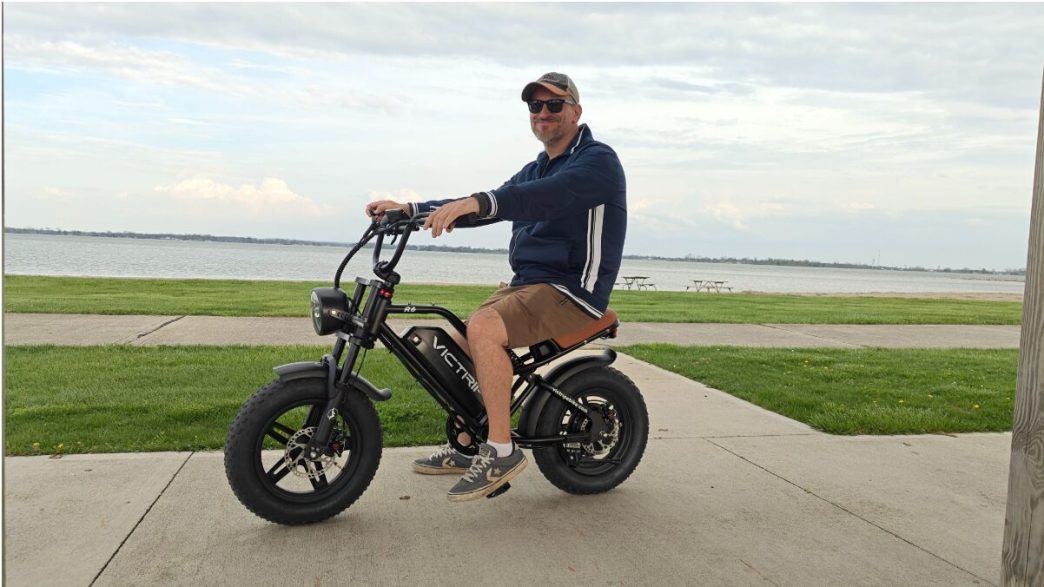
Low-standover fat-tire frames combine a low, step-through-style frame with wider tires for stability — good for uneven pavement or light gravel without sacrificing easy mounting.
In nearly every case, step-through beats step-over for shorter riders, unless you specifically want a sportier position and have confirmed the step-over model’s standover height fits your inseam.
Key Specs to Check Before Buying
Check actual numbers rather than relying on labels like “small” or “medium,” which vary by brand.
| Spec | What to Check | Why It Matters for Short Riders |
| Seat height (min) | Lowest setting, in inches | Full leg extension at pedal bottom |
| Standover height | Top tube clearance | Standing flat-footed over the frame |
| Wheelbase | Overall bike length | Shorter = easier low-speed handling |
| Wheel size | 16″ vs 26″ | 16″ lowers center of gravity, adds stability |
| Weight | Total bike weight | Easier to maneuver, lift, and park |
| Motor/battery | Class rating, range | Should suit commuter needs without added bulk |
Smaller 16″ wheels can improve stability and lower the center of gravity, making stops and slow maneuvering feel more predictable. Larger 26″ wheels roll over bumps more smoothly and hold speed better on longer commutes.
Class 1 and Class 2 ebikes generally don’t require a license in most US states, while Class 3 models may carry added restrictions depending on your state. Either way, fit should outrank motor power — a powerful motor on a bike you can’t stand over doesn’t help you.
Best Electric Bikes for Short Adults by Use Case
It’s more useful to match the bike to how you’ll ride it than to scan a flat top-10 list.
For daily commuting: A step-through commuter ebike with a light frame and adjustable handlebar reach is the sweet spot — easier to carry up stairs and dial in a low-strain position. VICTRIP’s Commuter Ebike lineup is built around this everyday usability.
For errands and short trips: A compact or folding frame with 16″ wheels works well, thanks to its smaller footprint and lower center of gravity for frequent stop-and-go starts.
For light off-road or mixed terrain: A low-standover fat-tire frame offers wider-tire stability without the typical tall, hard-to-mount frame. For short adults wanting a compact, easy-to-handle commuter ebike that handles rough patches too, VICTRIP’s fat tire lineup is worth a look.
VICTRIP itself is positioned around compact, easy-handling models for smaller riders and daily commuting rather than performance-first specs — a useful filter when comparing average-height bikes to ones built for shorter frames.
How to Test Bike Fit Before You Buy
Specs only tell part of the story. Run through this checklist before buying:
- Flat-foot test: Sit at your intended riding height and confirm both feet touch the ground without tiptoeing.
- Reach test: Confirm a slight elbow bend at the handlebars, not a full stretch or rounded back.
- Standover check: Straddle the frame with both feet flat and confirm real clearance, not just contact.
- Mount/dismount practice: Get on and off as you actually would day to day, with a bag, in regular clothes.
- Return policy review: Confirm the return window in case sizing feels off after a few real rides.
If a retailer won’t allow a test ride or offer a reasonable return window, treat that as a red flag.
Final Thoughts
The best electric bike for adults under 5’5″ isn’t the one with the biggest battery — it’s the one whose standover height, seat height, and reach actually match your body. Step-through and compact frames solve most fit problems, and a few minutes of hands-on testing tells you more than any spec sheet.
Once fit is sorted, match frame type and wheel size to your use case — commuting, errands, or light trail riding — and let comfort lead the way to a bike you’ll genuinely enjoy.