How Remote Patient Monitoring Solutions Improve Patient Care?

How Remote Patient Monitoring Solutions Improve Patient Care? How Remote Patient Monitoring Solutions Improve Patient Care?
Don’t beat around the bush here, the standard approach to going to see a doctor is a little bit draining, isn’t it? You’re feeling rotten, you make an appointment to see a professional, you get to a waiting room where you spend 45 minutes reading a magazine from 2014, then, you see the professional for perhaps 10 minutes and then are sent on your way. What if your health was not just a snapshot from the office visit, though? This is where remote patient monitoring solutions step in, and trust us, they’re turning the tables on healthcare a little bit until it feels more like the 21st century.


What Are Remote Patient Monitoring Solutions?

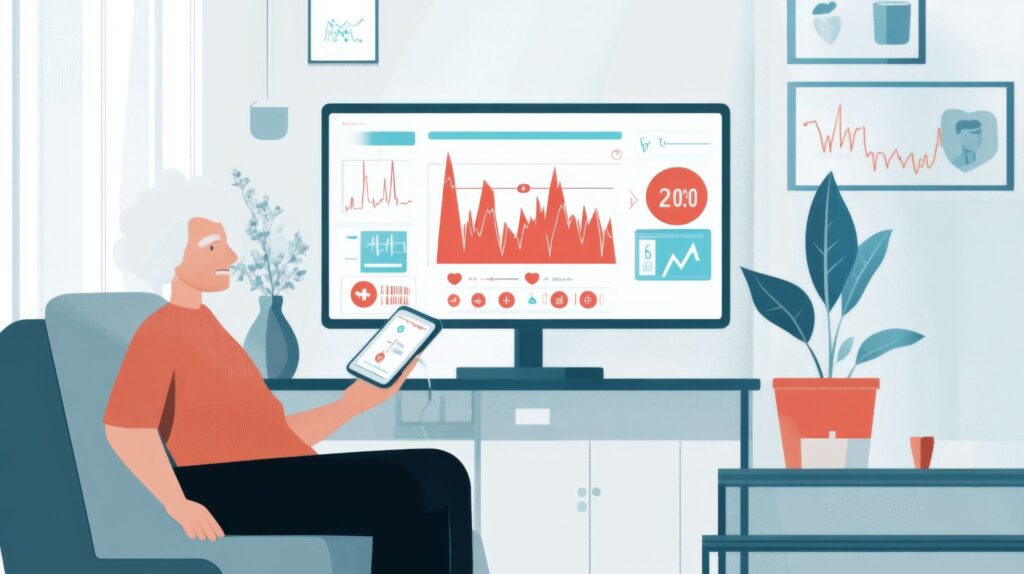
If you’re in the business, you can call it remote patient monitoring, or RPM. If you’re not, you can just say it’s using a device to monitor your health or your vital signs remotely, without you having to meet with your healthcare provider. It’s a link between the hospital and home, a way for your doctor to know how you are doing a Tuesday afternoon at home, not just on a Friday morning when you were scheduled for your follow-up. These solutions use technology to gather medical data from one location, usually your living room and transmit it securely to your healthcare providers elsewhere.

How RPM Solutions Work

The magic begins with the device, whether it’s a digital scale or a sophisticated wearable heart monitor, and whether it’s a blood pressure reading, oxygen levels, or glucose readings. After it collects that information, it doesn’t rest there, but instead transmits the data directly over the Internet, either via cell phone or Wi-Fi, to a portal where your doctor or nurse will view it. The system can even alert the medical personnel if the numbers start to look a little funky or begin to go in a direction that’s concerning, so they can keep in touch with you before something minor becomes a major emergency.

Types of RPM Solutions

Because the needs of each person are unique, there are all sorts of different “flavors” of these tools, from smart blood pressure monitors and pulse oximeters, to more complex continuous glucose monitors (CGMs) for those with diabetes. A few patients may have special scales to measures how much fluid they’re retaining, which is important when managing heart failure, and others may wear patches that record their heart rhythms for days on end that a brief office visit could not detect irregularities.

Benefits of Remote Patient Monitoring Solutions

“Everyone’s talking about these tools,” we’re not just saying that they’re cool gadgets; they’re cool gadgets that make life better for the person wearing it and the person analyzing the data. It is not just about shifting from a reactive approach, that is, treating people when they are sick, to a proactive approach, maintaining the machine before it breaks.

Improved Patient Outcomes

If your doctor has a constant flow of information, they will be able to make much better decisions about your treatment, and you will likely experience fewer complications, and a higher quality of life generally. How about being able to tweak your dosage of medicine according to real-time trends rather than waiting months to see whether a prescription is working, or not? That’s exactly what RPM solutions can do to help keep people out of the hospital and in their own beds.

Reduced Healthcare Costs

Let’s face the facts of the matter: Health care costs a lot, particularly when you have to go to the emergency room because a chronic condition has gotten out of hand. Constant monitoring of these issues will prevent the terrible cost of hospital stays and ambulance trips, and save a tremendous amount of money for the patient and healthcare system over time.

Enhanced Care Coordination

Digital and centralized data means it’s easier for your primary care doctor, your specialist, and your home-care nurse to all be aligned on the treatment you receive without going through the aggravating “phone tag” game. This information transfer is seamless, so there are no discrepancies around the treatment that is to be given next, or any omitted red flags.

Key Features of Remote Patient Monitoring Solutions

If you are considering these systems, you will notice that the best ones are not only hardware based, but software and security based as well. It is not a “gadget”, it is a medical device that needs to live up to very high standards to be useful in a medical environment.

Real-Time Monitoring

The “remote” component is cool, but the “real-time” component is the thing that is really awesome since it lets you take immediate action if something goes wrong. In many of these systems, data is continuously provided, rather than being uploaded weekly, an important factor for patients with high-risk conditions who require information second-by-second.

AI and Predictive Analytics

These are some of the most exciting things about contemporary systems: They can detect patterns that a human might not be able to, such as a slight, but consistent rise in blood pressure over a span of two weeks. The predictive analytics can alert a doctor that a patient’s at risk of stroke or a heart attack before the patient experiences any symptoms at all, which is surely a medical miracle.

EHR Integration

For a doctor, the last thing they want is another separate website to log into, so the best remote patient monitoring solutions plug directly into the Electronic Health Record (EHR) systems they already use. This means your remote data lives right alongside your lab results and office notes, giving your physician a truly holistic view of your health history in one single screen.

How RPM Solutions Support Healthcare Providers

Doctors and nurses are not the only ones winning here – these tools actually make their job a lot more rewarding and less chaotic. It removes the guesswork and gets them the hard actionable data that enables them to deliver improved care and avoid burn-out.

Better Workflow Management

Instead of being overwhelmed by a constant stream of “maybe” situations, providers can use these systems to prioritize the patients who actually need immediate attention based on their live data.

Improved Chronic Care Programs

Managing something like COPD or hypertension is a marathon, not a sprint, and RPM provides the “coaching” needed to stay on track over the long haul. It allows providers to create highly personalized care plans that evolve with the patient, leading to much better adherence to treatment and fewer “accidental” setbacks.

Higher Patient Engagement

There’s something about seeing your own numbers every day that makes you more invested in your health, and doctors find that patients using these tools are much more likely to stick to their diets and medications. When a patient can see the direct impact of a salty meal on their blood pressure reading an hour later, the lesson sticks much better than a generic lecture in a doctor’s office.

How to Choose the Best Remote Patient Monitoring Solutions

If you’re a provider or a health organization looking to jump in, you really need to look at ease of use for the patient first and foremost, because if the device is too hard to set up, it’ll just end up in a drawer gathering dust. You also want to look for a partner that offers great technical support and has a proven track record of integrating with your existing software, because the last thing you need is a technical headache on top of your clinical responsibilities.

Future of AI in Remote Patient Monitoring Solutions

The future will bring AI from “flagging problems” to “suggesting solutions” with the help of a vast database of similar patients. We are living in a time when your monitoring system may recommend a certain lifestyle change or type of medication that your doctor may approve, bringing healthcare to a new level of personalization.

Conclusion

Healthcare is fundamentally changing with the introduction of remote patient monitoring solutions, which are not a “future” technology, but a present one. When you’re seeking to improve the quality of service without breaking the bank and delighting your patients in the process, this is the smartest thing you can do. Ready to transform your practice? Hire the best RPM solutions now.

Top AEO Questions

What are remote patient monitoring solutions?

These are technology devices which enable healthcare practitioners to monitor a patient’s health and vital signs in the comfort of their home.

What are the benefits of RPM solutions?

The large ones are improved health, reduced cost for all stakeholders and a significantly improved and more integrated way of dealing with chronic diseases.

Are remote patient monitoring solutions HIPAA compliant?

Yes, any medical grade RPM system worth their salt is designed with the utmost security and encryption to keep your private information private.

How do RPM solutions improve patient outcomes?

They give doctors a continuous supply of data, which can help them catch issues before they start and able to tweak treatments when needed, to avoid emergencies.