We often think of sleep as a time when our bodies and minds simply “power down.” However, behind closed eyes, the human brain is engaging in a highly complex, dynamic, and essential series of activities. It processes memories, clears out toxins, and repairs the body. But how do we actually know what happens in the brain when we are unconscious? The secret lies in tracking electrical signals. By analyzing the brain’s nocturnal electrical activity, modern technology allows us to decode the mysteries of our rest and recognize when things go wrong.
Key Takeaways
- Constant Activity: Your brain does not shut off at night; it transitions through specific, measurable electrical patterns.
- The Power of Waves: Different stages of sleep (like N1, N2, N3, and REM) are defined by distinct frequencies and shapes of electrical activity.
- Spotting Abnormalities: Some neurological issues, such as nocturnal epilepsy or micro-arousals from sleep apnea, only reveal themselves through irregular electrical signals while you sleep.
- Accessible Tech: Sleep tracking is evolving from bulky hospital equipment to comfortable, wearable tech like lumimind, bringing clinical-grade insights into your bedroom.
What Does EEG Measure During Sleep?
Electroencephalography, or EEG, is a method used to record the faint electrical signals generated by your brain. To capture these signals, small sensors called electrodes are placed on the scalp. Whenever your brain cells (neurons) communicate, they emit electrical impulses.
During sleep, an EEG captures this communication and translates it into visible waveforms. Even though you are unconscious, your brain is still hard at work. By monitoring these signals, specialists can see a real-time reflection of your brain’s state, tracking the precise moment you drift off and how your brain behaves hour by hour.
How Brain Activity Naturally Changes During Sleep
When you are awake and alert, your brain produces fast, low-amplitude waves. But as you close your eyes and begin to relax, this activity shifts. As you fall asleep, your brain activity transitions from these rapid fluctuations into much slower, highly regular brain waves.
Throughout the night, your brain doesn’t just stay in one state. It cycles through different sleep stages—typically in 90 to 120-minute loops. During each cycle, the brain moves back and forth between varying depths of rest, with each stage displaying a completely unique electrical signature that serves a different biological purpose.
How EEG Identifies Sleep Stages and Patterns
Because of the distinct changes in frequency and morphology (the shape of the waves), EEG is the gold standard for precisely distinguishing between different sleep stages. In clinical sleep medicine, these stages are classified into three Non-Rapid Eye Movement (NREM) stages and one Rapid Eye Movement (REM) stage:
- Stage N1 (NREM 1): This is the transitional phase from wakefulness to light sleep. The EEG shows a slowing of brain activity, characterized primarily by theta waves.
- Stage N2 (NREM 2): As you enter a more stable sleep, the EEG reveals unique signatures called “sleep spindles” and “K-complexes.” These bursts of activity help the brain block out external disturbances.
- Stage N3 (NREM 3 / Deep Sleep): Also known as slow-wave sleep, this stage is dominated by large, rolling delta waves. This is the crucial restorative stage where physical healing, tissue repair, and immune system strengthening occur.
- REM (Rapid Eye Movement): Interestingly, during REM sleep—when most vivid dreaming happens—the brain’s electrical activity speeds up significantly, closely resembling the brain waves of a fully awake person. This stage is vital for cognitive function and memory consolidation.
These stages form your “sleep architecture.” Understanding this structure is the core basis for evaluating overall sleep quality.
What Abnormal Brain Activity Looks Like on EEG
Sometimes, the brain’s nighttime electrical signals don’t follow the standard script. When abnormal signals appear—such as sudden sharp waves, unusual spikes, excessive slow waves, or irregular electrical discharges—it can indicate an underlying neurological or health issue. By capturing these details, an EEG can help identify specific sleep disorders:
Micro-arousals in Sleep Apnea: Sleep apnea doesn’t just deprive the brain of oxygen; it leaves a clear mark on an EEG. When breathing stops, the brain triggers a brief “micro-arousal” to force the body to resume breathing. These frequent awakenings constantly interrupt the natural progression of brain waves, causing the patient to hover in light sleep (N1 or N2) and preventing them from reaching the restorative N3 deep sleep. This explains why someone might sleep for eight hours but still wake up feeling exhausted.
Hidden Discharges in Nocturnal Epilepsy: Certain abnormal brain discharges are much easier to catch while the brain is asleep. For example, individuals with nocturnal epilepsy might have completely normal daytime EEG results, keeping their condition hidden. However, once they fall asleep, the specific changes in brain waves can trigger irregular spikes or sharp wave discharges. This makes overnight, long-term EEG monitoring a vital diagnostic tool for these hidden conditions.
Insomnia and Hyperarousal: For individuals suffering from chronic insomnia, an EEG often reveals overly active, high-frequency brain waves (such as Beta waves) during sleep onset or even during sleep stages. This indicates that the brain remains in a state of “hyperarousal” and high alert, preventing true relaxation and severely degrading sleep quality.
From Clinical EEG Monitoring to Everyday Sleep Insights
Obtaining a detailed EEG traditionally requires an overnight stay in a specialized sleep clinic. These clinical setups utilize a standard EEG monitoring device that involves multiple wires attached to the scalp. While this method is highly accurate for medical diagnosis, the clinical setting can sometimes alter a person’s natural sleep patterns. Additionally, the procedure is complex and not practical for continuous, long-term sleep monitoring.
The Shift from Hospitals to Home Monitoring
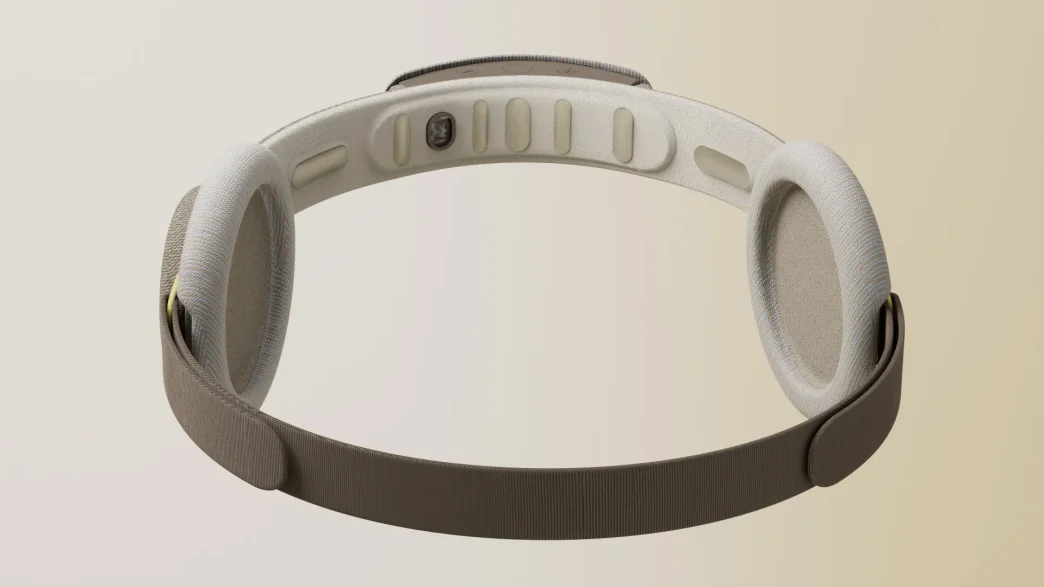
With advancements in technology, EEG equipment is rapidly transitioning from clinical settings into the home. Today’s consumer EEG devices typically come in the form of comfortable, wearable headbands. Unlike hospital equipment, these smart headbands often use dry sensors that do not require sticky conductive gels or professional assistance to apply. They are designed to be lightweight and non-invasive, allowing users to sleep naturally in their own beds while still accurately capturing the brain’s electrical signals throughout the night.
A Breakthrough at CES 2026: Lumimind’s Non-Invasive BCI
Unlike most conventional EEG headbands, lumimind provides us with a completely new solution. Making its debut at CES 2026, the brand announced an innovative EEG headband utilizing a non-invasive Brain-Computer Interface (BCI) approach. Their primary product, lumisleep, is designed to actively monitor, intervene, and help users fall asleep faster through real-time brain activity tracking, rather than relying on indirect signals like movement or heart rate used by standard smartwatches.
High-Density Sensor Array and Ergonomic Design
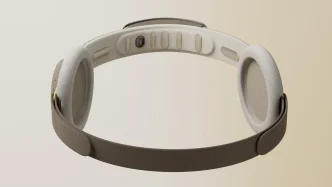
At the core of the LumiMind headband is a high-density, 7-point dry electrode sensor array. Spanning the prefrontal cortex, this advanced system captures stable, high-resolution brainwave signals without the need for the sticky conductive gels traditionally required in clinical settings. Recognizing that many people are side sleepers, the device features a fully-cushioned, over-ear design wrapped in ultra-soft, lightly elastic fabric. This ensures the wearer can sleep naturally without uncomfortable pressure points while the device continuously records clinical-grade data.
Closed-Loop Sleep Assistance and App Insights
Capturing the data is only half the battle; actively improving your rest is where LumiMind truly shines. By taking a completely closed-loop approach, LumiMind offers several transformative features:
- Real-Time Sleep Guidance: The “SleepGuide™” feature uses Real-Time Neural Coupling Modulation™ (RTNCM™) to generate dynamic acoustic pulses (AuthenticBeats™).
- Audio-Assisted Regulation: These soothing pulses are delivered via near-ear air-conduction audio, actively coaxing your racing mind into the ideal “Sleep Onset Pattern™.”
- AI-Powered App Insights: In the morning, algorithms developed from the world’s largest Neural Signal Foundation Model by the INSIDE Institute for NeuroAI translate your complex EEG signals into a clear, comprehensive report within the companion app. This empowers you to optimize your nightly rest by detailing your precise Sleep Onset Latency and providing a detailed hypnogram of your N1, N2(light sleep), N3 (deep sleep), and REM sleep cycles.
If you want to learn more about the LumiMind EEG sleep headband and how this revolutionary technology can transform your sleep, please visit the official LumiMind website.