Hold a flat piece of paper in your hand. Now imagine that same paper shifting from one image to a completely different one as you tilt it, or seeming to hold real depth without a single pair of 3D glasses involved.
That trick has a name most people never bother to learn, even though they have seen it plenty of times on a cereal box, a trading card, or a promotional poster. It works through a plastic lens etched with tiny ridges, engineered to bend light differently depending on the angle from which a viewer stands.
With this in mind, this article looks at how lenticular art pushes past what a flat printed image can normally do, one technique at a time.

1. Turns a Flat Surface Into Movement
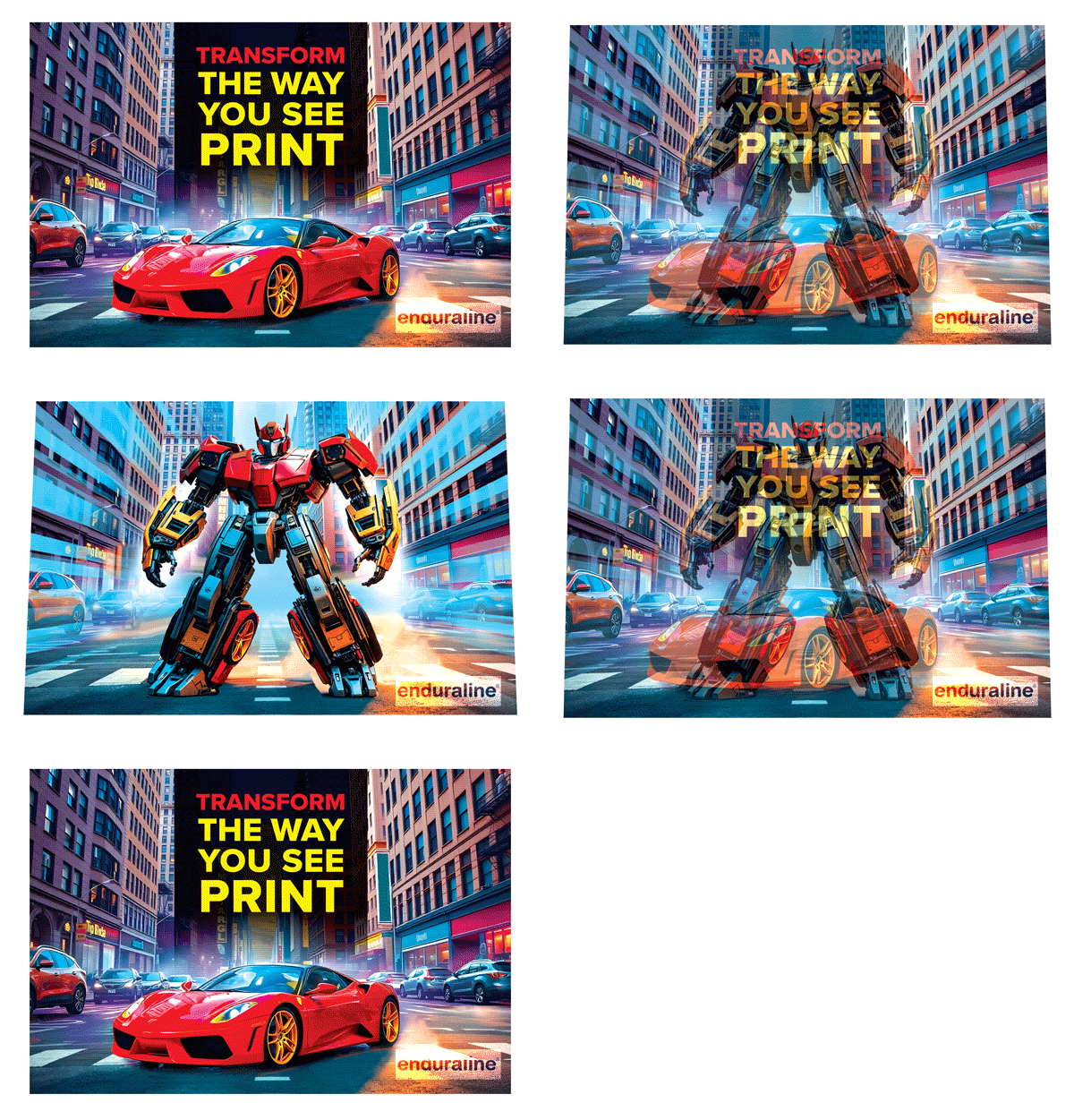
The simplest form of this technique is the flip effect: two separate images that swap back and forth as the viewing angle changes. A postcard might show a product in daylight, then switch to the same product lit up at night, with nothing but a hand tilt in between.
Designers working in this space are essentially creating lenticular art built around contrast, since the swap only reads clearly when the two images differ enough to register as a change rather than a blur. Vibrant colors and full ink coverage tend to produce the cleanest transition, while pale or washed-out backgrounds create a ghosting effect in which both images bleed into each other. Lenticular design guide walks through exactly this kind of setup, down to which lens specifications keep the flip effect crisp rather than muddy.
2. Adds Real Depth Without 3D Glasses
Beyond merely flipping an image, true dimensionality in a lenticular print is achieved through a process that stacks different images on top of each other. In such a case, a designer will take an image and divide it into up to fifteen depth layers, with one of those layers being the focal point, the only point that remains fixed while others are changed. Different elements are superimposed on one another because a three-dimensional image on the computer is likely to be more believable when printed.
The effect observed is known as parallax, the principle our brains use to perceive that objects like fence posts appear to shift more quickly than distant ones like trees. The same process applied in print makes us view 3D space from a very thin sheet of paper.
3. Captures Motion in a Single Still Print
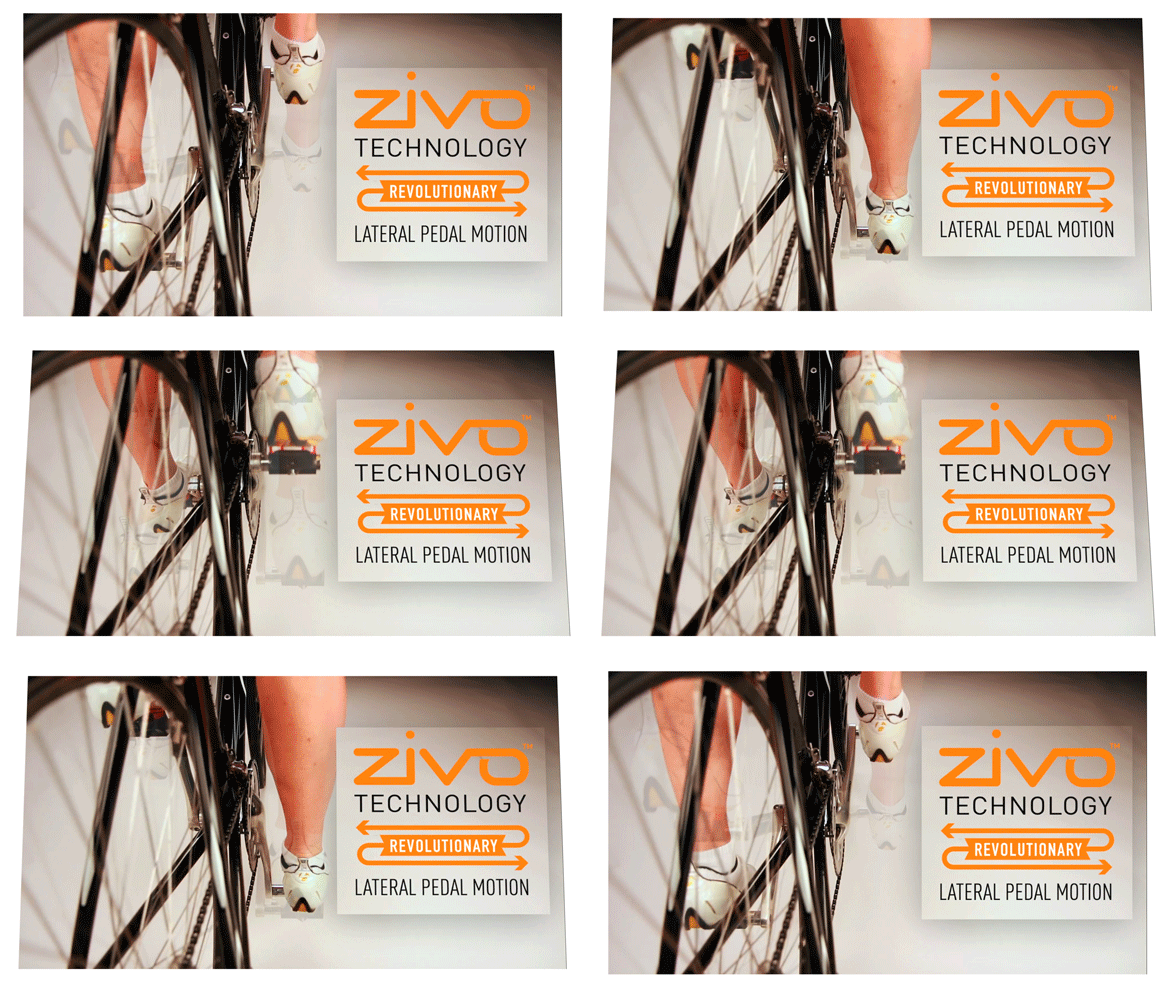
A third variation captures actual motion or a zoom effect using a sequence of frames, similar in principle to a flip book. Whether that be a cyclist in motion, a spinning product, or a zooming logo heading toward the viewer, each is illustrated across three to eight frames on a single surface.
Fewer frames will create clearer movements because the more you have, the greater the chance of seeing ghosting effects among the frames. This limits the designer’s creativity in illustrating their idea with as few frames as possible, rather than adding unnecessary details. The importance of maintaining a uniform background across the frames should also be considered to avoid overshadowing the object in motion.
4. Outperforms Flat Print in Grabbing Attention
Pushing creative boundaries only matters if people actually notice the result, and there is real research behind why dimensional print tends to land harder than flat media. According to MIT Sloan Management Review, a neuroscience study using EEG and eye-tracking found that dimensional mail pieces required less cognitive effort to process than digital ads. They elicited a noticeably stronger motivational response and a higher rate of recall after the fact.
Lenticular pieces sit squarely in that dimensional category. The physical act of tilting a card or walking past a display to see an image change adds a layer of interaction flat print or a static screen cannot replicate. That interaction is exactly what keeps a viewer’s attention a few extra seconds longer than a printed image that never moves.
5. It Pushes Designers to Think in Layers, Not Just Pixels
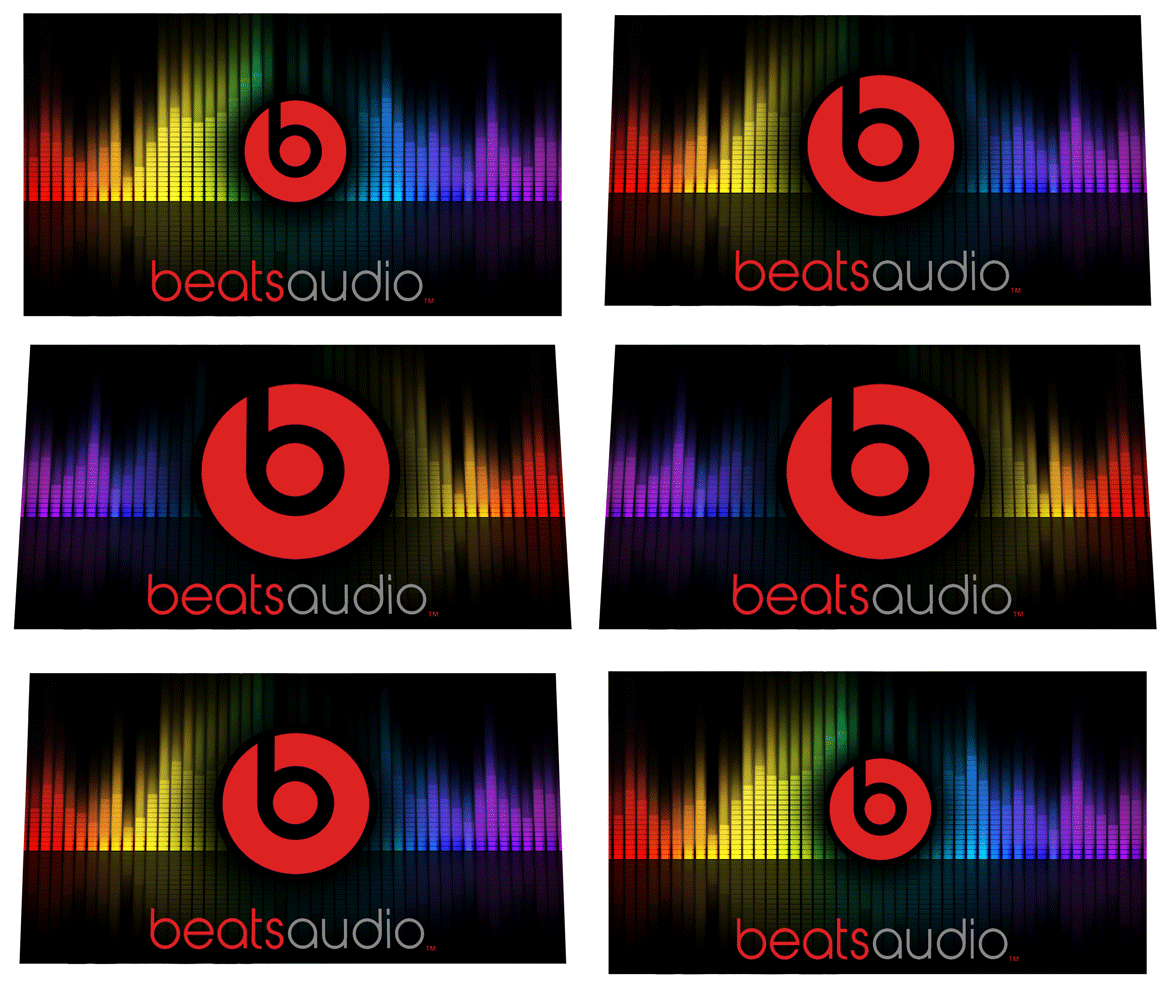
Every one of these effects imposes real constraints: minimum font sizes tied to lens density, backgrounds that must avoid solid colors or stark whites to prevent ghosting, and artwork planned in depth layers rather than a single flat canvas. None of that is optional once a design moves into lenticular production.
Those constraints end up sharpening creativity rather than limiting it. A designer has to think about how an image behaves across multiple angles and frames, not just how it looks sitting still, which is a fundamentally different design problem than anything flat print requires.
Conclusion
Lenticular printing did not just add a novelty effect to flat paper. It handed designers an entirely new set of tools, movement, depth, and motion that force a different kind of visual thinking from the first sketch onward. For a medium built on a decades-old plastic lens, it continues to push what a printed image can do, well past what flat design alone can offer.