If you’re trying to get your business noticed, you’re never short on advertising options. Social media feeds, search engines, streaming platforms, and real-world marketing all compete for your attention and your budget. The challenge isn’t finding places to advertise. It’s figuring out which channel is most likely to reach the right people and inspire them to take action.
One option that continues to stand out is mobile billboards on an advertising truck fleet. Unlike digital ads that appear on screens for a few seconds, mobile billboard campaigns deliver your message directly to busy neighborhoods, downtown districts, events, and commuter routes. Mobile advertising provides something increasingly rare: real-world visibility that people can’t swipe away.
What Are Mobile Billboards?
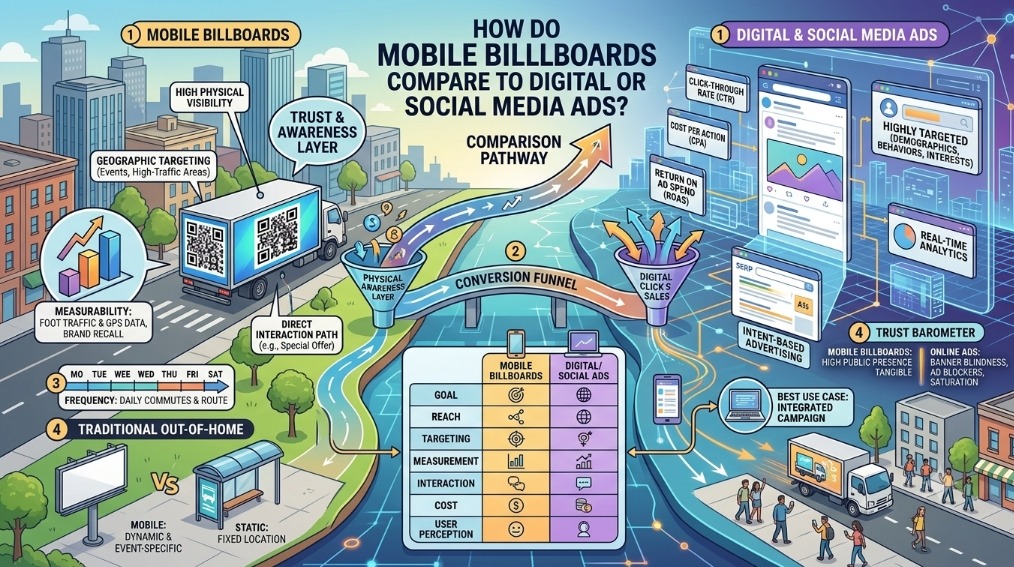
Mobile billboards are advertisements displayed on moving vehicles, such as dedicated billboard trucks, wrapped vans, or digital display trucks. Instead of remaining fixed in one location, these ads travel along carefully planned routes designed to maximize exposure among specific audiences.
Businesses often schedule routes around shopping centers, entertainment districts, sporting events, concerts, business parks, or major commuter corridors. Because the advertisements are constantly moving, they can generate thousands of impressions throughout the day while reaching people in multiple locations, rather than relying on a single billboard placement.
How Does Digital and Social Media Advertising Reach Consumers?
Digital advertising works differently. Platforms like Google, Facebook, Instagram, TikTok, LinkedIn, and YouTube use customer data to display ads based on demographics, interests, browsing behavior, search history, or geographic location.
One of digital marketing’s biggest advantages is flexibility. Advertisers can launch campaigns quickly, test different creatives, adjust budgets, and monitor performance in real time. Businesses can also create highly specific audiences, making digital advertising particularly effective for driving website traffic, generating online sales, or generating leads.
Which Advertising Method Gets More Attention?
Digital advertising offers enormous reach, but it’s also competing against endless streams of content. Consumers scroll quickly through social media, install ad blockers, or simply ignore banner ads after seeing similar promotions repeatedly. This phenomenon, often called ad fatigue or banner blindness, can reduce engagement over time.
Mobile billboards face far less direct competition in the physical world. A professionally designed vehicle naturally draws attention as it travels through busy streets or parks near popular destinations.
Because people encounter these advertisements during their daily routines rather than while scrolling through crowded feeds, they often leave a stronger visual impression. While no advertising channel guarantees success, combining memorable real-world exposure with strategic digital campaigns can help businesses stay top of mind.
How Does the Audience Targeting Differ?
One of digital advertising’s greatest strengths is audience targeting. Businesses can show ads to users based on factors like age, interests, online behavior, purchasing habits, and even recent searches. This level of precision helps marketers focus their budgets on people who are most likely to become customers.
Mobile billboard campaigns take a different approach by targeting locations instead of individual users. Rather than following someone online, advertisers place their message where their ideal audience naturally spends time. This strategy works especially well for local businesses, event promotions, grand openings, and regional product launches.
How Can You Measure Results and Return on Investment (ROI)?
Digital campaigns provide detailed performance metrics, including impressions, clicks, conversions, and cost per acquisition. These insights allow marketers to optimize campaigns quickly and make data-driven decisions throughout the advertising period. Though mobile billboard campaigns don’t generate click-through rates, they can still produce results.
Businesses often use custom landing pages, QR codes, unique promotional codes, dedicated phone numbers, or campaign-specific URLs to track customer responses. Combined with traffic estimates and campaign reach, these tools help advertisers evaluate performance and understand their return on investment.
Budget Considerations and Long-Term Value
Advertising costs vary depending on campaign goals, competition, and market size. Digital advertising often starts with a lower initial investment, but expenses can rise quickly as competition drives up pay-per-click or cost-per-impression rates. Maintaining visibility frequently requires ongoing spending.
Mobile billboard campaigns typically operate on a fixed-cost basis, making budgeting more predictable. Since a single vehicle can generate thousands of impressions throughout the day, businesses may find this approach particularly valuable when building local brand awareness. The most cost-effective solution ultimately depends on whether the objective is broad visibility, online conversions, or a combination of both.
The Best Advertising Choices Depend on Your Goals
There isn’t a universal winner between mobile billboards and digital or social media advertising because each serves a different purpose. Digital platforms excel at precise targeting and measurable online engagement, while mobile billboards create memorable, real-world visibility that reaches consumers where they live, work, and travel.
Many successful businesses use both channels together. Mobile billboards generate awareness and spark curiosity, while digital advertising reinforces the message and encourages customers to visit a website, redeem an offer, or make a purchase. Through matching your advertising strategy with your goals, audience, and budget, you can build campaigns that make a lasting impact.