Flight delays affect far more than departure times. They disrupt connecting flights, increase operational expenses, create scheduling conflicts, and negatively impact passenger satisfaction.
As airlines manage larger fleets and airports handle rising traffic volumes, maintaining punctual operations has become increasingly challenging. Even a minor disruption can trigger a chain reaction across multiple flights, crews, and destinations.
To address these challenges, the aviation industry is embracing intelligent digital solutions that provide greater operational visibility and faster decision-making.
Modern software platforms help airlines monitor flights in real time, coordinate resources, anticipate operational risks, and respond quickly to unexpected events. Instead of reacting after delays occur, organizations can proactively identify potential issues and take corrective action before they affect schedules.
This shift toward technology-driven operations is helping airlines improve efficiency, reduce delays, and deliver more reliable travel experiences for passengers worldwide.
Why Flight Delays Remain a Major Challenge for the Aviation Industry
Flight delays are rarely caused by a single event. They typically result from several interconnected operational challenges that affect airlines, airports, crews, and ground service providers simultaneously.
As air traffic continues to increase, managing these variables efficiently becomes more difficult.
[A] Operational Inefficiencies Across Flight Operations
Many airlines still rely on multiple disconnected systems for scheduling, dispatch, maintenance, and operations management. When departments work in isolation, important information is often delayed or overlooked, making it difficult to respond quickly to operational changes. These inefficiencies reduce coordination and increase the likelihood of flight disruptions.
[B] Maintenance and Fleet Availability Issues
Aircraft require regular inspections, repairs, and compliance checks before every flight. Unexpected technical problems can ground an aircraft without warning, forcing airlines to delay departures or rearrange flight schedules. Poor maintenance planning often creates a ripple effect that impacts several subsequent flights.
[C] Airport and Air Traffic Congestion
Growing passenger demand has placed additional pressure on airports and air traffic management systems. Limited runway capacity, crowded airspace, and gate shortages frequently create departure queues and arrival delays. During peak travel periods, even small disruptions can quickly spread throughout an airport’s daily operations.
[D] Communication Gaps Between Stakeholders
Airlines, airport authorities, ground handling teams, maintenance crews, and air traffic controllers must coordinate continuously throughout every flight. Delays in sharing operational updates or inaccurate information can slow decision-making and reduce the effectiveness of disruption management, ultimately extending flight delays.
Ways Aviation Software Improves Flight Operations
Reducing flight delays requires more than simply reacting when problems occur. Airlines need complete operational visibility, intelligent automation, and accurate forecasting to prevent disruptions before they escalate.
This is where aviation software development services play a vital role by delivering customized solutions that connect critical systems, streamline operations, and support faster, data-driven decision-making across the aviation ecosystem.
1. Real-Time Flight Monitoring and Operational Visibility
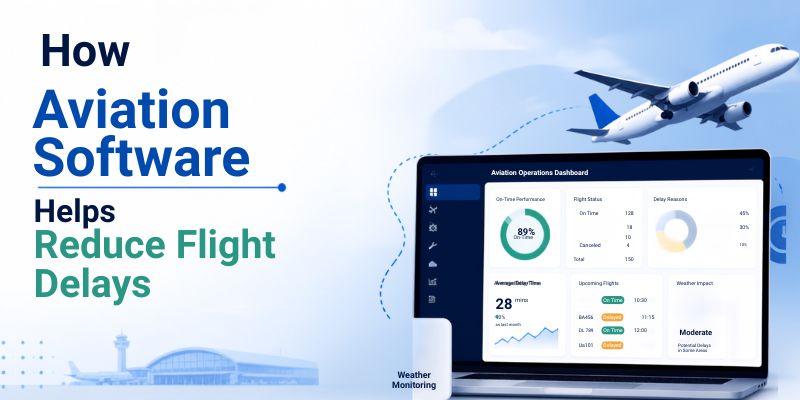
Modern aviation platforms continuously collect and display live information from aircraft, airports, weather systems, and operational teams. This centralized visibility enables control centers to identify disruptions early, evaluate their impact, and make informed decisions that minimize schedule changes and improve overall operational efficiency.
2. Predictive Maintenance Using AI
Artificial intelligence analyzes historical maintenance records, sensor readings, and aircraft performance data to detect signs of potential equipment failures. Maintenance teams can schedule repairs before issues become critical, reducing unexpected aircraft downtime and helping flights depart according to schedule.
3. Smart Crew Scheduling and Resource Allocation
Advanced scheduling systems automatically assign pilots, cabin crew, and ground personnel while considering regulatory requirements, availability, and operational priorities. If disruptions occur, the software quickly recommends alternative assignments, helping airlines maintain compliance and reduce delay-related staffing issues.
4. Flight Planning and Route Optimization
Intelligent route planning tools evaluate weather conditions, air traffic congestion, fuel efficiency, and airport capacity to recommend the most effective flight paths. Dynamic route optimization helps airlines avoid congested airspace, reduce travel time, and improve on-time arrivals.
5. Automated Airport Ground Operations
Ground handling activities such as fueling, baggage loading, catering, aircraft cleaning, and boarding must be completed within tight turnaround windows. Aviation software coordinates these activities in real time, ensuring every team works efficiently and reducing delays caused by ground operation bottlenecks.
Key Technologies Behind Modern Aviation Software
The aviation industry depends on advanced technologies to process enormous volumes of operational data and convert it into actionable insights. For organizations exploring how to build aviation software, understanding these core technologies is an essential first step.
► Artificial Intelligence and Machine Learning
AI and machine learning analyze historical flight patterns, maintenance records, weather forecasts, and operational trends to predict potential disruptions before they occur. These systems continuously improve their recommendations by learning from new data, enabling airlines to make smarter operational decisions and minimize avoidable delays.
► IoT-Enabled Aircraft Monitoring
Connected sensors installed throughout aircraft continuously monitor engine performance, fuel systems, landing gear, and other critical components. Real-time monitoring allows maintenance teams to identify abnormalities early, reducing unexpected failures and ensuring aircraft remain available for scheduled operations.
► Cloud-Based Aviation Platforms
Cloud technology enables airlines, airports, and operational teams to access centralized information from virtually any location. By connecting departments through a single platform, cloud-based systems improve collaboration, accelerate information sharing, and support faster responses during operational disruptions.
► Predictive Analytics and Big Data
Aviation organizations generate massive amounts of operational data every day. Predictive analytics transforms this information into meaningful insights that help forecast delays, optimize flight schedules, improve fleet utilization, and allocate airport resources more effectively.
Steps to Develop Aviation Software That Ensures Better Flight Operations
Developing aviation software requires much more than building a digital platform. The solution must support complex operational workflows, integrate with existing aviation systems, comply with strict industry regulations, and deliver reliable performance under demanding conditions. A structured development approach helps ensure the software effectively addresses operational challenges while remaining scalable for future industry needs.
Step 1. Define Operational Objectives and User Requirements
Every successful aviation platform begins with a clear understanding of operational challenges. Airlines, airports, maintenance providers, and ground handling teams often have different workflows and priorities. Identifying user requirements, business goals, and performance expectations early helps create software that solves real operational problems instead of adding unnecessary complexity.
Step 2. Select Core Features and Integrations
The software should include features that directly support flight operations, such as flight tracking, maintenance management, crew scheduling, operational dashboards, and resource planning. Seamless integration with existing airline systems, airport infrastructure, weather services, and air traffic management platforms ensures consistent data flow and efficient coordination across all operations.
Step 3. Ensure Regulatory Compliance and Security
The aviation industry operates under strict safety, privacy, and regulatory standards. Software must comply with aviation regulations while protecting sensitive operational and passenger data. Strong cybersecurity measures, encrypted communications, role-based access controls, and continuous monitoring help maintain system reliability and regulatory compliance.
Step 4. Test, Deploy, and Continuously Optimize
Comprehensive testing ensures the platform performs reliably under various operational scenarios before deployment. Once implemented, continuous monitoring, software updates, and performance optimization allow aviation organizations to adapt to changing operational demands, evolving regulations, and emerging technologies while maintaining high system availability.
Why Invest in Professional Development Services For Aviation Sector
Selecting the right technology partner is just as important as choosing the right technology. Professional development expertise helps transform operational challenges into reliable digital solutions that deliver measurable business value.
1. Build Solutions Tailored to Airline Operations
Every aviation organization has unique workflows, operational priorities, and compliance requirements. Custom-built software aligns with these specific needs, enabling greater flexibility, improved efficiency, and better operational control than generic off-the-shelf platforms.
2. Integrate Seamlessly with Existing Aviation Systems
Modern aviation relies on numerous interconnected platforms, including reservation systems, maintenance software, flight operations, airport management, and regulatory databases. Experienced development teams ensure seamless integration without disrupting existing business processes.
3. Scale with Future Aviation Technologies
As artificial intelligence, automation, predictive analytics, and connected aircraft continue to evolve, aviation software must remain adaptable. Scalable architectures allow organizations to introduce new capabilities without replacing their entire technology ecosystem.
4. Improve Long-Term Operational Efficiency and ROI
Well-designed aviation software reduces manual work, minimizes operational disruptions, optimizes resource utilization, and improves decision-making across departments. These long-term efficiencies contribute to lower operating costs, stronger on-time performance, and higher customer satisfaction, delivering measurable returns on technology investments.
Conclusion
Flight delays can never be eliminated, but they can be significantly reduced with the right technology. Aviation software enables airlines and airports to monitor operations in real time, predict disruptions, automate critical workflows, and improve coordination across teams.
These capabilities lead to better on-time performance, lower operational costs, and a smoother passenger experience. As air travel continues to expand, investing in intelligent, scalable software will be essential for maintaining efficiency and meeting rising customer expectations.
Organizations that embrace digital innovation today will be better equipped to deliver reliable, resilient, and future-ready aviation operations in an increasingly complex industry.