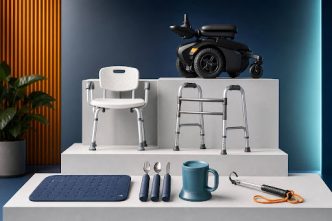
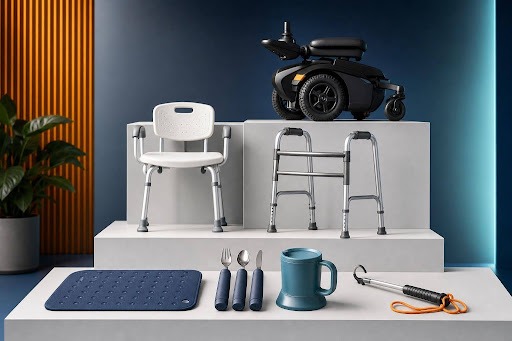
The right piece of equipment can change how an everyday task feels. A shower chair, a long-handled sponge or a talking pill organiser can help someone wash, dress, eat, take medication or move around the home with less hands-on help. Under the NDIS, this equipment is assistive technology, or AT.
This guide maps common self-care tasks to NDIS-friendly devices and explains how to choose and buy items without wasting plan budget. It is general information only, not medical, clinical or legal advice. For decisions about your situation, speak with an OT, AT advisor or your NDIS contact.
What ‘self-care and daily living’ mean in the NDIS
The NDIS defines assistive technology as equipment or a device that helps you complete tasks you may not be able to do because of your disability. This includes kitchen aids, bathing equipment, dressing tools, mobility supports and more complex powered equipment.
Two budget areas matter most for everyday routines. Assistance with daily life sits in Core supports and can fund support workers for cleaning, cooking, personal care and help around the home. Consumables, also in Core, can cover low-cost AT such as non-slip bathmats or small devices for dressing, eating, drinking or cleaning.
A quick primer on AT cost and risk
The NDIS sorts AT by cost and risk. Low-cost AT is under $1,500 per item. Mid-cost AT runs from $1,500 to $15,000 and usually needs an AT advisor recommendation. High-cost AT is more than $15,000 and needs an AT assessor.
Risk is separate from cost. Higher-risk AT needs specialised advice to buy, set up and use safely, and some low-cost items still fall into this category.
Low-cost AT: where it sits and what to try first
Low-cost AT funding usually appears in your Core budget under consumables. If you have consumables funding and the item costs under $1,500, you generally do not need to check with the NDIA first or send a quote.
Useful starter items by routine include:
- Bathroom: non-slip bathmats, shower stools, long-handled sponges and easy-grip bottles.
- Kitchen: jar openers, easy-grip utensils, plate guards and talking scales.
- Dressing: button hooks, sock aids, zipper pulls and long-handled shoe horns.
- Medication: labelled organisers and simple reminder devices.
One caution: a cheap item can still be higher-risk. If an item affects positioning, sleep, transfers or safety, get specialised advice before buying.
Mid- and high-cost AT: evidence and assessment
As cost rises, so does the evidence needed. Mid-cost items generally need an AT advisor to compare options, check safety and teach safe use. High-cost items need an AT assessor and may involve a trial or rental period.
Quotes are only required for AT items over $15,000. Items under that figure do not require quotes, although mid-cost items still need supporting evidence. When AT is in your plan, you will have at least $500 in Improved Daily Living for independent AT advice.
If you trial equipment, keep notes on which tasks became easier, any safety issues, fit in the home and whether you needed less hands-on help.
Higher-risk items and safe setup
Higher-risk AT requires specialised advice because fitting and use affect safety. Examples include adjustable beds, complex bathing or toileting equipment, bed poles and weighted blankets. Some are low-cost yet still carry risk.
Good setup and training matter as much as the device itself. An OT or AT advisor can fit the equipment, show safe use and confirm it suits your home and routine.
How to buy AT under the NDIS
Only items that are NDIS supports, related to your disability and in line with your plan can be funded. How you pay also depends on whether your plan is self-managed, plan-managed or NDIA-managed.
For low-cost AT, check that you have consumables funding, confirm the item is under $1,500 and disability-related, buy from a suitable supplier, keep receipts and claim according to your plan management type.
For mid- or high-cost AT, arrange advisor or assessor input, gather evidence and a quote if the item is over $15,000, trial or rent first if asked, and keep records once approved.
Check current NDIA guidance before a larger purchase.
Where to get help with in-home self-care supports
You can find AT advisors and assessors through allied health providers. Your support coordinator or my NDIS contact can also point you to local options.
If comparing options for in-home personal care in Sydney, you can find assistance with self care activities NDIS that outlines tasks like grooming, meal support, mobility and routine-building. Contract Care lists help with bathing, grooming and dressing, eating and meal preparation, mobility at home, and overnight or weekend help. Use service information as a starting point for questions, not as a promise of outcomes, pricing or availability.
Working with support workers and therapists
OTs and AT advisors help select, fit and train you on equipment. Support workers then help put the routine into practice, such as setting up the bathroom safely, prompting medication or supporting meal preparation.
If you use Contract Care or another support provider, share any AT advice from your OT so workers understand the safest way to assist. Well-chosen AT can support greater independence and may reduce hands-on assistance, but outcomes vary by person.
What not to expect the NDIS to fund
NDIS funding is for disability-related supports, not everyday living costs. Mainstream items most people buy regardless of disability, and general household expenses, are usually out of scope unless clearly justified. When in doubt, check the supports list or ask your NDIS contact.
Planning changes to watch
If your review is near mid-2026, ask your NDIS contact what planning changes apply.
FAQ
Can I buy low-cost AT without asking the NDIA first?
If you have consumables funding, the item is under $1,500 and it is disability-related, you can usually buy it and keep receipts. Check current NDIA guidance first.
Who should I ask about higher-risk AT?
Speak with an OT, AT advisor, AT assessor or your NDIS contact before buying, because safe setup and fit matter.
Bringing it together
Match the task to the tool, then check the budget and cost tier. Low-cost AT is the simplest entry point; mid- and high-cost items need advice and evidence. Keep receipts and involve qualified help for higher-risk or expensive items.